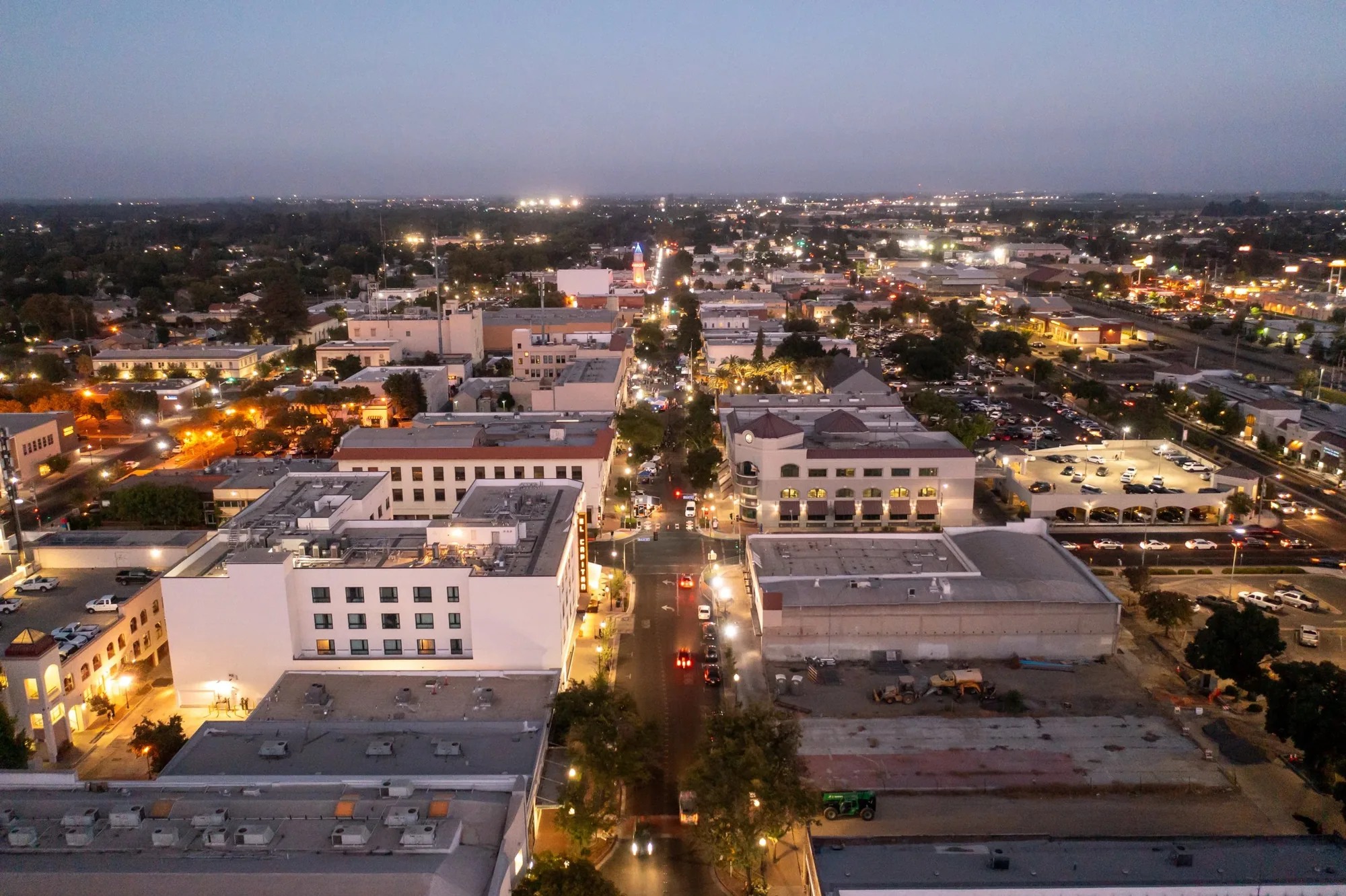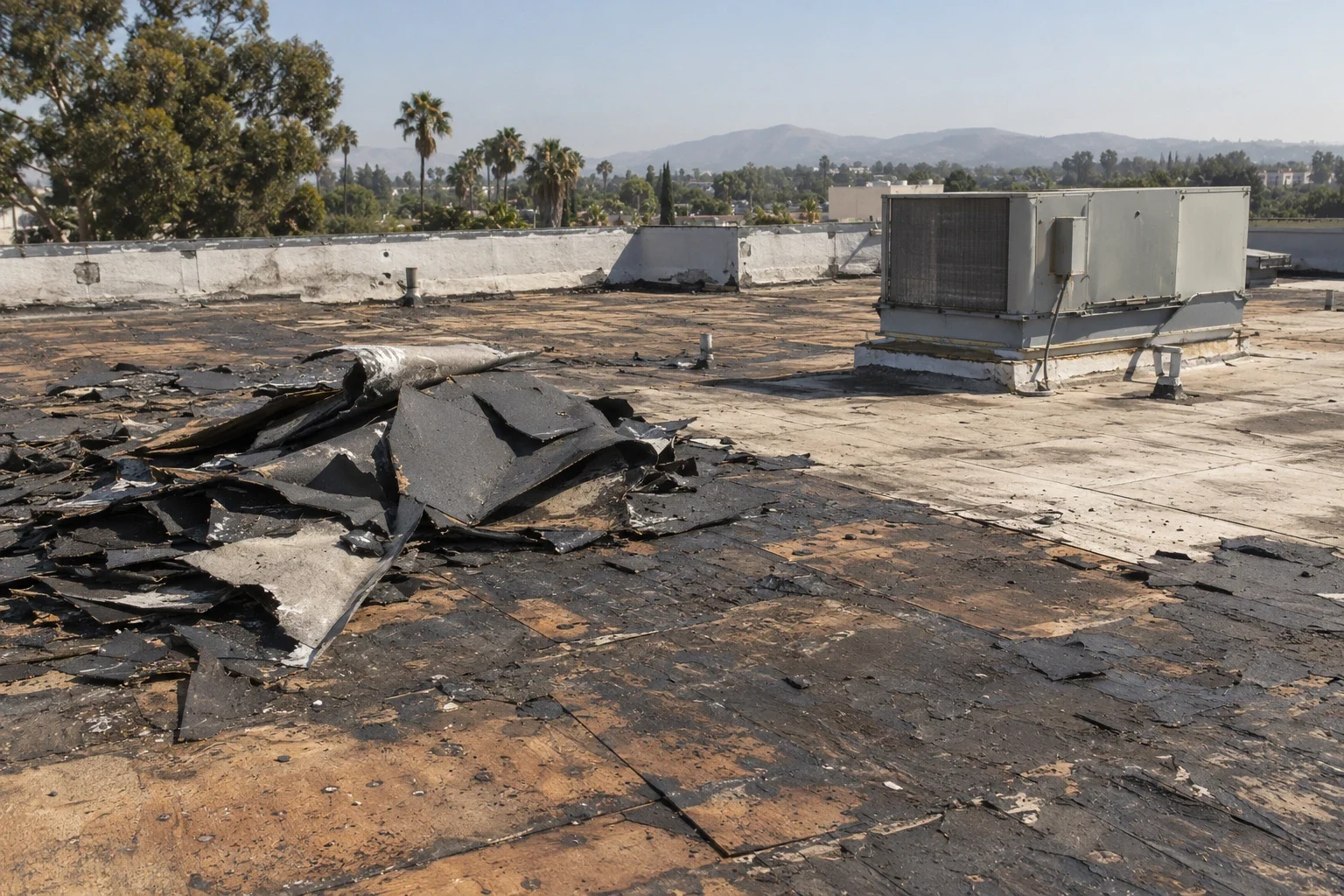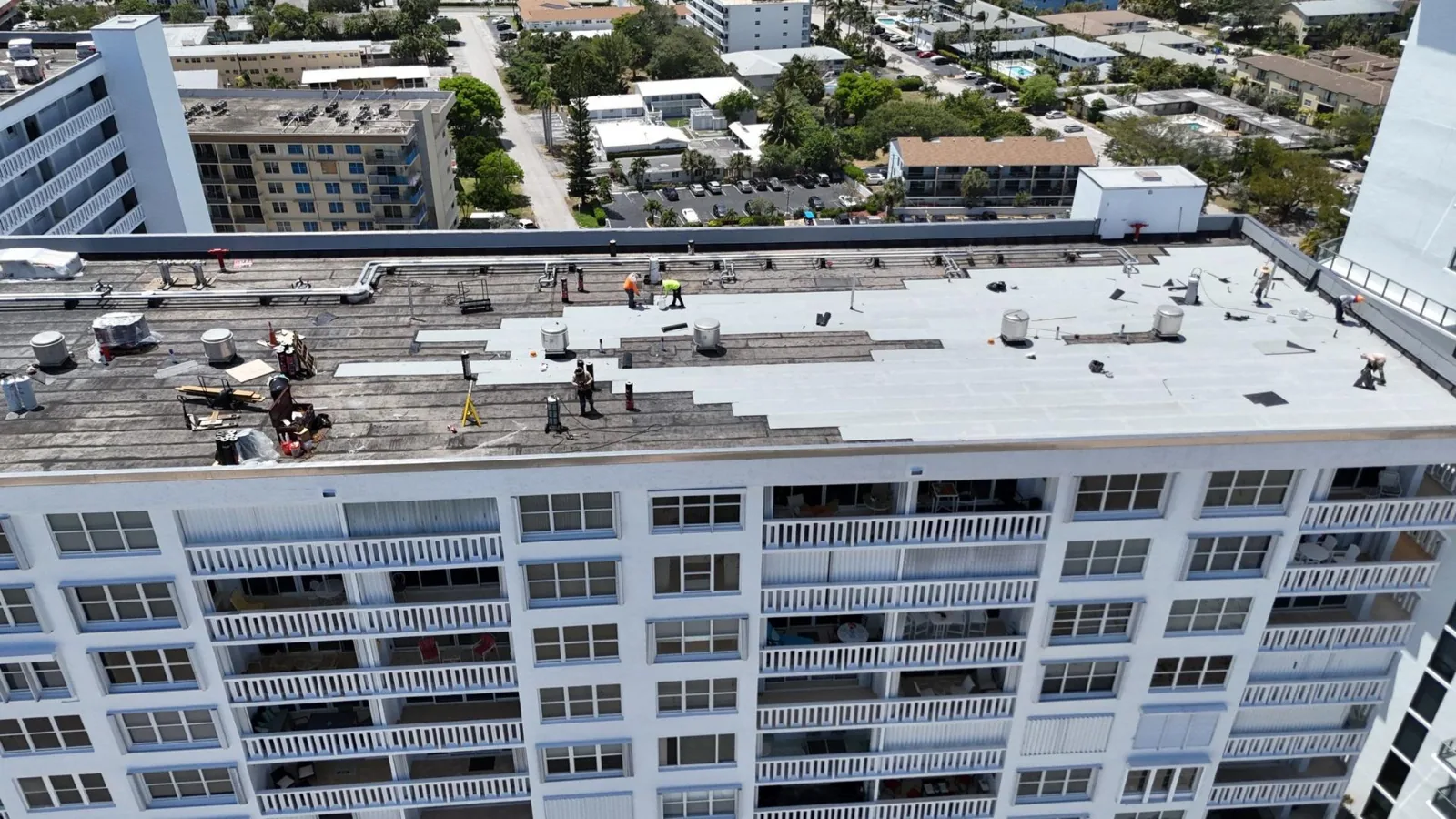
A seam repair on an industrial roof can fail when it bridges a wet area instead of correcting it. In Southeast Merced, we identify the membrane and inspect the insulation below suspected leaks before choosing a patch or larger scope. The area spans Highway 140, Fairfield Canal, Highway 99, and Mission Avenue, with Santa Fe Industrial Park extending through the district. That broad district provides geographic context. It does not establish the roof type, condition or business at an individual address. We verify the assembly, moisture and access before recommending work.
Work sequence through the industrial area
Santa Fe Industrial Park extends from Highway 140 toward Mission Avenue, east of Campus Parkway. The park includes multiple industrial areas with different property access and operating needs. A roof project here still begins at the building: where the hatch is, where equipment stages, which rooms lie beneath the work and when operations allow an opening. We confirm those limits before mobilizing. If a loading route or equipment clearance crosses the staging area, the plan accounts for it before material arrives.
Highway 99, Highway 140 and Mission Avenue help define connections across Merced; the South Merced Highway 99 area is a separate district, as is the Highway 59 commercial corridor. A roof inspection identifies whether a membrane is TPO, EPDM, modified bitumen or metal and records the condition of its details. We inspect the field, penetrations, edge transitions, attachment and deck, then return a scope with photos.
Inspect each layer before sealing a defect
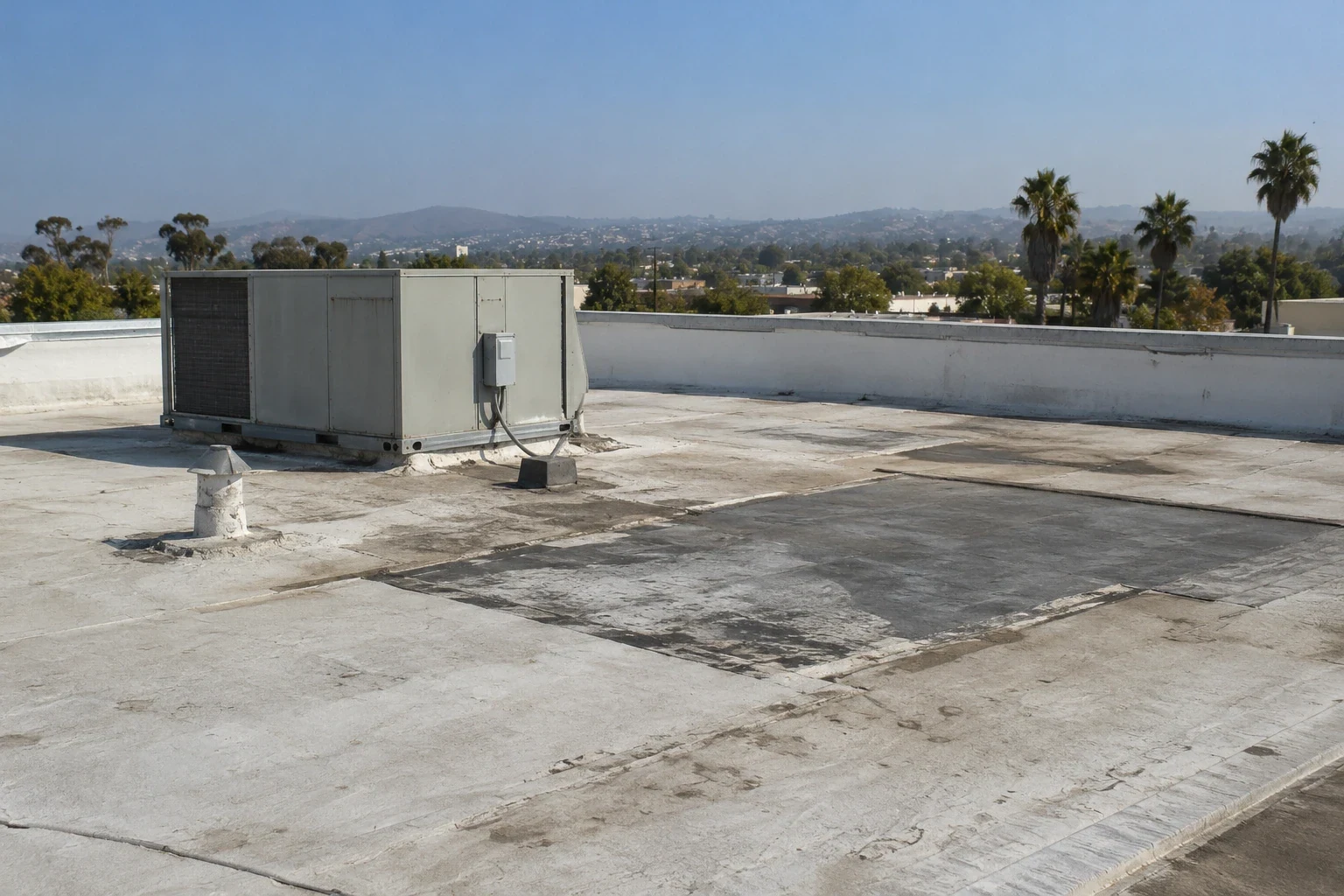
At a membrane seam, we look for a split, a lifted edge, a repair patch that no longer bonds or a fastener line that has opened. Around HVAC curbs and pipe penetrations, we check flashing height, corners and the connection to the roof field. At the perimeter, we inspect edge metal, termination bars and splices. Drain bowls, strainers and sumps are checked with the surrounding slope, because clearing debris will not correct a low area or a separated connection. Notes identify the exact roof section and the area visible from safe access.
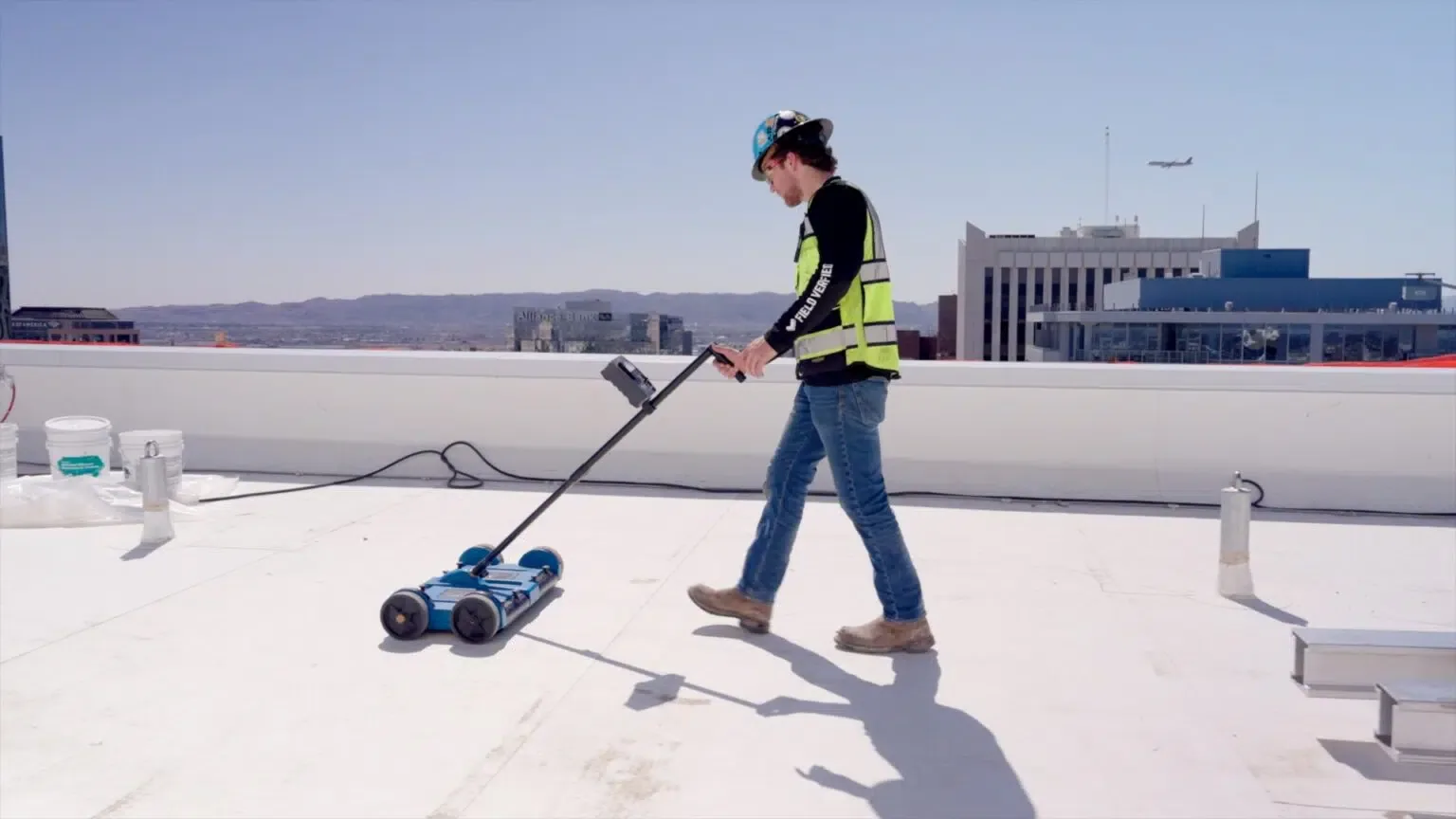
The Merced station records a normal July high of 96.3 degrees and a normal low of 61.7 degrees. Merced station normals provide regional context; the South Merced roof requires its own assembly and detail inspection. Heat exposure is one reason to examine membrane movement, brittle sealant and metal fasteners at transitions. We compare the suspect detail with adjacent material and document what is visible. If the surface may conceal moisture, infrared moisture testing can narrow the area for an opening. A test cut confirms the insulation and deck at that point; the scan alone does not.
Trace the leak before setting a repair limit
A ceiling stain can sit below a different roof bay from the actual entry. Water may travel along insulation joints, deck flutes, framing or conduit before it appears indoors. We map the interior mark, inspect the roof above and around it, and check nearby curbs, seams and drains. When the source remains uncertain, a test opening or moisture survey can help distinguish a dry surface defect from wet insulation. The record identifies tested points and any area that remained inaccessible.
Our repair stops at sound, dry material. We remove loose membrane, prepare the surrounding field and install a compatible patch with secure edges. If insulation is wet, we remove it within the approved boundary and inspect the deck before rebuilding. A broad pattern of moisture or attachment failure can change the recommendation from a local fix to selective removal, recovery or tear-off. A repair scope identifies a bounded defect; a replacement plan compares full assembly options when failures repeat. We do not cover wet layers to make the surface look finished.
Keep dry-in tied to the workday
The Merced station's 1991-2020 precipitation normal is 11.80 inches for the year. January and February account for the higher monthly normal totals; July and August round to no measurable precipitation. These figures belong to the city station, while the local forecast and roof conditions govern the actual work window. Before opening the assembly, we check the substrate and choose compatible materials. The crew secures a temporary cover if permanent work cannot be completed, keeps drains open and checks the roof before leaving the section.
Industrial operations can require staging away from vehicles, stored materials or equipment intakes. We agree on access and interior protection before work starts. For larger assemblies, an occupied-building sequence can divide the scope into sections and maintain a dry-in at each shift. At closeout, the owner receives photos of the original condition, exposed layers and finished detail. Follow-up maintenance can compare drains, seams and penetrations with that record.
Give facilities a defensible next step
The final scope states the roof section, defect, materials removed, layers retained and boundary of completed work. If concealed damage continued past the approved line, photographs show why the scope changed and where additional work began. A report can also separate immediate water control from repairs that can be scheduled with production or tenant operations. That is useful when the facility manager needs to make a budget request or coordinate another trade at a curb, pipe support or rooftop unit.
Southeast Merced is a broad planned commercial and industrial area. It is not the same as every Merced industrial location, and a reference to Santa Fe Industrial Park does not point to a single tenant or building. We also cover the wider Merced city area and the Atwater area, while inspecting each roof individually. For several buildings, roof asset records can connect inspection dates, leak history and replacement priorities. Share the roof material if known, active hours, interior impact and access details. We will inspect the assembly and return a documented recommendation tied to the condition found.
Commercial Roofing Questions
Does the Santa Fe Industrial Park area mean every building has the same roof?
No. The plan describes a broad multi-area district, not individual roof assemblies. We inspect the membrane or metal, attachment, insulation, deck and edge details on the building in question. The report keeps its findings attached to that roof and does not transfer conditions from nearby properties.
What happens when a test opening finds more wet insulation?
We photograph the exposed layers, secure the area and compare the condition with the authorized removal boundary. If moisture continues outside it, the owner reviews the added area and scope before the crew extends the opening. The deck is checked before new insulation or membrane is installed.
Can you stage repair work around equipment and deliveries?
We confirm access, clearance, staging and operating hours before materials arrive. The sequence can protect the area below the roof and keep required routes open. The plan changes if an opening exposes conditions that need a different repair, and we review that change before expanding the work.
When should a manager compare a repair with replacement?
A comparison helps when leaks return, moisture spans roof sections or attachment and deck condition raise questions beyond one detail. We map defects, inspect representative layers and document drainage. The proposal can then compare localized repair, selective removal, recover and tear-off with each scope's access and schedule needs.
How do you protect the building during a same-day opening?
We set the opening limit, protect the space below and plan temporary dry-in before cutting. The crew checks exposed insulation and deck, installs permanent materials when the conditions allow, then secures any temporary cover and confirms the roof is watertight at the work edge before leaving.
Inspect a Southeast Merced roof
Send the building use, roof material, leak location and access limits. We will inspect seams, drainage and exposed layers, then return a repair scope tied to documented conditions.
Related Roofing Work