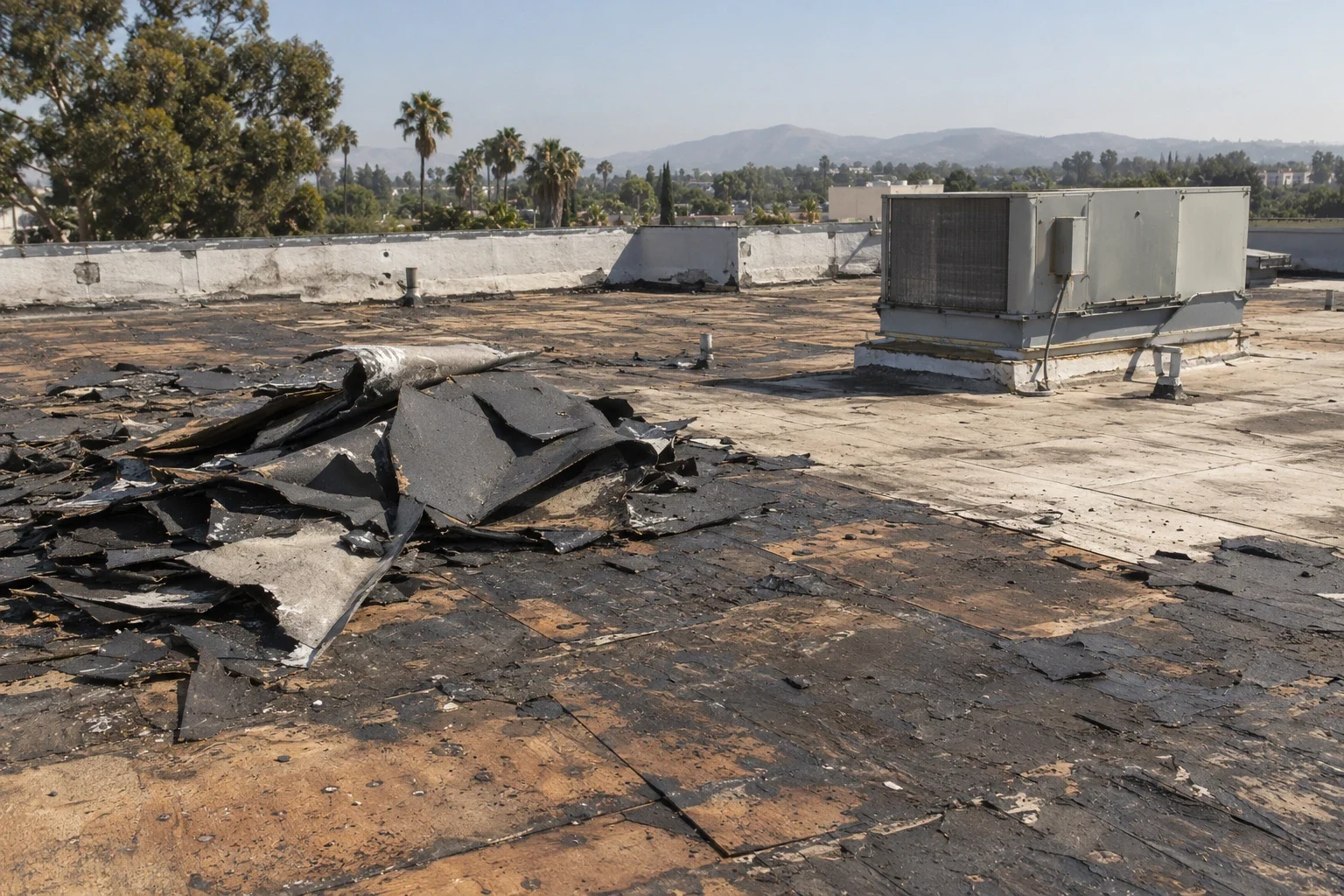
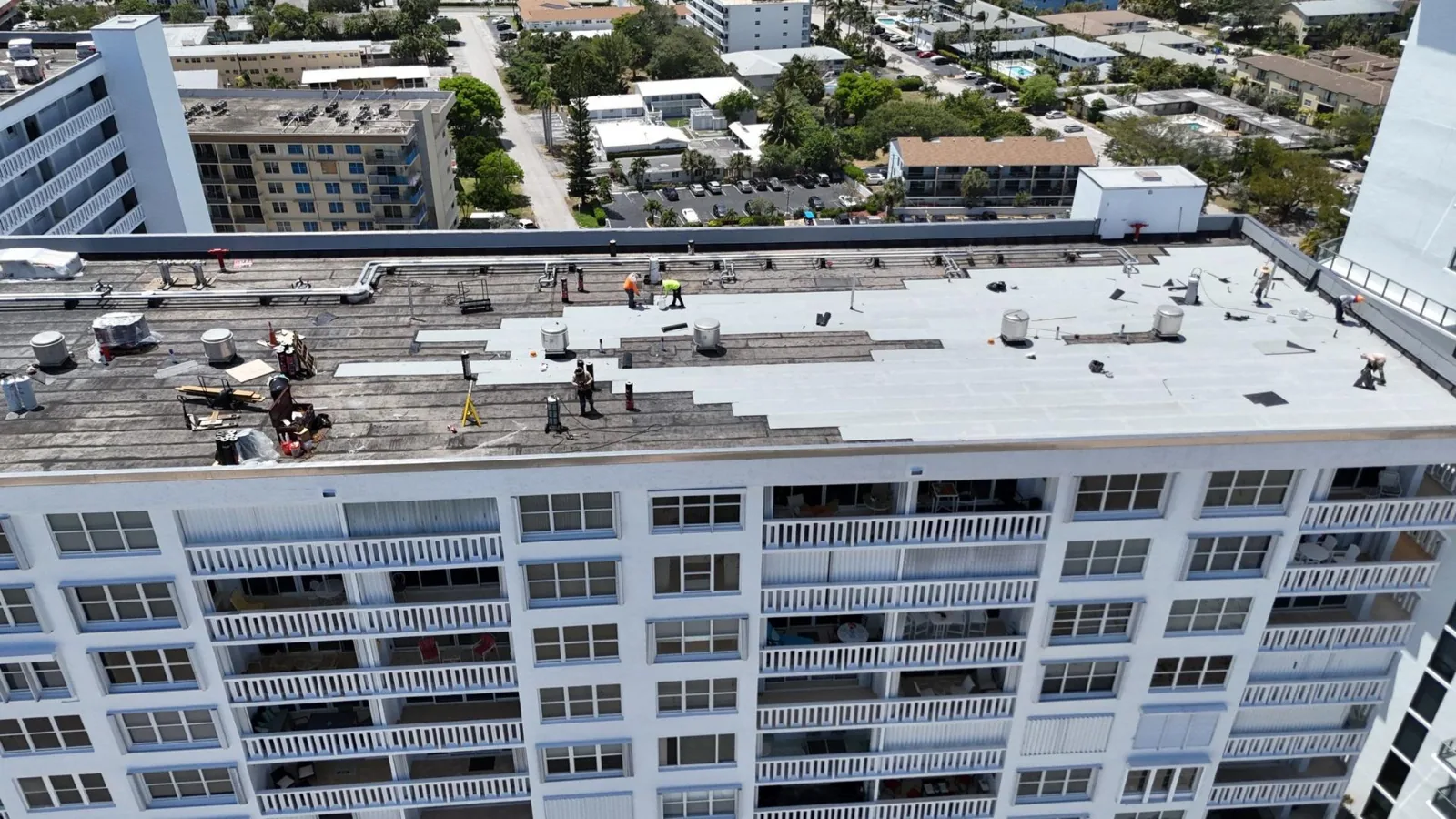
A roof opening near an active production area needs a firm boundary and a same-shift dry-in plan. In South Merced, we identify the membrane and supporting layers before deciding how far removal should go. The district lies south of Childs Avenue, north of Mission Avenue, west of Highway 99 and east of Thornton Road. The district includes industrial development along Highway 99 and areas near the regional airport. A roof inspection identifies the assembly and operating needs at the property before we set a repair or capital scope.
A roof scope for the South Merced area
South Merced includes both Highway 99 and Highway 59 corridors. The planned area includes regional commercial land near the Highway 99 and Mission Avenue interchange, with neighborhood-commercial sites near population centers. We use those area references to identify the district, then verify the property access and roof assembly. A road interchange does not establish the condition of the membrane, the state of insulation or the strength of the deck. The inspection must answer those questions on the building.
Other Merced commercial areas follow their own boundaries. The city's plan identifies a corridor along Highway 59 between Childs Avenue and Mission Avenue; the South Merced Highway 59 area focuses on that route. Southeast Merced has its own boundaries and includes the Santa Fe Industrial Park. We do not carry observations from one district to another. Each report names the inspected roof section, the defect, access limitations and any test opening. A commercial roof inspection should leave the owner with a scope that can be checked against photographs.
Check the surface and the layers below
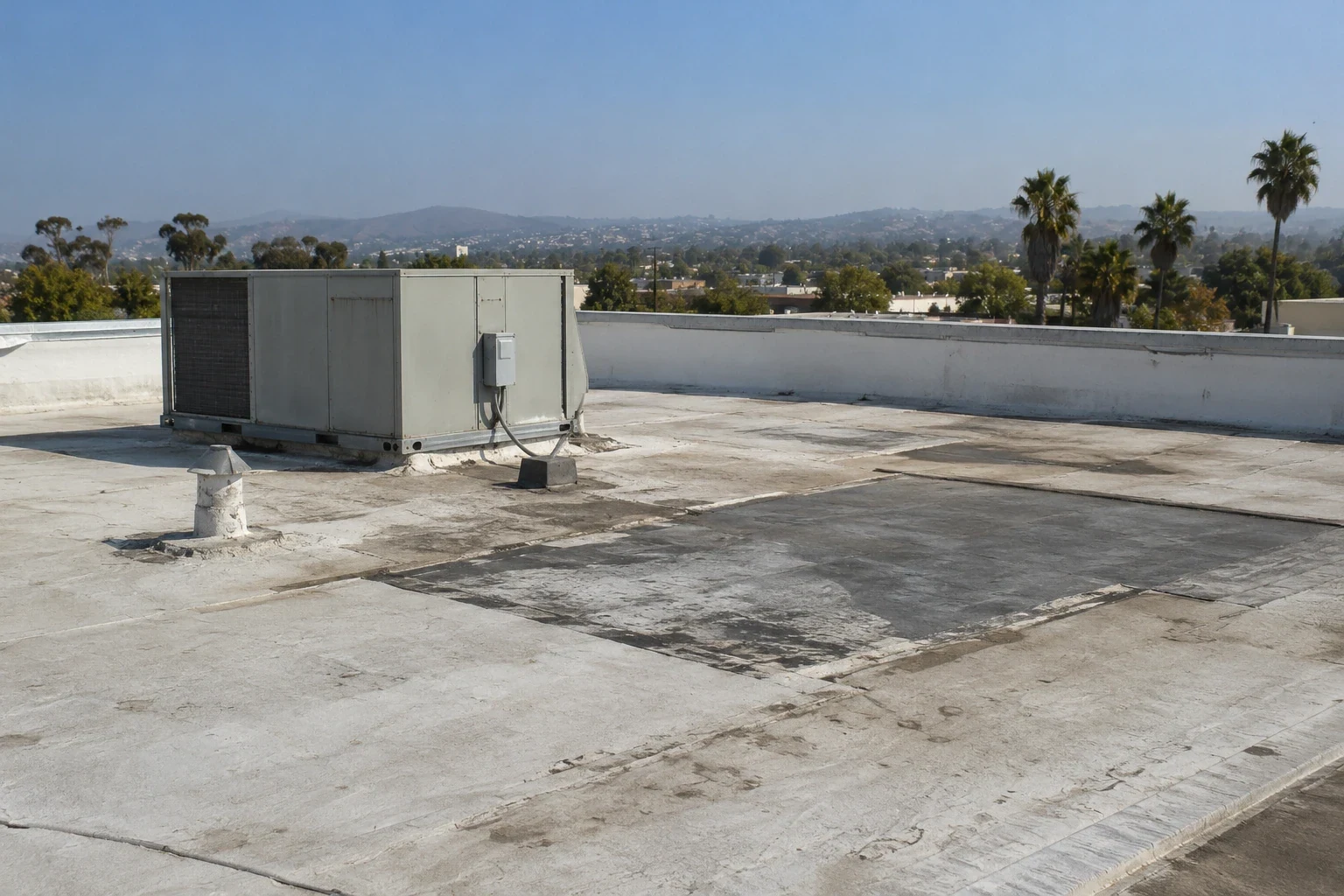
At seams, we look for lifted laps, open edges and patches that have separated. Curbs and pipes need flashing that remains bonded and secure where it meets the field membrane. Edge metal can loosen at fasteners or open at a splice. At drains, the bowl and sump matter as much as the strainer; a clear opening does not correct a depressed roof area or a separated drain connection. We photograph each defect and compare it with nearby details before defining a repair.
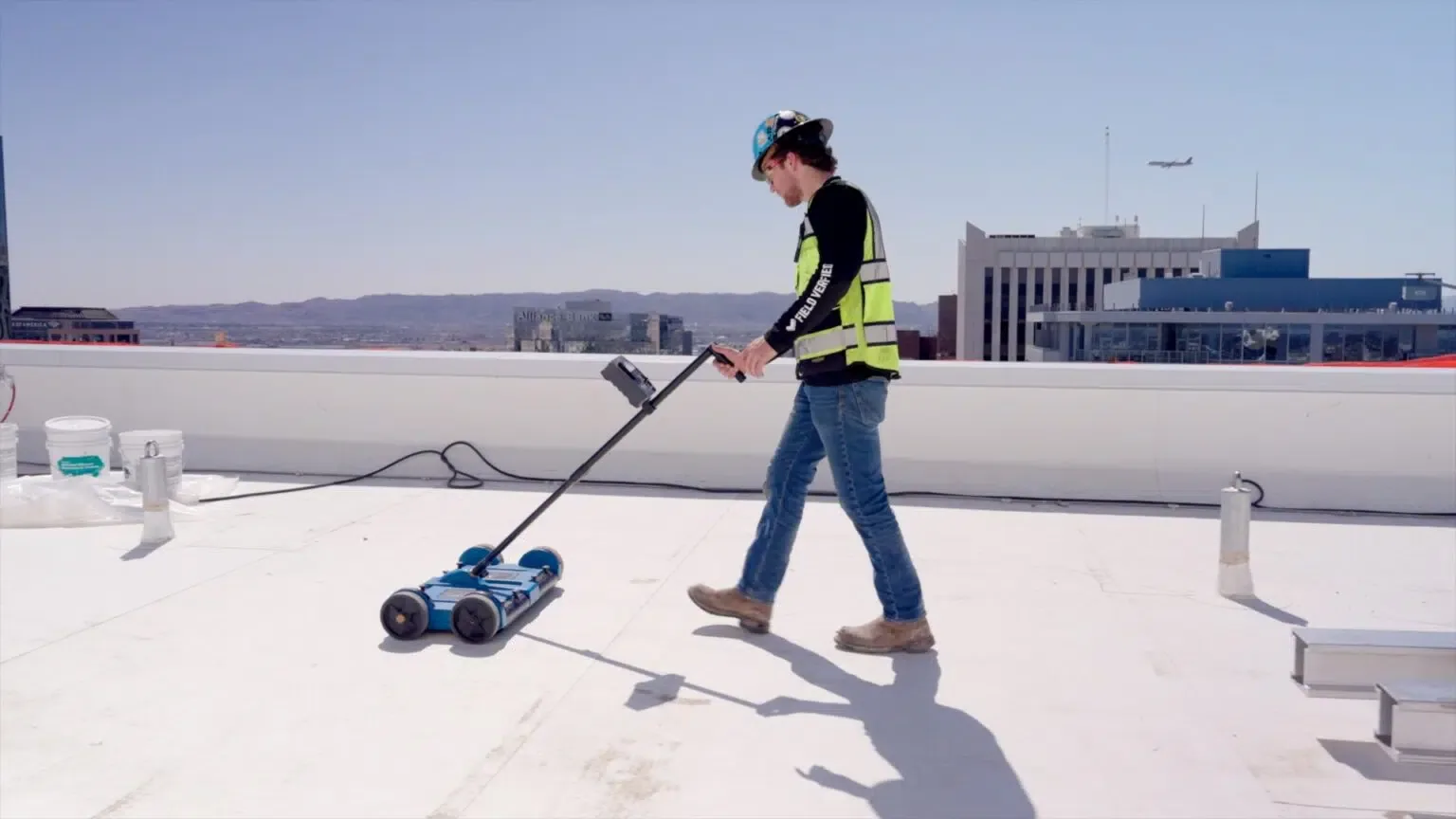
A normal July high of 96.3 degrees appears in the Merced station's 1991-2020 climate record. The South Merced roof needs its own inspection of the field sheet, penetrations, and perimeter details. Sustained heat exposure makes it useful to inspect sealant, membrane movement, metal fasteners and previous patches. Where moisture beneath a surface could alter the plan, infrared scanning can help select test locations. The exposed layers in a test opening determine whether insulation is wet; a thermal pattern alone does not confirm that condition.
Choose a repair that stops at sound material
A patch is appropriate when the defect is localized, the surrounding membrane is secure and the substrate is dry. We clean and prepare the area, tie in compatible material and check the repair edge. If moisture reaches insulation, the affected material needs to be exposed and evaluated before a new surface covers it. The owner sees the test area, photographs and removal limits. When one opening reveals more damage beyond the approved boundary, we pause for review and document the changed condition.
A repeated leak or connected pattern of seam and attachment failure can justify a broader comparison. We review selective tear-off, recovery and replacement against moisture, deck condition, drainage, edge details and the number of layers. Recovery only works when the existing roof can support it. Price and timing depend on access, height, removal depth, insulation, deck repair, drain changes, disposal and the work window below. A localized repair and a replacement scope should show separate work limits so the owner can compare immediate repair with longer capital planning.
Protect the opening and the operating area
Before cutting, we confirm the hatch, lift or ladder route, staging location and rooms below the roof. The crew removes only the authorized area, inspects the exposed deck and insulation, and installs permanent materials or secures temporary protection before leaving. Drains remain clear. Tools and loose materials are accounted for. If equipment, storage or staff routes sit beneath the work, we place protection and set a sequence that keeps the space usable when conditions allow it. Around rooftop units, we keep service clearances open while inspecting curbs and nearby condensate lines.
Annual precipitation at the Merced station has a 1991-2020 normal of 11.80 inches; winter months account for most normal rain, while July and August round to zero. We check the current forecast, roof surface, and product limits before opening or closing a work area. We check surface and substrate conditions before applying membrane or coating products. A phased installation plan can keep roof sections manageable around active use. Later maintenance records drains, seams and flashing for comparison at the next visit.
Document the work for the next owner decision
A useful closeout names the roof section, the defect found, materials removed and repair edge. Photographs show the before condition, exposed substrate and completed detail. We note what was tested, what remains concealed and what should be watched. If a larger project is considered later, those records give the facilities manager a better starting point than a list of undated leaks. With several roof sections, asset records keep inspection history and capital decisions connected to the correct area.
Across the South Merced district, each building still requires its own assembly identification and inspection record. The Merced city service area is broader than this district, and the city's Highway 99 industrial corridor describes another geography. We keep service area names separate from property findings. Send the leak timing, interior impact, known roof material and access limits. We will inspect the roof, photograph the relevant conditions and return a written scope with urgent work, planned options and any unresolved tests stated clearly.We label each photograph by roof zone and retain the test-opening location for the next visit.
Commercial Roofing Questions
Does an industrial planning designation identify the roof type?
No. South Merced contains broad development areas, while the roof assembly still varies by property. We inspect the membrane or metal surface, attachment, insulation and deck before giving a roof recommendation. The report ties each conclusion to a visible condition or test opening.
How do you decide how far to open a wet roof?
We start with a marked work boundary and open only the area authorized. Once the layers are visible, we document the insulation and deck. If moisture or damage continues past the line, we secure the opening and review photographs and added work with the owner before extending removal.
Can roof work be scheduled around an operating business?
We confirm the active hours, access route and space below each work area. The sequence can divide the roof into manageable sections, protect interior operations and secure a same-shift dry-in. The actual sequence depends on the assembly and weather conditions, so we set it after inspection.
What makes a roof ready for a recover system?
Dry insulation, reliable attachment, functioning drainage and serviceable edges all matter. We verify those conditions before placing new material over the existing roof. If moisture is present or the deck is compromised, selective removal or replacement may be needed instead. The scope identifies what evidence supports the option.
What should a facilities manager receive after a repair?
The closeout should show the defect, repair area, materials used, before-and-after photos and any condition left for monitoring. We also identify access or testing limits. That record supports later maintenance, budget review and a decision about whether adjacent roof areas need separate inspection.
Request a South Merced roof assessment
Share the building use, leak location, known roof material and access window. We will inspect the assembly, test where needed and define the repair or replacement boundary.
Related Roofing Work