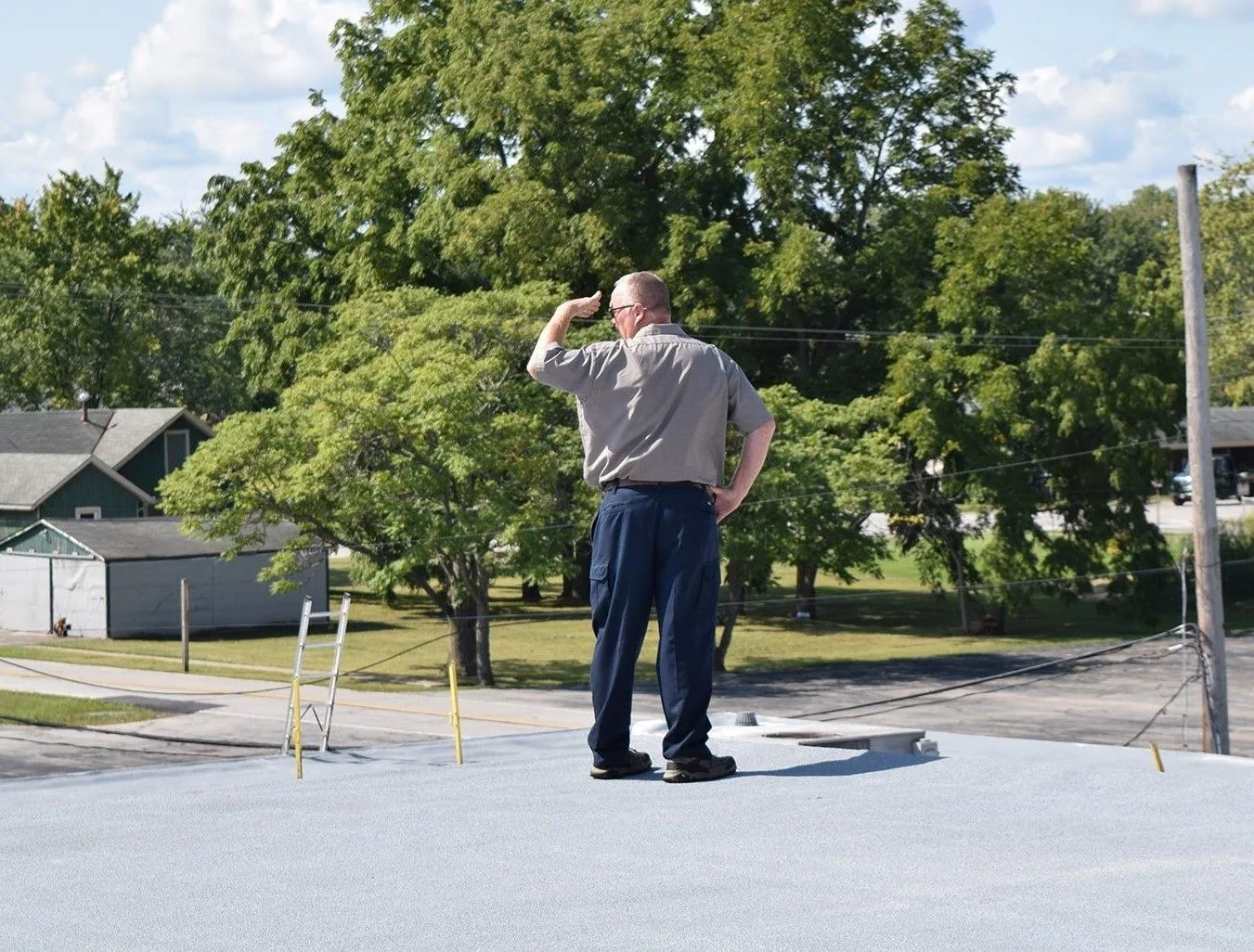
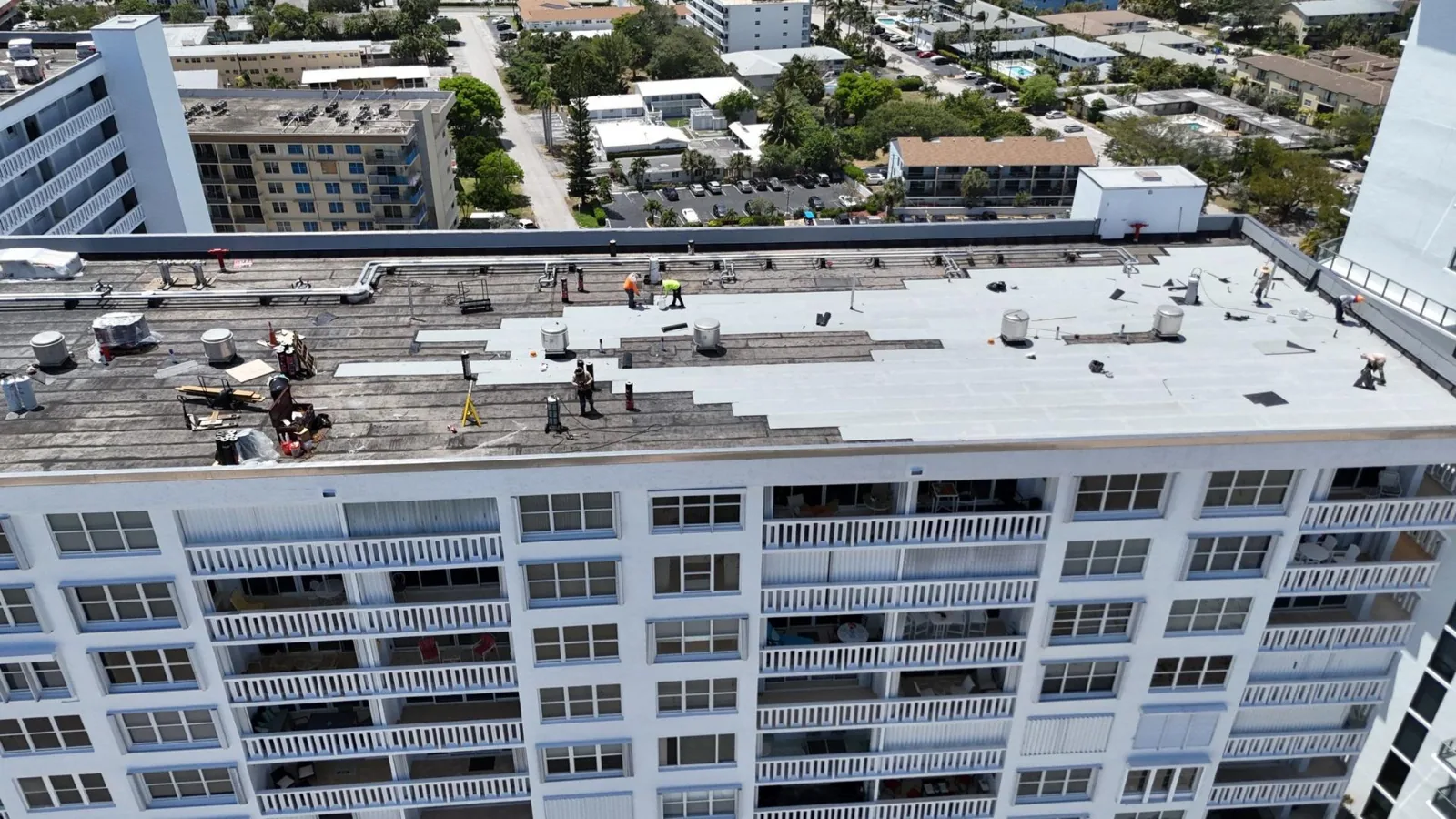
A roof drain can be open while water still sits beside it. Along the South Merced Highway 59 commercial corridor, we check the bowl, sump, roof slope and nearby seams before calling the condition a drainage failure. The South Merced commercial corridor follows Highway 59 between Childs Avenue and Mission Avenue. This corridor includes neighborhood-commercial uses and properties along Highway 59; each roof inspection starts with the installed system and the building's operating needs. We inspect the actual assembly and connect each recommendation to a visible condition or test.
The corridor from Childs to Mission
The South Merced commercial corridor follows Highway 59 between Childs Avenue and Mission Avenue. Highway 59 also connects with the city's broader highway network, which includes Routes 99 and 140. Those road references can help orient a property manager, but access still comes from the building itself: gate instructions, roof hatch, lift location, occupied hours and the route below a planned opening. We confirm these items before equipment arrives. A work area above active rooms needs protection and a dry-in plan that fits the building's use.
South Merced is generally south of Childs Avenue, west of Highway 99, north of Mission Avenue and east of Thornton Road. It identifies neighborhood-commercial sites near population centers as well as the Highway 59 corridor. Before writing the scope, we identify the surface, attachment, insulation and deck on the property being inspected. A documented roof inspection separates observed defects from assumptions and records any areas that could not be reached.
Seams, drains and roof transitions
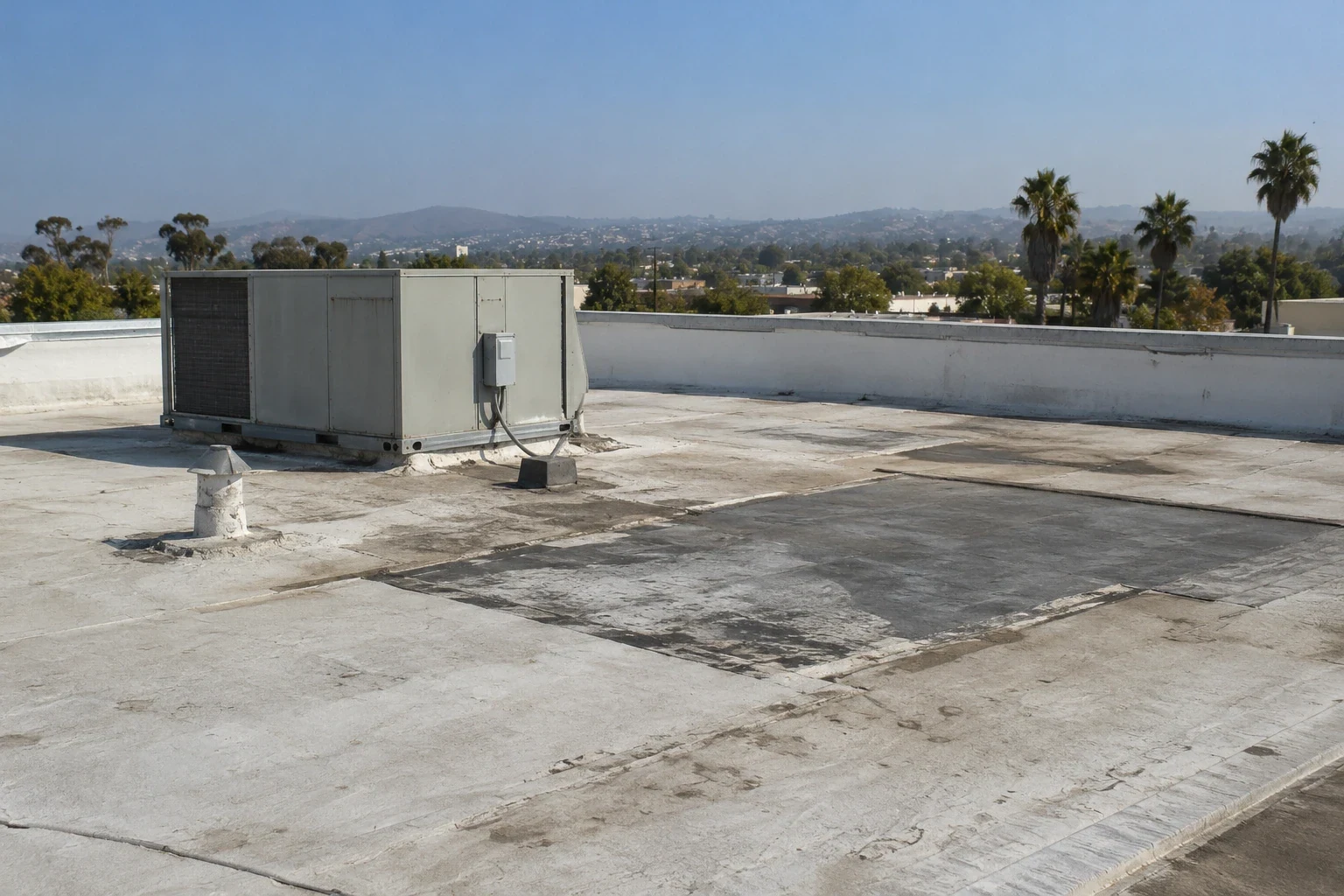
At a low-slope roof, water entry often begins where one material meets another. We inspect field seams, curb flashing, wall terminations, pitch pockets, drain bowls and edge metal. A loose termination bar can admit water behind otherwise intact membrane. A drain strainer may be clear while the sump remains depressed or the connection has separated. We photograph the defect, compare nearby details and note the limits of the inspection. The record should show whether the issue is isolated or repeats along a connected area.
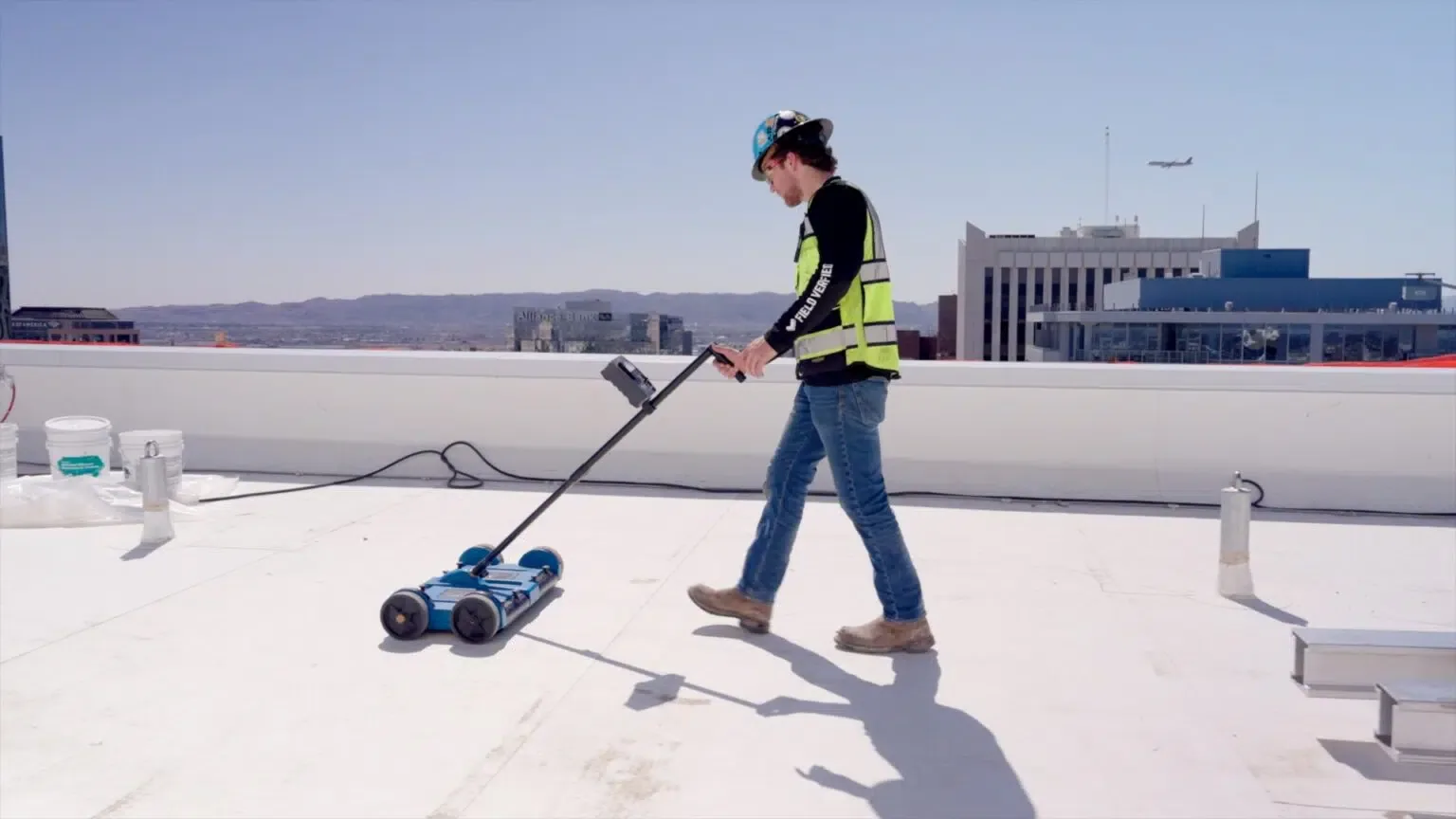
The Merced station's 1991-2020 July normal high reaches 96.3 degrees; 90-degree days average 99.7 annually. We inspect each corridor roof directly, including the membrane, drains, and edge connections that shape its scope. Heat exposure makes changes at membrane edges, sealant joints and metal fasteners worth checking during the walk. Our scope ties any heat-related work to movement at an actual seam, fastener, or flashing detail. Where a surface pattern could conceal wet insulation, infrared moisture mapping can guide a test opening. The opening, not the scan, confirms which layers are wet.
A repair that respects the assembly
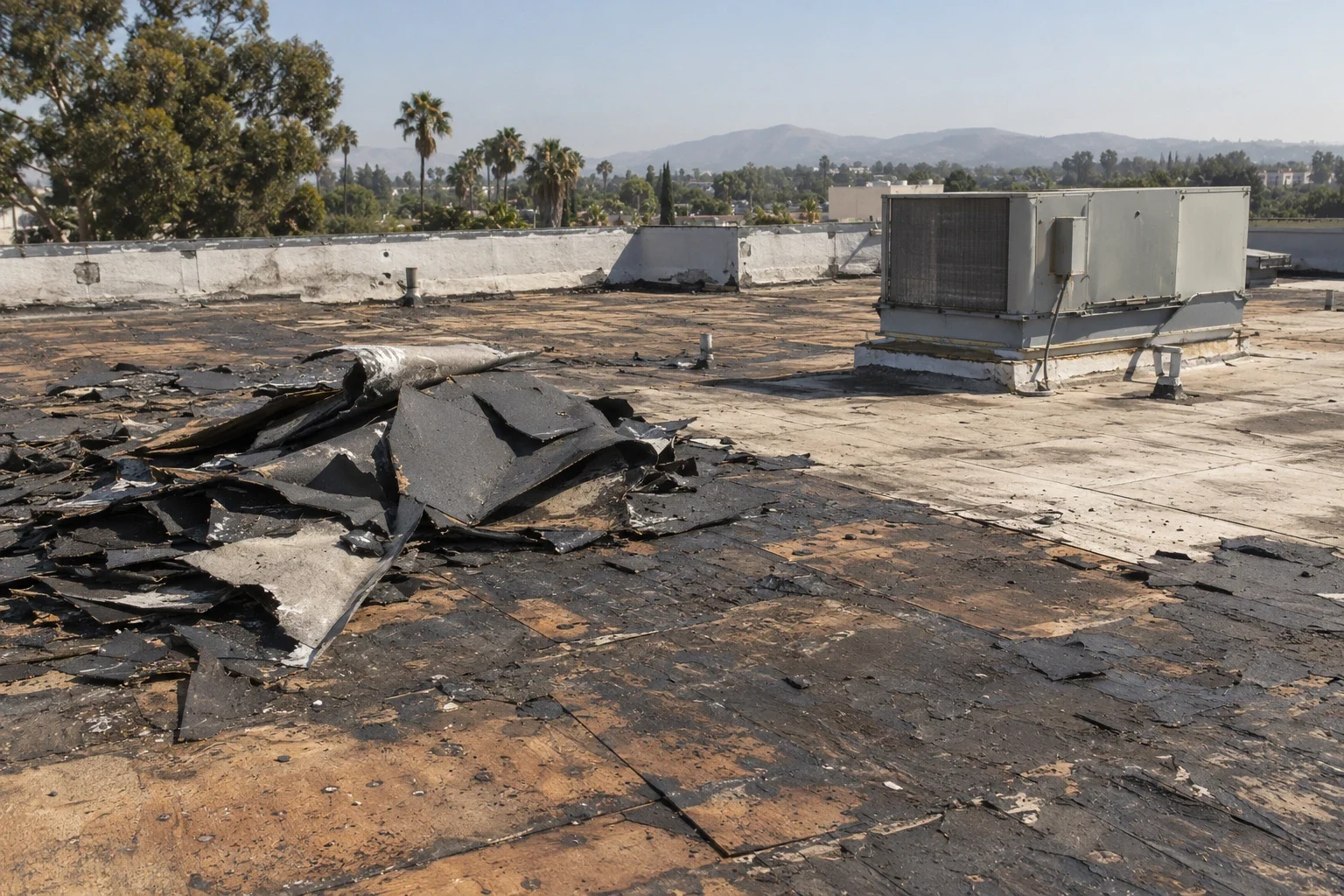
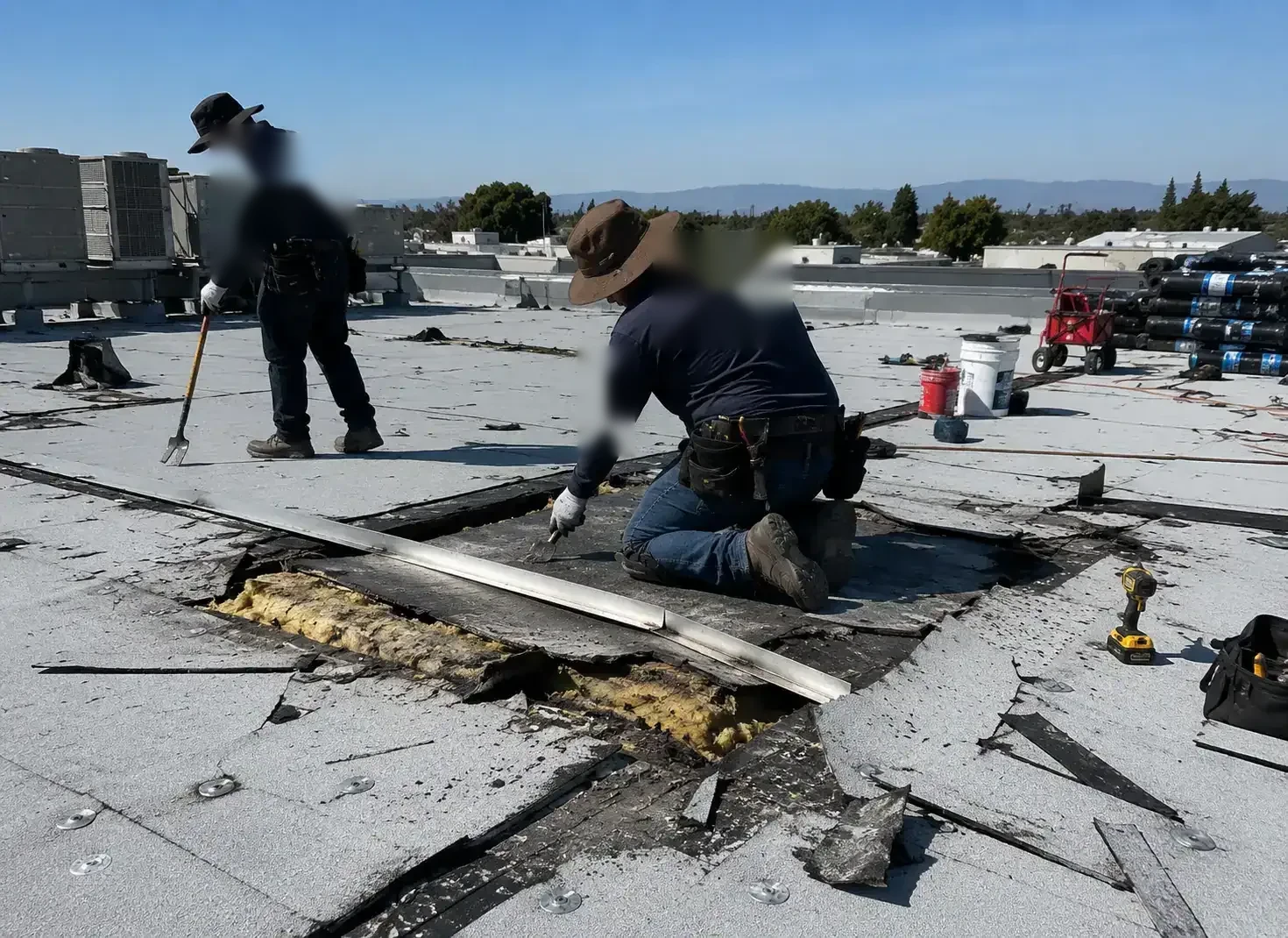
A patch is useful when the surface around the defect is sound and the substrate is dry. We remove loose material, prepare the membrane, tie in a compatible repair and check the finished edge. At a penetration, a repair needs secure attachment and sealed corners, not a bead of sealant over a moving joint. If water reached insulation or deck, we expose the affected layers within the approved boundary and replace what cannot remain. The work record identifies the layers retained and the point where the repair stops.
A repeated leak, several open seams or moisture that spans connected sections can change the decision. We compare localized repairs with selective removal, recover and replacement after checking attachment, drainage, edge condition and deck. Recovery is not appropriate when wet material would remain trapped. Price and timing reflect access, removal depth, disposal, insulation, deck repair, drain work, edge metal and how the work can be sequenced around operations. A bounded repair scope addresses a confirmed defect, while a replacement assessment sets out broader assembly options.
Dry-in and work windows
Before opening a roof, we agree on where materials stage, what lies below the cut and how the temporary cover will be secured. The crew removes only the approved area, checks the exposed insulation and deck, and rebuilds the assembly before leaving the section. If moisture or damage continues past the boundary, we stop and provide photos for review. This protects the owner from unreviewed expansion and gives the next decision a clear basis. Drains stay open and loose materials are secured at the end of the work period.
The Merced station's annual precipitation normal is 11.80 inches. The January and February averages exceed the rest of the year; July and August each register 0.00 inches. Winter timing matters for temporary protection, so we check the forecast and dry-in window before opening the roof. Seasonal timing can affect when an opening is practical and how long temporary protection must stay in place. The schedule also depends on roof access, interior use, delivery paths and any equipment that cannot be interrupted. A phased work sequence can divide a larger scope into sections. We inspect drains and seams again when a maintenance visit is due.
Scope with a visible repair limit
The closeout should identify the roof location, defect, materials removed, exposed conditions and final repair edge. Photos taken before, during and after the work help a facilities manager compare later changes. A condition list can separate active leaks from seams or drains to monitor. If testing is incomplete, the report says so. That detail matters when a later repair, capital request or sale depends on knowing which sections were checked.
South Merced's Highway 59 corridor is one geographic area within the city; the broader Highway 59 service area follows a longer route. The South Merced commercial area near Mission Avenue and Highway 99, while the Southeast Merced industrial area has separate boundaries and uses. We keep findings tied to the individual property. Send the leak location, known membrane, interior impact and access limits. We will inspect the roof, photograph the relevant details and return a scope that states what needs attention now and what can be planned.
Commercial Roofing Questions
Does a water mark below Highway 59 mean the roof over it is leaking?
The mark gives us a starting point, not a confirmed entry point. Water can travel along insulation joints, deck flutes or framing. We inspect above the stain and nearby transitions, then use a test opening when moisture location would change the scope. Photos show the roof layers checked and the limits of the finding.
What is the difference between the South Merced corridor and the broader Highway 59 area?
A South Merced commercial corridor runs between Childs Avenue and Mission Avenue. The broader Highway 59 route covers a longer city connection. The names help locate a property for service; roof access, assembly and repair findings are confirmed at that property.
Can a drain problem be fixed without replacing the whole roof?
Often, a localized correction is possible when the drain connection, surrounding membrane and substrate can be repaired and the larger assembly remains sound. We check slope, bowl, sump and nearby seams first. If the deck is depressed or moisture extends across connected areas, the scope may need drainage work or a broader roof option.
How do you keep a roof opening from expanding unexpectedly?
We mark the authorized boundary before cutting and photograph the exposed layers. If wet insulation, deck damage or another failed transition continues beyond it, we secure the opening and ask the owner to review the condition and added work. The updated limit is documented before removal extends.
What information helps set a work window in South Merced?
Tell us the building's active hours, roof access route, interior space below the leak, equipment clearances and any delivery restrictions. We use those details to place staging, protect the occupied area and sequence temporary dry-in. The final schedule follows both the observed roof condition and site access.
Inspect a South Merced corridor roof
Share the roof location, known system, leak timing and access requirements. We will walk the assembly, document what is wet or failed and provide a repair boundary for review.
Related Roofing Work