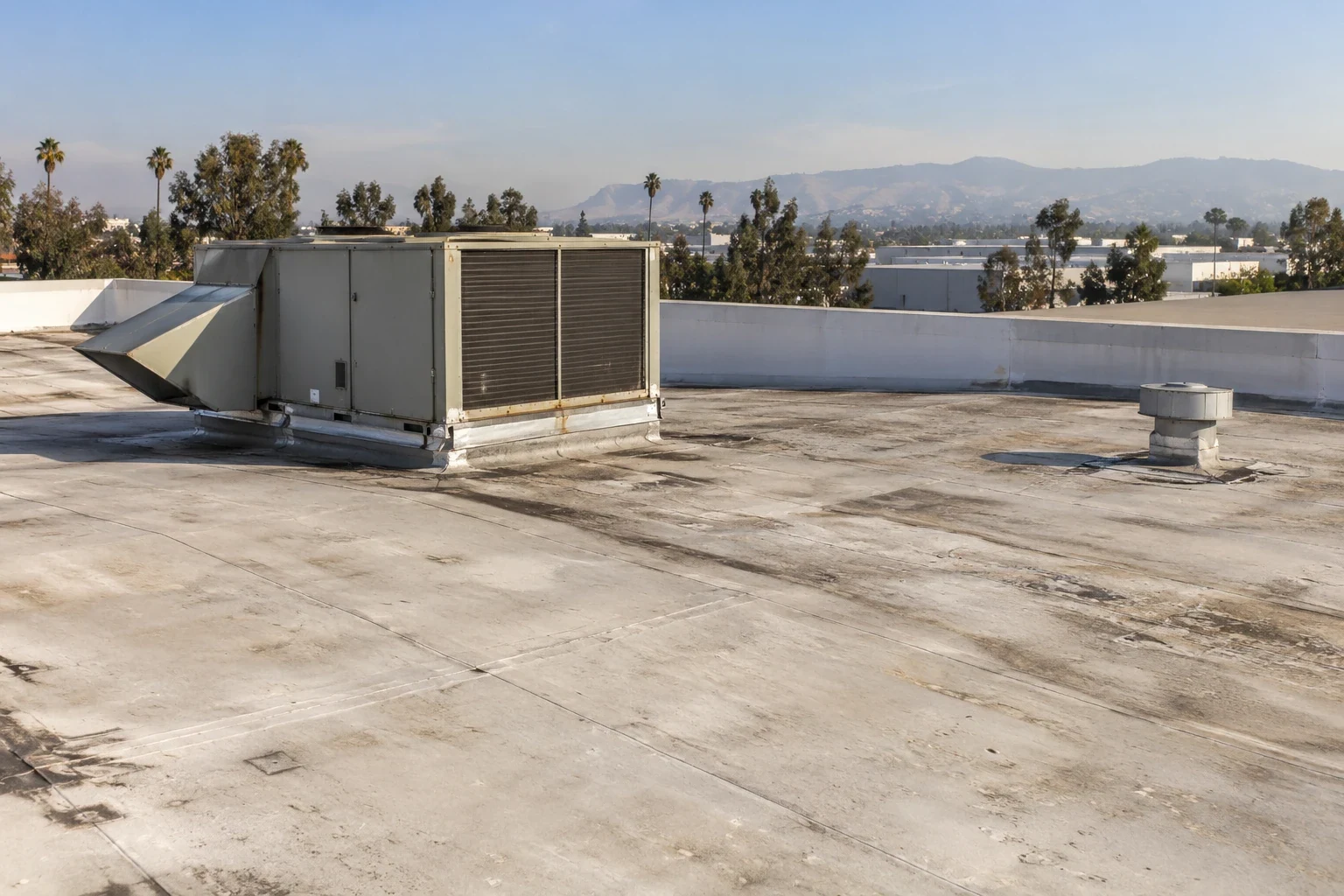
A coping joint that has pulled apart exposes more than a cosmetic gap. On a commercial building in Merced, CA, we examine the metal, its attachment and the roof connection beneath it. The repair may require a new joint arrangement or reconstruction of damaged support. A bead across the visible opening does not establish that the perimeter detail has been restored.
Merced summer heat makes exposed metal movement a useful inspection concern. Atwater has building-products manufacturing and food-processing activity. Livingston includes packaged-food and poultry-processing uses. Perimeter work above an operating industrial property needs a clear roof and ground access arrangement. We identify the damaged detail and the business areas affected before removing loose components or rebuilding the roof edge.
Coping joints and parapet protection
A coping cover protects the top of a parapet, but its joints and attachment determine how that protection continues along the wall. We examine opened laps, separated joints and displaced pieces. Water reaching beneath the cover may affect the construction below. The assessment considers the connection with wall flashing rather than treating the cover as an isolated strip of metal.
Different joint arrangements accommodate movement differently. We identify how the existing pieces connect and whether the arrangement suits the material and attachment. Rigid repairs across a joint can interfere with its intended movement. Merced heat does not establish every failure cause, but it makes a strained exposed connection worth examining. The repair method needs to match that connection instead of merely filling its outer gap.
The supporting construction matters when coping has moved or become loose. We inspect accessible fastening and substrate condition, and identify where opening is needed. Damaged support can require repair before replacement metal is installed. Perimeter roof repair may also need to reinstate the membrane transition below the cover. We include those connected tasks in the scope.
The field membrane at the edge
An edge termination connects the roof field to the perimeter construction. Its attachment, profile and connection method need to suit the assembly. We examine separating membrane, loose metal and damaged supporting material together. Replacing only the exposed metal may leave an unsuitable membrane connection behind it. The repair should define how the complete edge detail will be rebuilt.
On a TPO roof system, the connection at edge metal must be compatible with the membrane and its specified detail. Other membranes require other methods. We identify existing materials before choosing the repair. An unidentified coating or heavy sealant buildup can complicate the connection and require preparation beyond the visible metal replacement.
A new roof assembly may also change the edge height. Insulation thickness, wall flashing and coping relationships need review as part of that work. We coordinate the edge detail with the finished field elevation. The proposal should state which components remain and which need modification so the replacement membrane reaches a suitable perimeter termination.
Gutters and collected roof water
A gutter carrying debris can retain water or overflow at an unintended location. We examine its accessible length, joints, slope and connection with the roof edge. Clearing addresses an obstruction. A damaged section or unsuitable alignment may need reconstruction. The scope separates those conditions so the manager knows whether the work restores a component or only removes material from it.
Roof drainage may involve several connected details. Drains and scuppers need a usable discharge route, and a gutter receiving roof water must suit its place in that route. We identify visible connection problems and any design issue needing appropriate review. We size gutter and overflow work from roof area, slope, outlet geometry, and the project's drainage criteria.
Merced has higher winter precipitation normals than midsummer rainfall normals. A dry interval can be useful for repairing gutter joints and related roof connections before renewed rain. Current conditions still matter. Active overflow or a loose component may need an immediate response. The work window follows the damaged detail, safe access and the building use beneath it.
Downspout connections and ground discharge
A detached downspout can leave collected water discharging against another building component. We inspect accessible joints, supports and the discharge arrangement. The repair needs to suit the connected gutter or scupper, not simply replace a visible lower piece. Concealed or downstream drainage may require another trade's examination. We identify that distinction before assigning the entire issue to the roof.
Ground access can shape the reconstruction method. A downspout near an entry or service route needs suitable separation during work. We coordinate with the property team and identify the usable access arrangement. On a manufacturing building, delivery and production routes may constrain where equipment can stand. The repair plan addresses the actual route at the property.
For properties in Atwater, the established processing and manufacturing mix makes that coordination practical. We ask the manager to identify operating windows and areas that cannot be obstructed. The building use does not establish the metal profile or repair material. Those decisions follow the examined connection and the adjacent roof and drainage components.
Reconstruction and continuing examination
Removing perimeter material can expose flashing or wall construction. We define the opening and its closure before dismantling the damaged detail. A repair above occupied space needs suitable temporary protection if the work cannot be completed immediately. Loose components also need controlled removal. The scope should connect each removal with the permanent material and attachment that will replace it.
A property in Livingston may need perimeter work coordinated with its actual food-processing operation. We identify equipment or protected work areas relevant to the roof opening. The proposal then specifies access, removal and closure in relation to those requirements. It should not imply that all industrial buildings share identical operating conditions.
After reconstruction, we examine the joints, terminations and connected water path. A roof maintenance program can keep these exposed details under recurring observation. Early separation, accumulated debris or a newly loose component needs a condition-based response. Maintenance should identify whether clearing is sufficient or whether the construction needs another repair.
Cost depends on access, supporting material damage, the amount of connected flashing and the fabricated metal required. We describe those items clearly. A short visible gap can involve a longer detail if adjoining attachment is unsuitable. Conversely, a bounded damaged section may permit localized work where the remaining assembly is serviceable. The inspected connection establishes that boundary.
Commercial Roofing Questions
Can an open coping joint simply be filled with sealant?
Its intended movement and existing attachment need examination first. Some joints require a suitable seal; others need rebuilding or a different connection. We identify the detail so the repair does not restrain movement or conceal damaged support.
Why might membrane work be included with edge-metal replacement?
The metal and roof field form a connected perimeter detail. Removal can reveal or disturb the membrane termination. We specify the work needed to reinstate that connection rather than treat the outer metal as the entire repair.
Does gutter clearing resolve every overflow problem?
An obstruction is only one possible condition. Damaged joints, alignment or downstream restrictions may also affect discharge. We examine the accessible route and identify construction or technical review beyond the clearing task where necessary.
What changes the cost of a short perimeter repair?
Access and concealed supporting damage can be significant. Connected flashing may also need removal and reconstruction. We explain those items and the usable repair boundary so the manager can assess the scope beyond the visible length of metal.
Inspection of the exposed perimeter connection
Request examination of the opened coping joint, loose roof edge or damaged gutter and the attachment supporting it.
Related Roofing Work