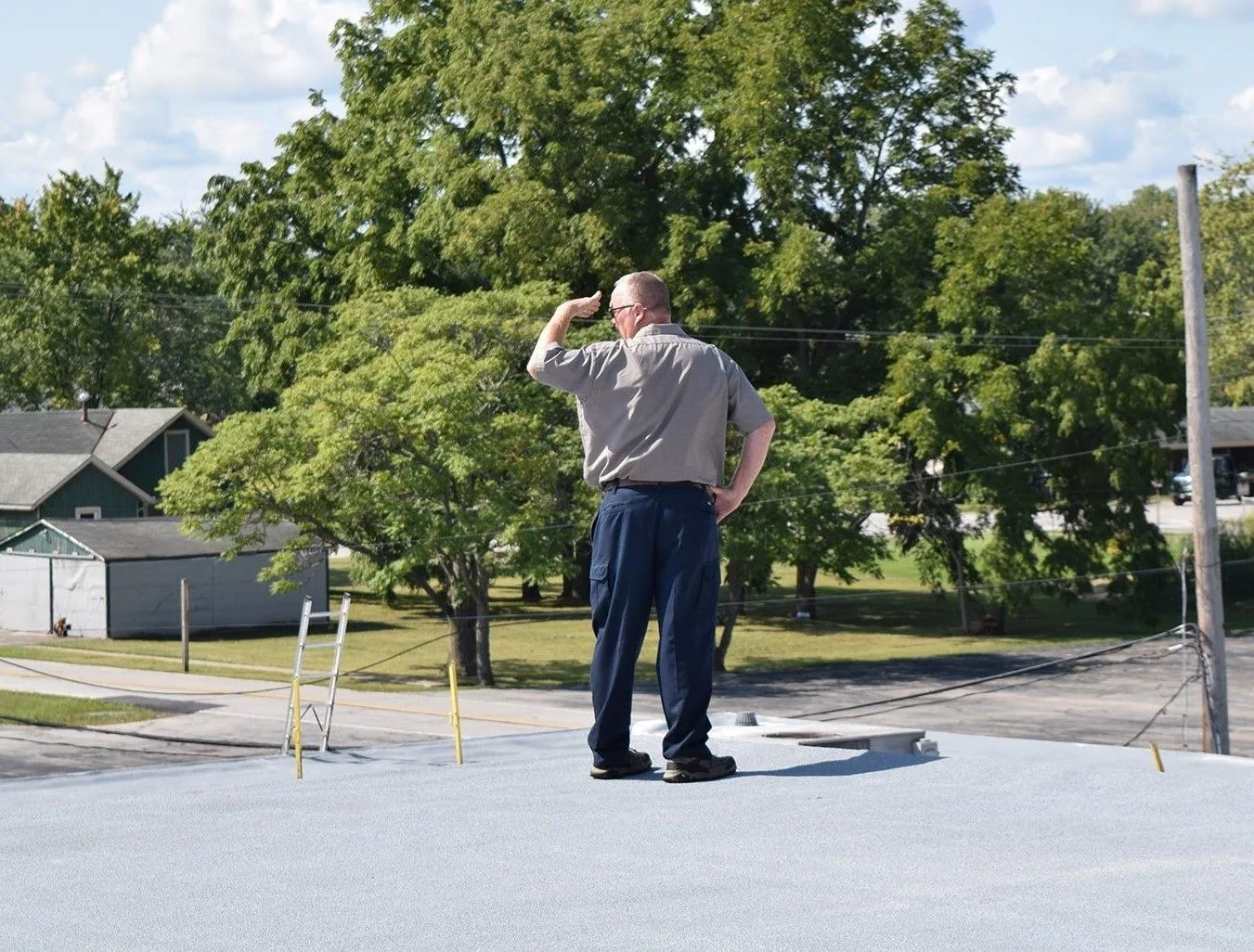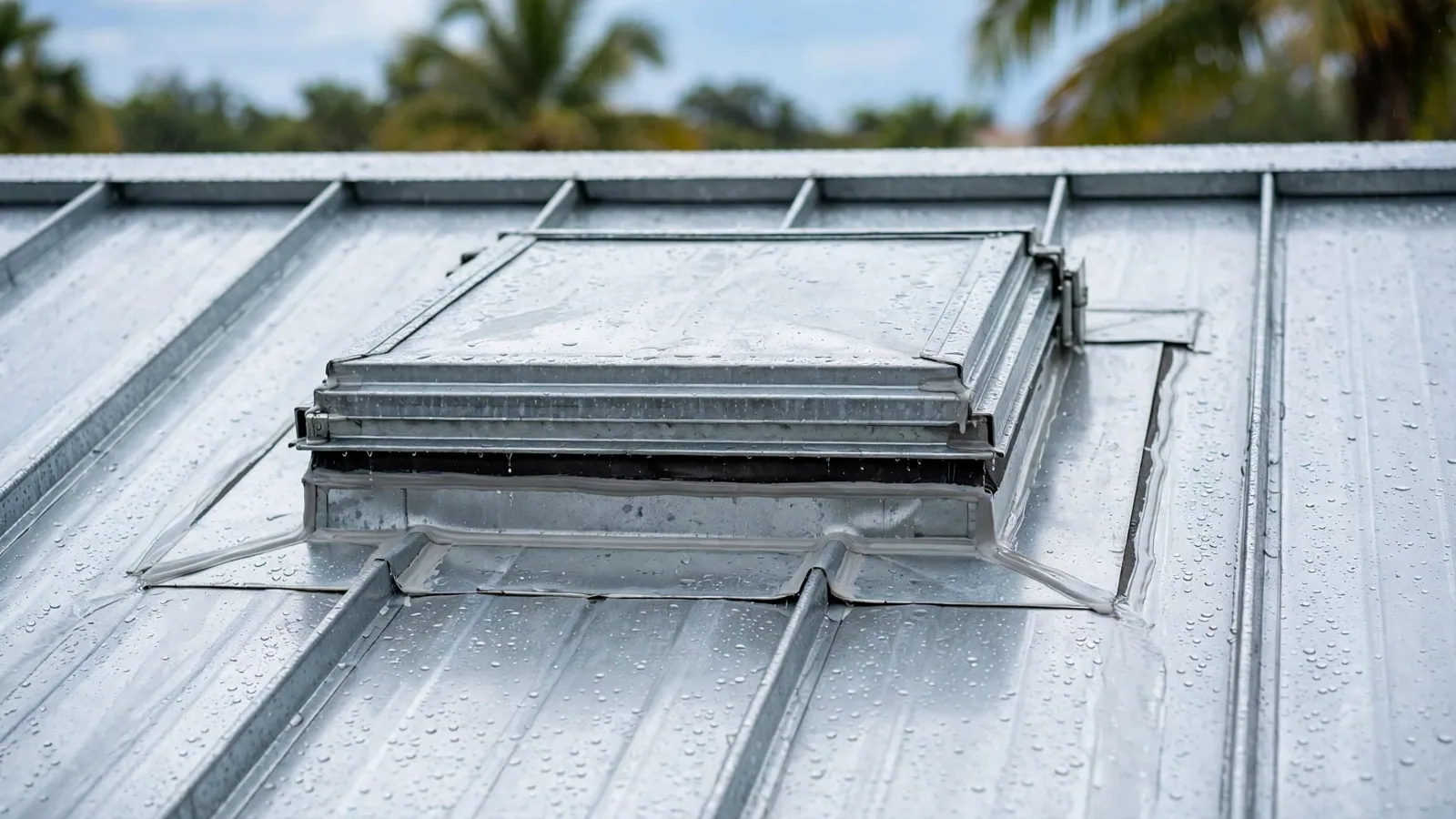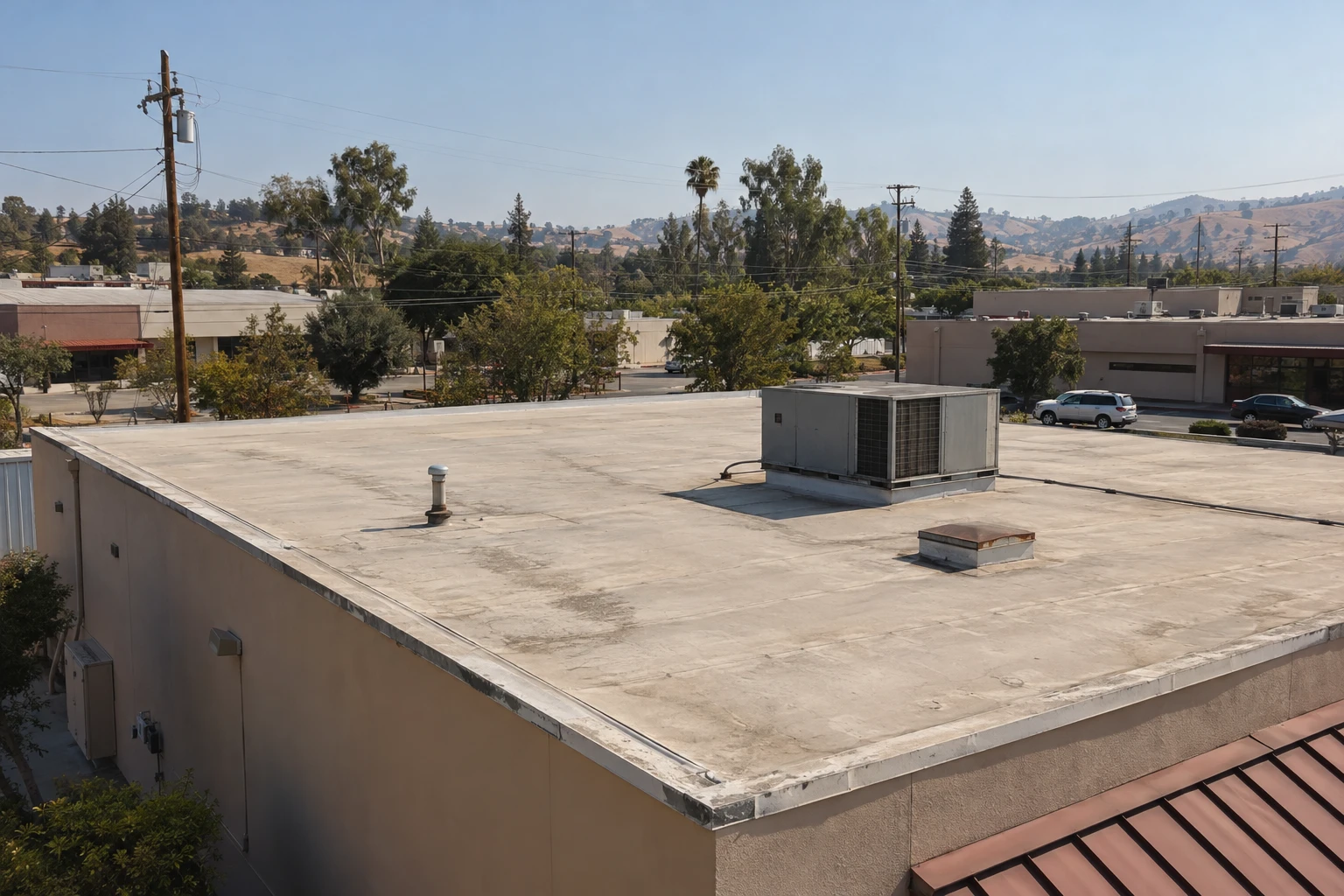
A gap where a roof terminates at an older wall can let water pass behind the visible flashing. In Hornitos, CA, we inspect the wall connection, membrane and substrate before deciding which material needs rebuilding. Hornitos is an unincorporated community in western Mariposa County and retains historic commercial-building remnants from the nineteenth-century mining era. Those remnants do not identify the current roof assembly at a property. We document what is present, what can be reached and whether the interior evidence follows the same path as the exterior defect.
For a building owner, the useful first answer is the repair boundary: which layers failed, where sound material begins and what remains untested. Merced station normals reflect a hotter summer pattern; at Hornitos, we check exposed edges and sealant joints for movement. A commercial roof inspection can record the existing detail before removal begins. If water enters at the wall, a flashing repair should restore the connection rather than cover the opening with another surface layer.
Separate the wall from the roof detail
At an older commercial structure, the wall surface and roof assembly may have different materials, repair histories and movement. We examine the membrane turn-up, counterflashing, termination, fasteners and any sealant line. A crack in the wall finish does not automatically mean the roof is leaking, and a dry wall surface does not clear the membrane below it. We compare each visible defect with the interior mark, then note where the connection disappears behind metal or other materials.
Hornitos sits in western Mariposa County northeast of Merced. The town's historic commercial remnants are a place fact, not proof that a specific building is occupied or that its roof is historic. We avoid disturbing sound material until the moisture path justifies an opening. If a controlled cut is needed, photographs should show the layers before they are closed. The same inspection discipline applies in Catheys Valley and the North Merced Villages area, but findings stay with the property examined.
Check where materials move
Metal, membrane and masonry do not expand in the same way. A termination can release at a corner even when its straight run remains attached. We look for a pulled fastener, a split at the bend, a loose counterflashing edge or a bead that no longer bonds to the receiving surface. A repair must reconnect the layers and allow the joint to move. Sealant alone cannot hold a loose termination in place or dry insulation beneath the membrane.
At the Merced station, 1991 to 2020 normals show an average of 22.8 days each year at or above 100 degrees Fahrenheit. At a Hornitos roof, we examine metal attachment and wall transitions directly before sizing any repair. Heat is one reason to inspect exposed transitions closely, not a diagnosis of a failed detail. We check the actual surface and attachment before choosing a material. If metal cannot be secured to a sound substrate, a perimeter-metal scope may need to include backing or a wider section of trim.
Match the leak to the opening
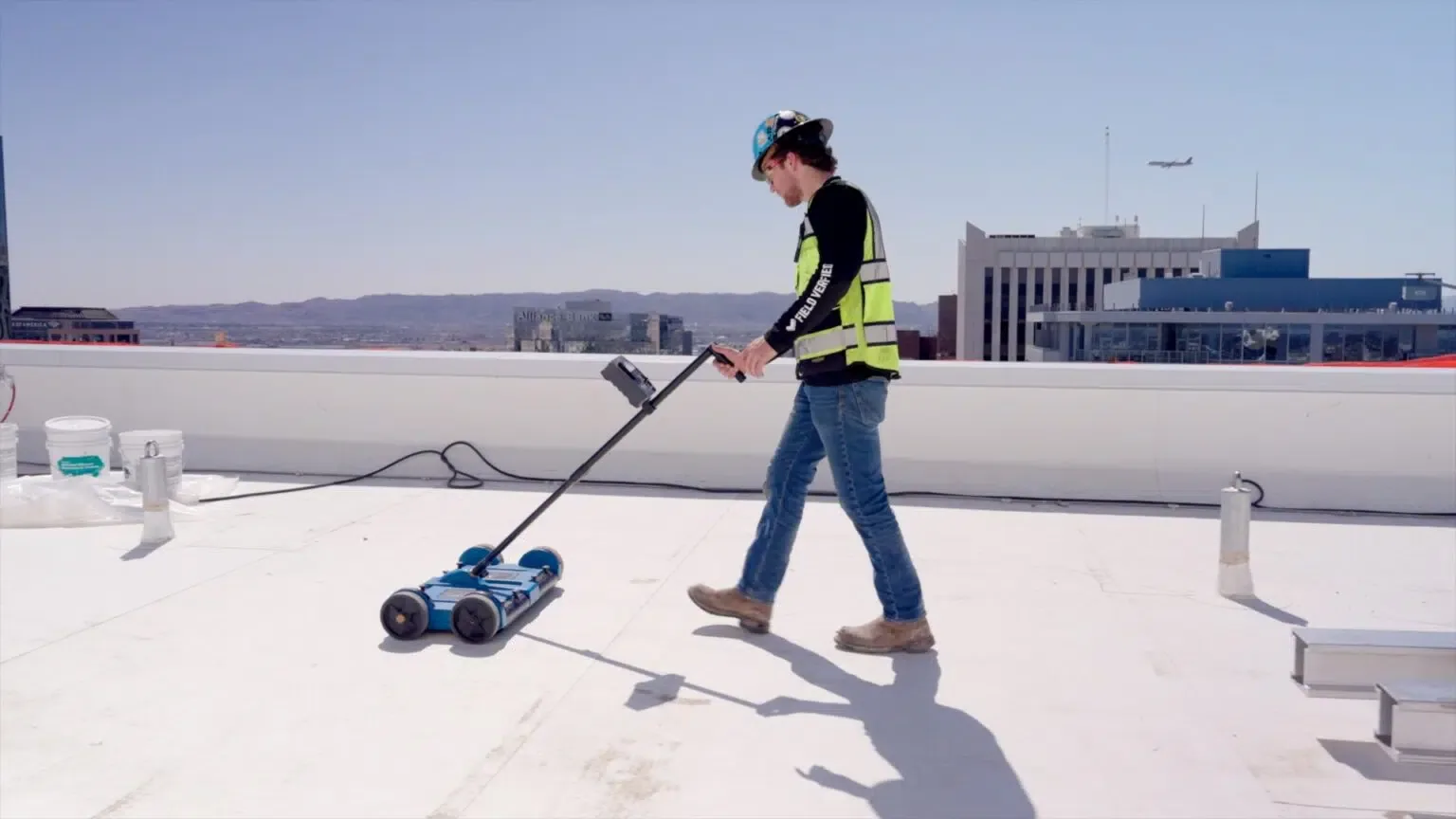
A ceiling mark near a wall can begin at a roof seam, penetration or drain uphill from that room. We trace the likely route through the deck and compare it with visible roof details. Staining can spread as water follows a framing member, so we do not use the interior outline as a removal boundary. A moisture scan can help choose a test location. The opening confirms the membrane, insulation and deck at that point, and the report notes whether other areas remain concealed.
The Merced station's 1991 to 2020 normals include 27.8 nights a year at or below freezing. We inspect the roof surface and the sealant joint at the actual property before choosing a compatible repair. They help describe the broad market's summer exposure, while the assembly and test findings set the repair. If a section contains moisture, we photograph each layer and remove only what the owner approves. A moisture survey and a written condition report keep the scan, test and visible repair boundary distinct.
Keep historic context out of the diagnosis
A historic commercial remnant deserves a roof scope based on present materials, not a guess about the original construction. We identify the installed membrane, metal, deck and prior repairs before selecting a compatible detail. If the substrate is dry and the opening is isolated, localized work may be enough. If several layers are wet, attachment has failed or the deck is damaged, selective removal or replacement may be more suitable. We identify which finding changes the choice instead of treating age or appearance as proof of failure.
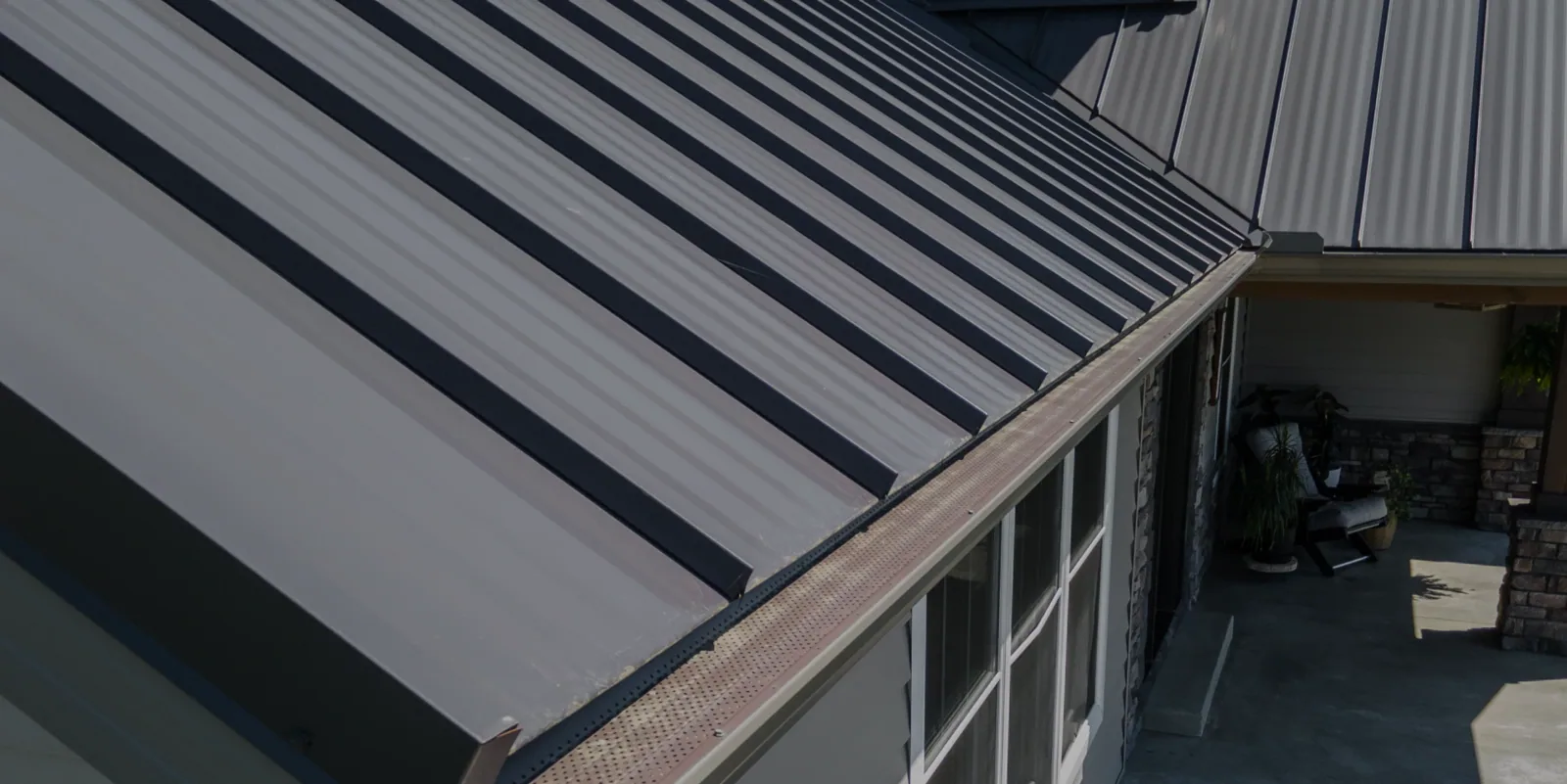
Time and cost depend on the layers removed, the material needed at the transition, access equipment, disposal and any protection required below. If a repair must stop at a fragile adjacent surface, we record the limit and discuss how the edge will be closed. A bounded repair addresses the failed area; replacement planning compares a larger assembly when local work no longer fits. A standing-seam metal review is relevant only if inspection identifies that system.
Plan access before removing material
The property manager confirms how the crew reaches the roof, where material can be staged and which interior areas need protection. We also agree on temporary dry-in if the assembly cannot be rebuilt in one work window. A test cut or repair stays within its approved limits. If the substrate condition requires more removal, work pauses for photographs and a revised decision. This keeps concealed damage from becoming an unreviewed addition to the scope.
A building's current use, operating hours and access controls are provided by its owner. The historical description of Hornitos does not tell us whether a particular property is open, occupied or under renovation. We schedule the work against those site details. If a broader project needs phases, the occupied-building approach can sequence sections while keeping the work area defined. A review of the insulation and cover board identifies what should remain once the affected assembly is open.
Record what was rebuilt
Closeout images show the original wall and roof connection, the layers exposed and the completed flashing or membrane transition. The written scope lists what was removed, the repair materials and the final boundary. It also says if any adjacent area remained inaccessible or untested. Those details matter on a property with prior repairs because a later inspection needs to distinguish the new work from older conditions.
Merced's industrial and downtown uses differ from the small-commercial and agricultural-support direction described for Catheys Valley. Hornitos has a separate history and location. None of those community facts substitute for a roof inspection. For a manager comparing properties, a condition record keeps each building's evidence separate. Share the leak location, roof access and any known repair history. We will examine the wall transition, trace moisture and provide a scope tied to what the opening shows.
Commercial Roofing Questions
Does the town's historic building context tell you what roof is installed?
No. Historic commercial-building remnants do not identify the membrane or condition at a current property. We inspect the layers and prior repairs that are present before specifying materials.
Can a wall crack be the source of a roof leak?
It can be part of the path, but the entry may be at the roof termination, a nearby seam or a penetration. We inspect the connection and compare it with interior evidence before marking a repair area.
Why use a test opening near a wall?
A controlled opening confirms the membrane, insulation and deck where the moisture pattern matters to scope. We photograph the exposed layers and close the cut with compatible materials. The result applies to that test point, not the whole roof.
Do Merced temperature records describe conditions in Hornitos?
They are measurements from the Merced station. We use them as broad market climate context only. The inspection at the property determines whether heat movement, water or a separate condition affected the roof detail.
What if the material beside a flashing cannot be disturbed?
We document the access or surface limit and identify a safe repair boundary. The scope may call for a compatible transition that preserves material outside the approved area. The owner reviews that detail before removal or installation proceeds.
Inspect the wall and roof connection
Send the leak location, interior mark and roof access details. We will inspect the termination, document the layers and return a written repair boundary for review.
Related Roofing Work