A drain that releases slowly after a dry spell can leave a membrane under standing water when rain returns. In El Nido, CA, the first roof decision is whether the outlet is blocked, the surrounding surface has settled or the assembly has a broader drainage problem. We inspect the drain bowl, slope, seams and nearby penetrations before selecting a repair. State Route 59 passes through El Nido, while the community's agricultural settlement followed irrigation development. Irrigation shaped the settlement. A roof walk still has to establish the membrane, drainage paths and penetrations on the building under review.
We work from the observed assembly. A drain and scupper inspection can trace where water slows and what blocks release. If a seam has separated, a commercial leak repair needs to address the opening and any damp insulation below. The written scope identifies the visible cause, repair boundary and next step. A building near Merced may face similar heat exposure, but its drainage and attachment still need their own inspection.
Water at the outlet
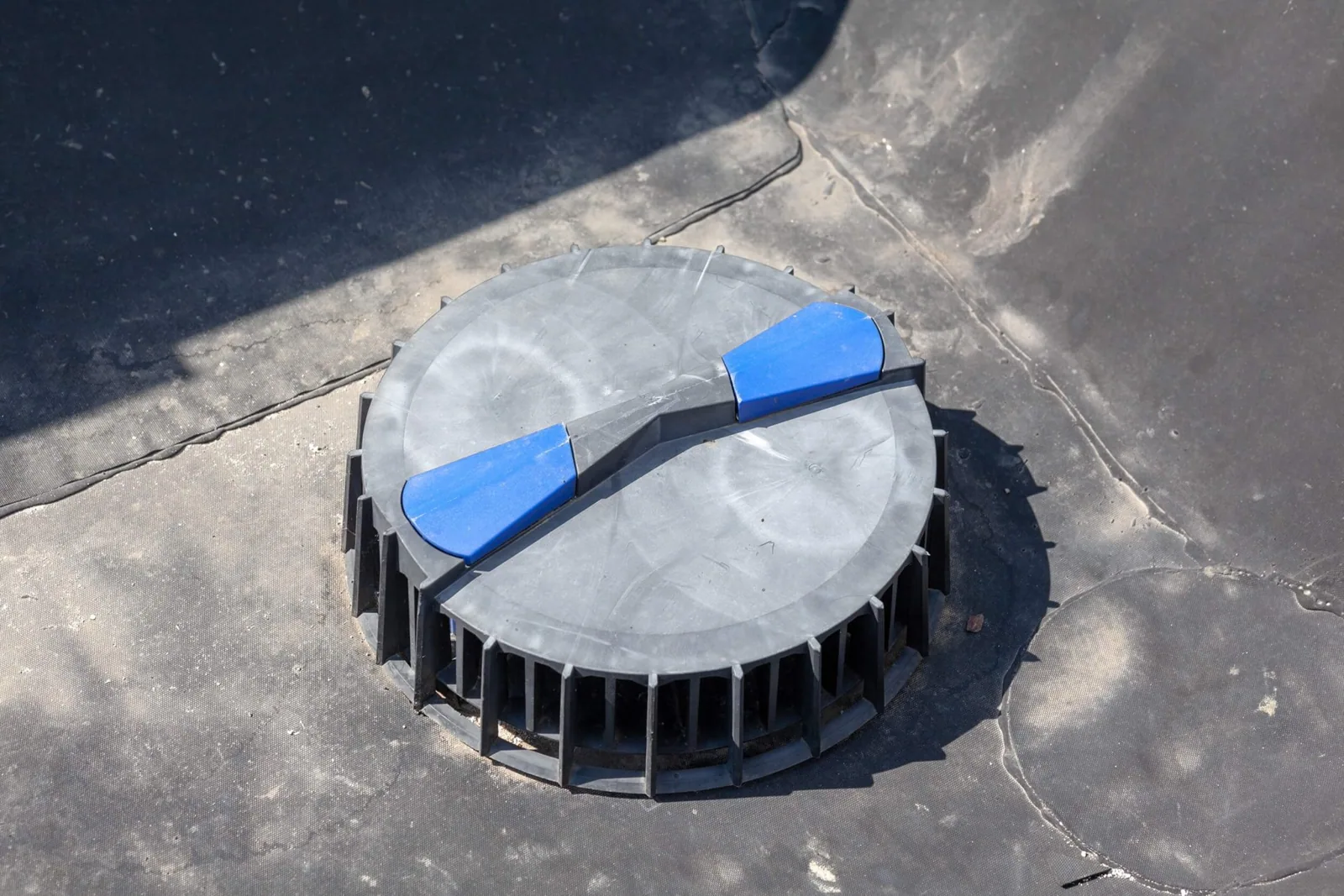
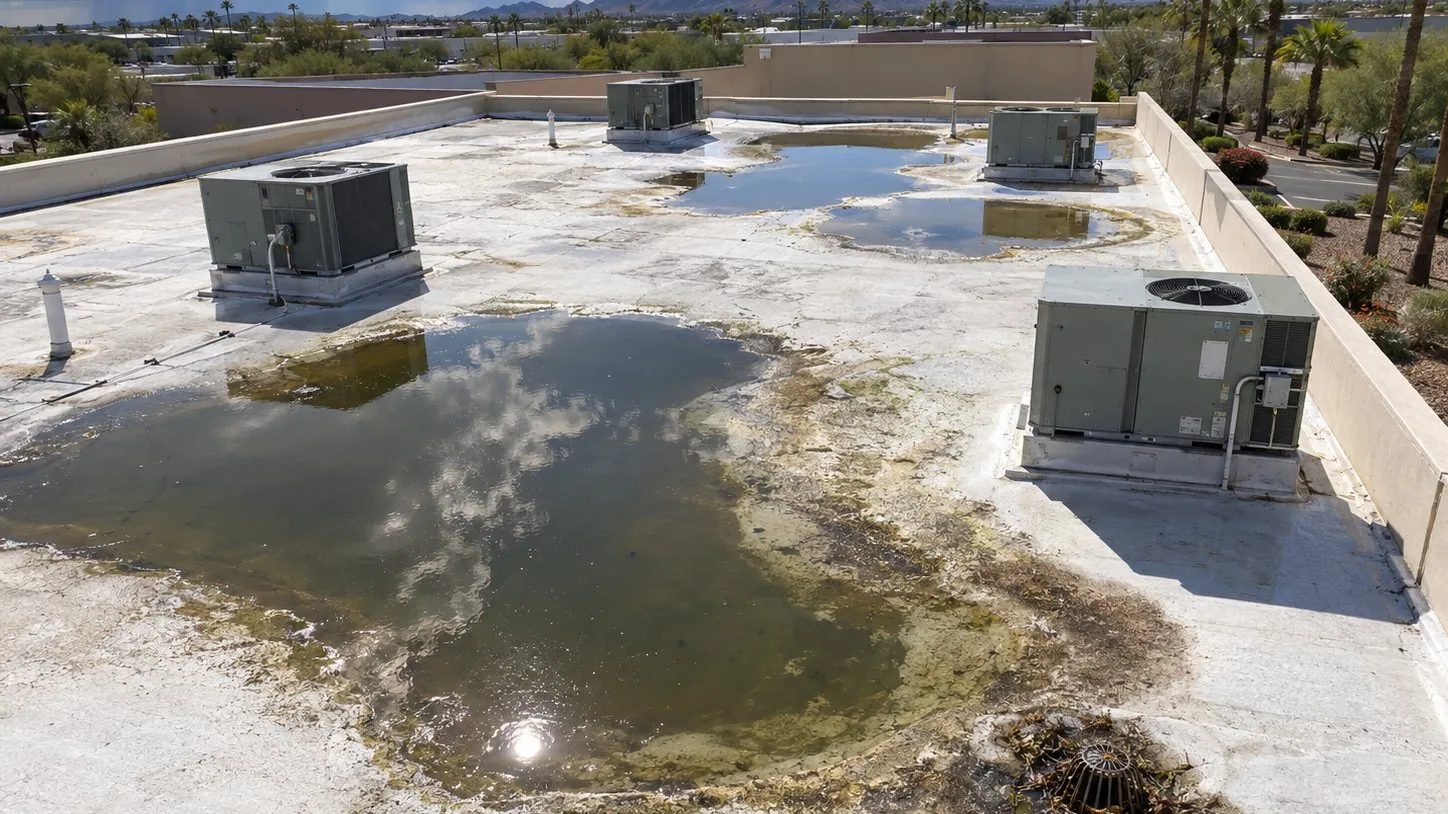
A drain problem can begin with leaves, sediment or a displaced strainer, but a clear bowl does not prove that the surrounding roof is pitched correctly. We check the drain throat, sump, membrane termination and the path that feeds the outlet. A low spot may still hold water after the drain clears. We compare the ponding with seams and penetrations. A softened section or pulled membrane needs more than sealant at the flange.
Water can also enter through a seam uphill from the visible pond. We follow the moisture path from the interior mark, inspect transitions above it and compare the surface with the deck below. A ponding-water assessment documents depth and drainage limits, while a moisture survey can help identify retained water within the assembly. Neither replaces a close check of the drain connection. The report should say what each method confirmed and where an opening is still needed.
Heat at the seam
At Merced, the 1991 to 2020 climate normals put the July daytime high at 96.3 degrees Fahrenheit. At an El Nido property, we inspect the actual seam, attachment, and membrane for heat-related movement. Repeated heating can move sheet metal, membrane and fasteners at different rates. At a drain, the movement can stress a clamping ring or pull a field seam away from a transition. We look for wrinkles, gaps, loose compression and changes in the bond line. The observed defect guides the repair material and the area that needs preparation.
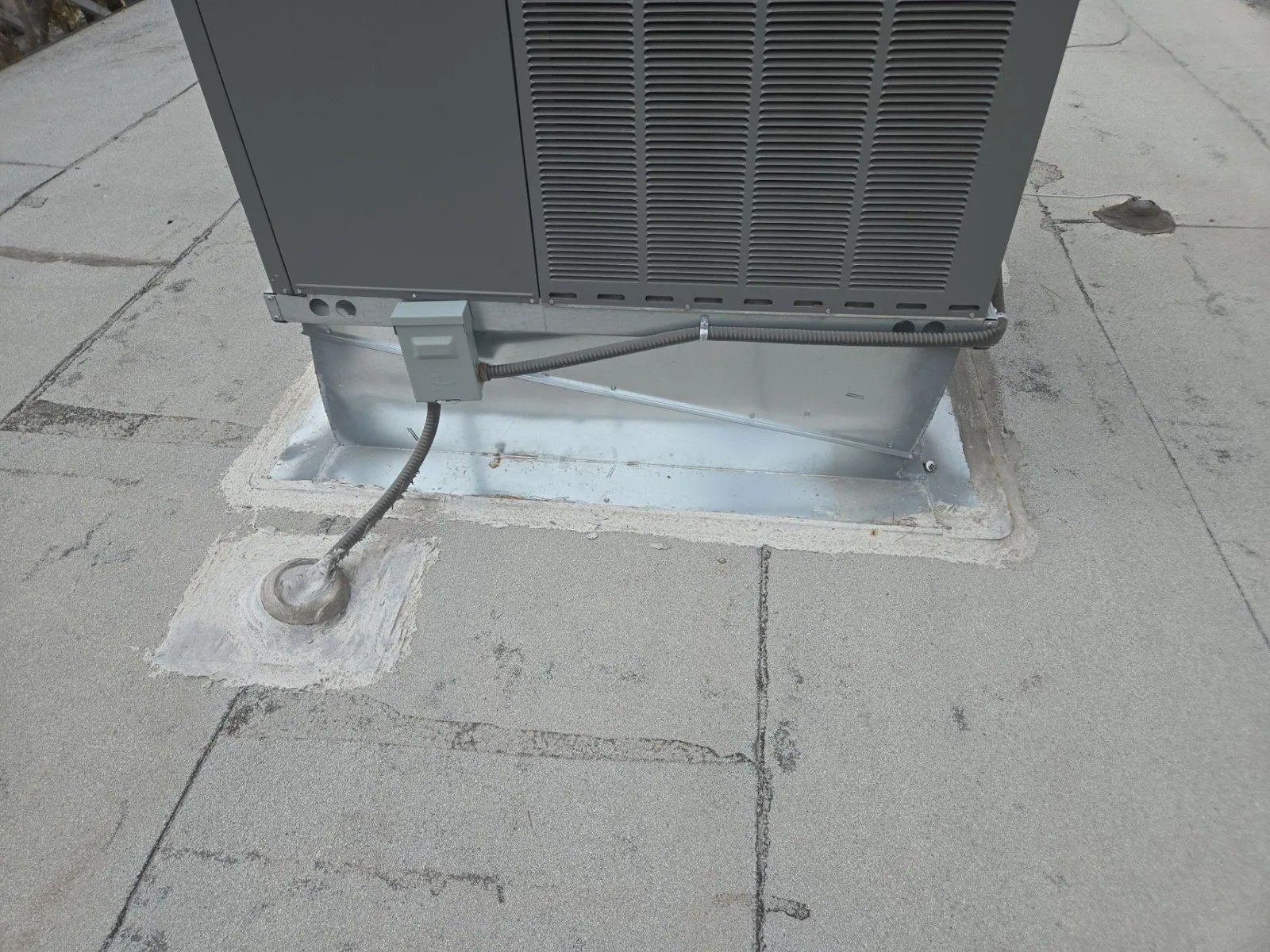
Irrigation development supported El Nido's agricultural settlement. That history helps describe the community, but it does not tell us what equipment, produce or roof system is present at a specific building. We ask how the building is used, what hours it must remain open and where water appears inside. For roof-mounted equipment, curb and support details may matter as much as the drain. A maintenance inspection can record outlets, penetrations and seam conditions for later comparison.
What the first walk establishes
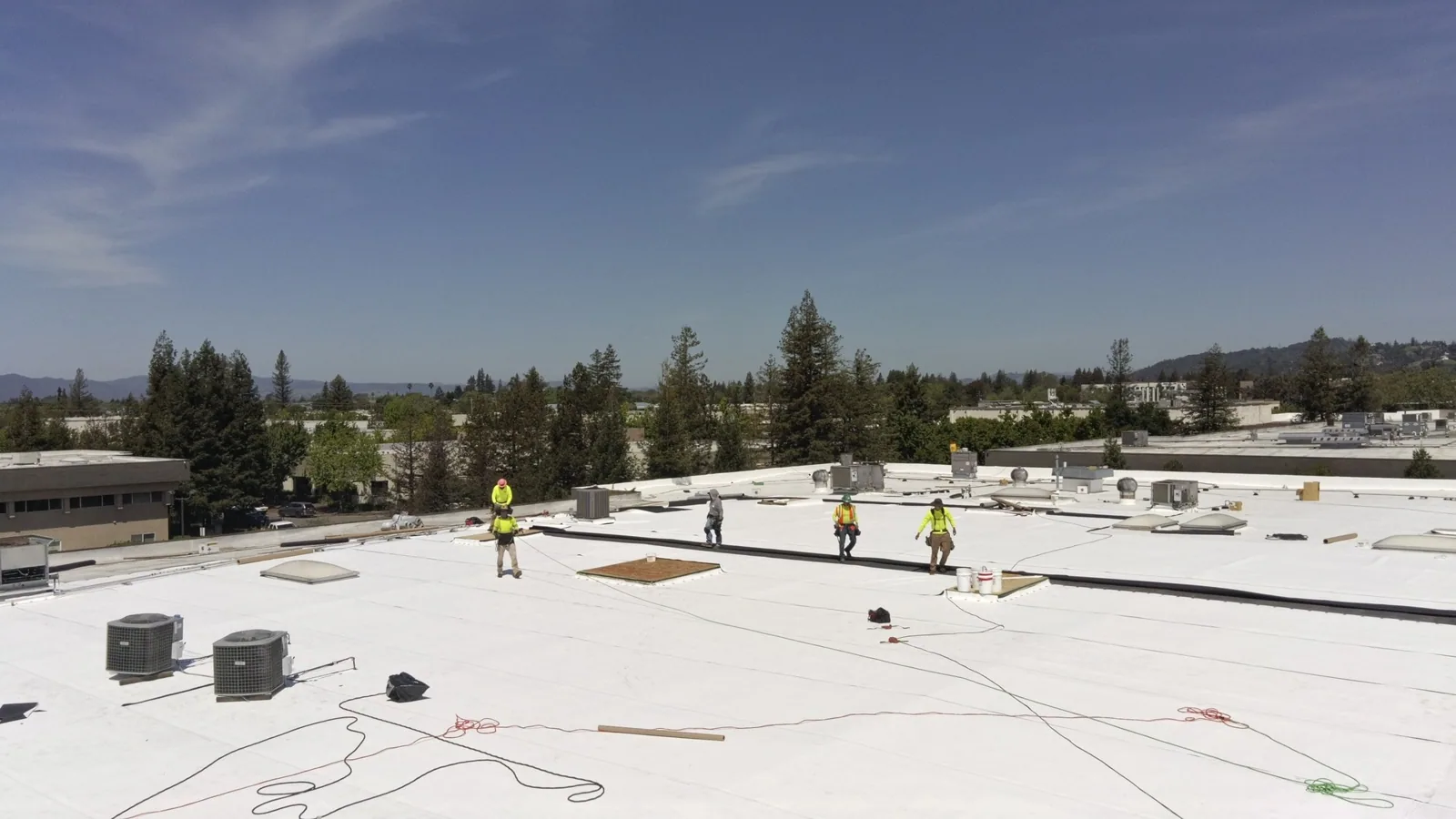
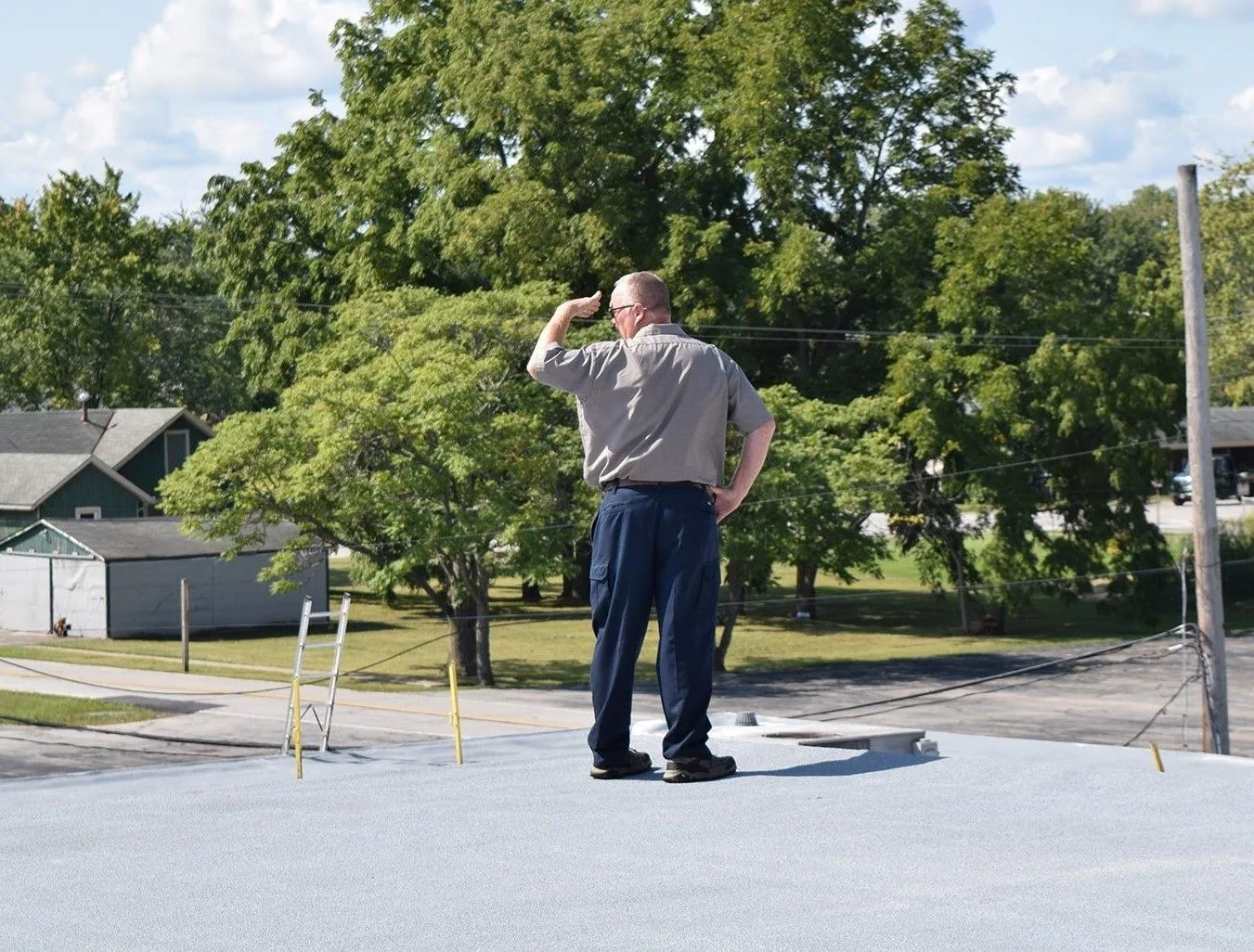
The first walk establishes the roof assembly where it is visible, the current drainage path and the condition of the suspected leak area. We photograph the drain, strainer, sump, seams and nearby flashing. We also look for blocked paths, unsupported membrane and signs of earlier patches. If the roof has several low areas, we note them separately rather than treating all standing water as one defect. A controlled test opening can confirm insulation and deck condition when surface clues do not explain the interior moisture.
The inspection does not infer that an entire roof is wet from one ceiling mark. It identifies accessible conditions and lists what remains hidden. A written roof inspection can include photos, moisture findings and a repair or monitoring recommendation. Where the owner needs a broader record, a condition report organizes the findings by location and urgency. The manager can then separate immediate water control from work that can be scheduled during a planned maintenance window.
A repair that follows the evidence
If the drain connection is intact and only the basket is obstructed, clearing it and checking the outlet may be enough. A failed clamp or torn membrane requires a compatible rebuild at the bowl. A settled deck needs slope correction, a localized cricket or a larger drainage section. We identify the sound area and the condition requiring wider work.
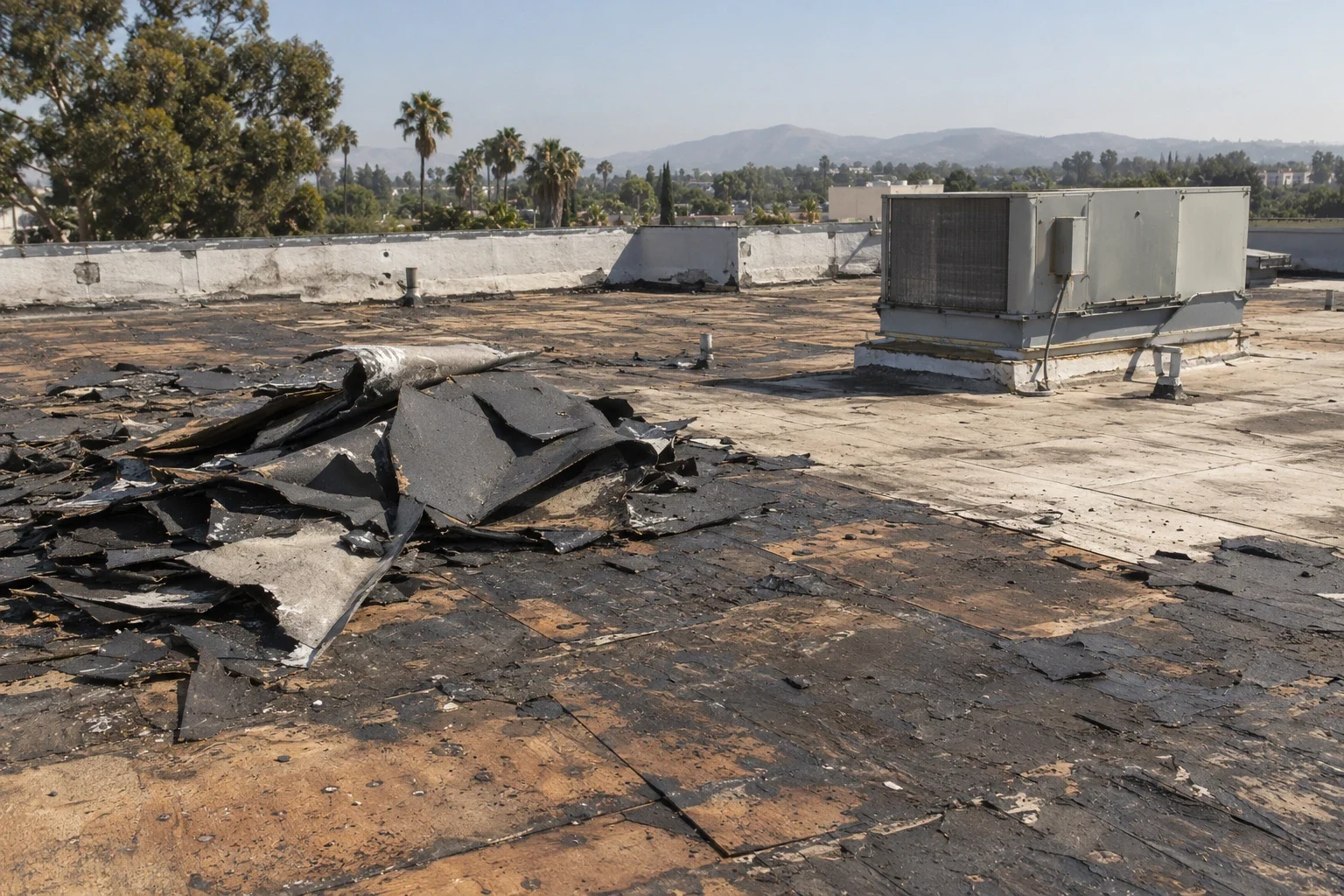
Recovering or replacing the roof becomes a separate decision when wet insulation, open seams or repeated patching span the assembly. A recover evaluation checks whether the existing roof can accept another layer, while a replacement scope begins with removal and substrate findings. Coating only enters the discussion after drainage, adhesion and existing materials are suitable. A Dos Palos roof may need a different assembly response; we do not transfer one property's repair details to another.
Sequence around the building
A drain repair can involve removing a strainer, opening membrane, drying or replacing insulation, resetting a clamp and testing water release. The sequence matters if the area sits above active operations or stored materials. We identify where crews can stage, how the roof will be protected between steps and what activity must pause. If water control is urgent, temporary protection can precede a permanent repair, but its limits and return date should be written down. A manager should be able to see what is complete and what remains.
El Nido's connection to State Route 59 provides local orientation for planning, not a promise about delivery access or drive time. The property manager supplies gate instructions and safe staging areas. We schedule noisy work, lifts and material movement around the building's operating needs. A time-sensitive roof response can stabilize an active leak while the inspection establishes permanent scope. When insurer records are needed, claim documentation can preserve photographs and the scope requested for review.
Record the drainage result
Closeout shows the drain before and after repair, the membrane or metal removed, the layers exposed and the final water path. We note whether compatible materials closed the opening and whether a water test was in scope. The record identifies areas outside the test. Photos help a later visit distinguish new damage from the repaired condition.
Request an inspection when ponding returns, a ceiling mark spreads or a drain detail separates. We trace the outlet and seam, check for retained moisture and set a repair boundary. If the roof is dry, the scope can stay local. Findings beyond the drain may require a wider alternative.
Commercial Roofing Questions
Does standing water always mean the roof needs replacement?
No. We first identify why water remains and whether the drain, slope or membrane connection has failed. A clear outlet with a sound assembly may need maintenance or a local correction. Broad wet insulation or repeated seam failures can support a larger scope. The inspection records the condition before we compare repair and replacement options.
Can a drain be repaired without opening the roof?
Sometimes. A blocked strainer may need cleaning and a drain that remains secure may need no membrane work. A separated clamp, damaged bowl flashing or wet insulation requires a closer opening. We explain the access needed before work begins and photograph the layers if an opening is approved.
Will infrared imaging locate every leak?
No. It can identify temperature patterns that may indicate retained moisture, but a pattern requires confirmation. We compare the scan with the roof surface and use a limited opening when the findings justify it. The report notes the areas scanned, the limits of access and any condition that still needs confirmation.
What happens if the drain is clear but ponding remains?
We measure the affected area and look for a low point, settled insulation or an obstructed path toward another outlet. The fix may involve localized slope work or a larger drainage correction. Raising one strainer will not solve a depression that holds water outside the drain sump.
What should be included in the closeout record?
The record should identify the drain detail, materials removed and installed, exposed layers and final water path. Photos should distinguish the repaired area from roof sections that were not part of the scope. That gives the next maintenance visit a useful baseline without overstating the extent of work.
Inspect the drain and seam
Request a roof inspection of the outlet, nearby seams and any interior moisture. We will document what is visible and define whether the repair stays at the drain or extends farther across the roof.
Related Roofing Work