A leak at a loading edge can put stored goods and daily movement at risk. In Dos Palos, we start with that roof detail, then trace water across seams, penetrations, drains and the interior mark. The city sits in southern Merced County, and its economy has an established agricultural base. That context makes drainage, serviceable access and controlled dry-in useful priorities, but it does not tell us what membrane or deck a property has. We inspect the assembly before choosing a repair, recovery or replacement scope.
The roof above agricultural operations
Stored materials, processing work and vehicle movement create different consequences when water enters. We ask where product, electrical equipment and active work sit below the reported leak. Then we check the roof area above those rooms, including the nearest curb, wall transition and drain. If the stain is offset from the entry, we follow the deck and insulation joints rather than cutting directly over the ceiling mark. Photos record each test area and make the repair limit clear to the person managing the building.
Dos Palos is served by State Route 33, which connects toward Los Banos and Interstate 5. A road connection says nothing about a roof assembly, but it matters when a property needs staged deliveries, access planning or a return visit. We confirm the gate, roof hatch, lift location and hours before work is scheduled. If agricultural activity continues below the repair, we protect the route under the opening and keep tools and removed material out of the operating area. A phased roofing plan can separate roof sections where interior use requires a controlled sequence.
What the first roof walk must establish
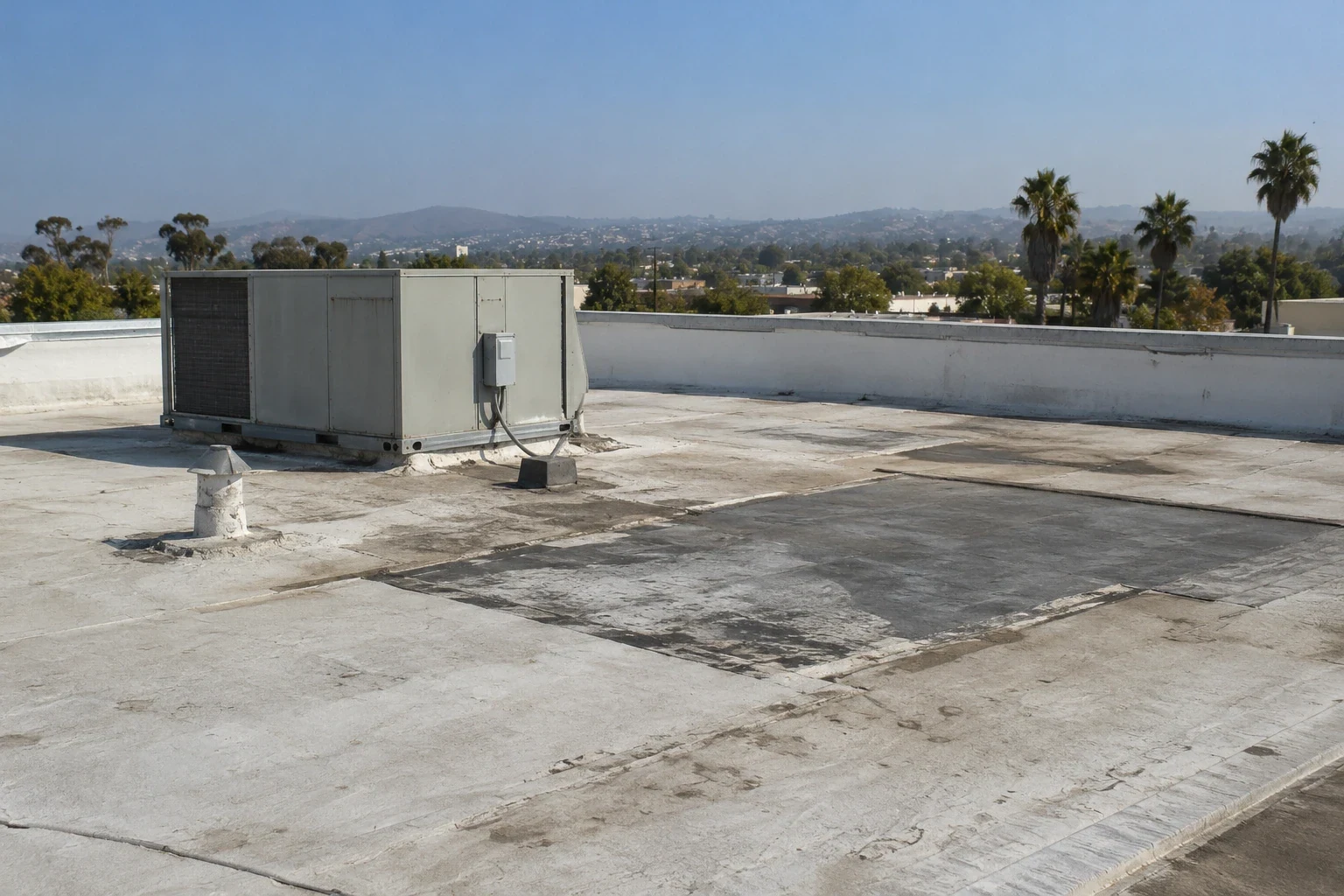
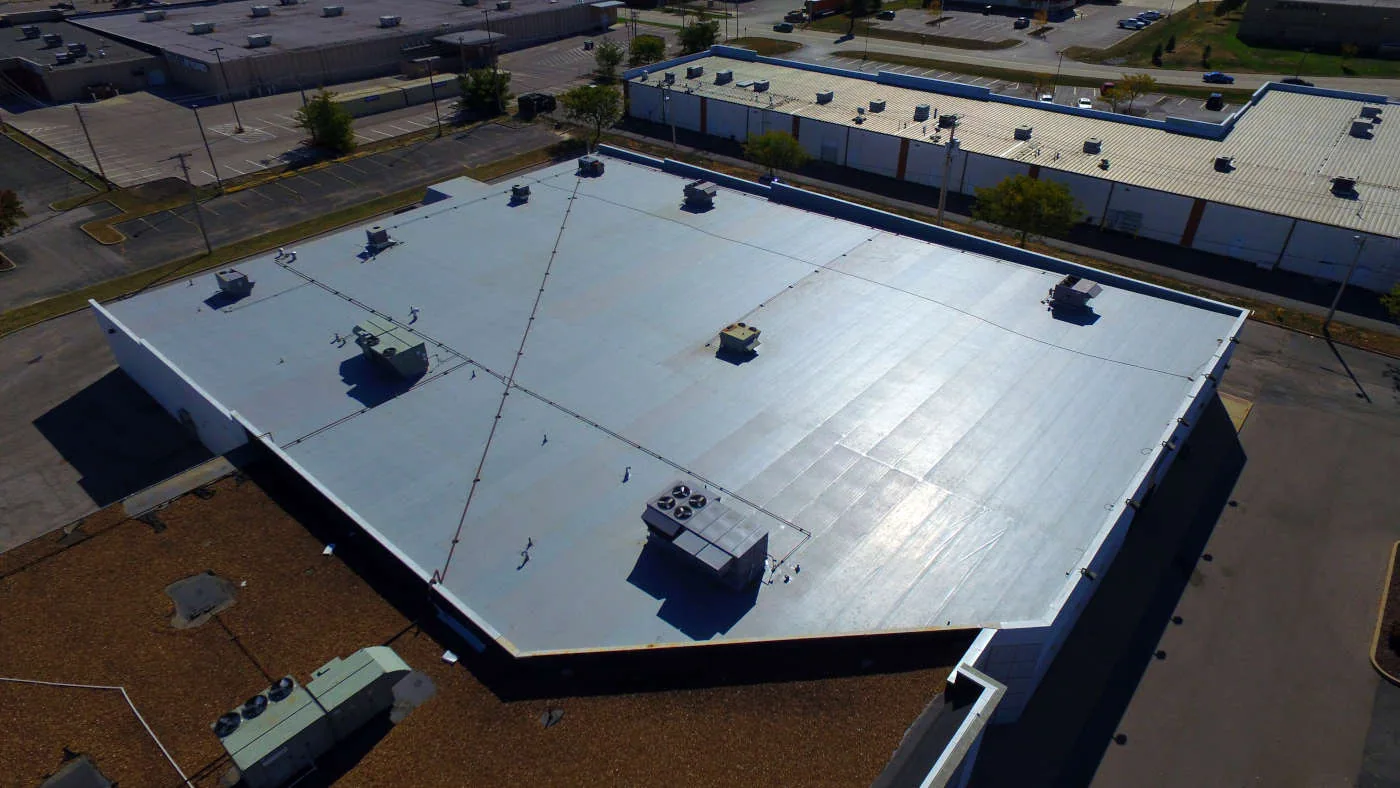
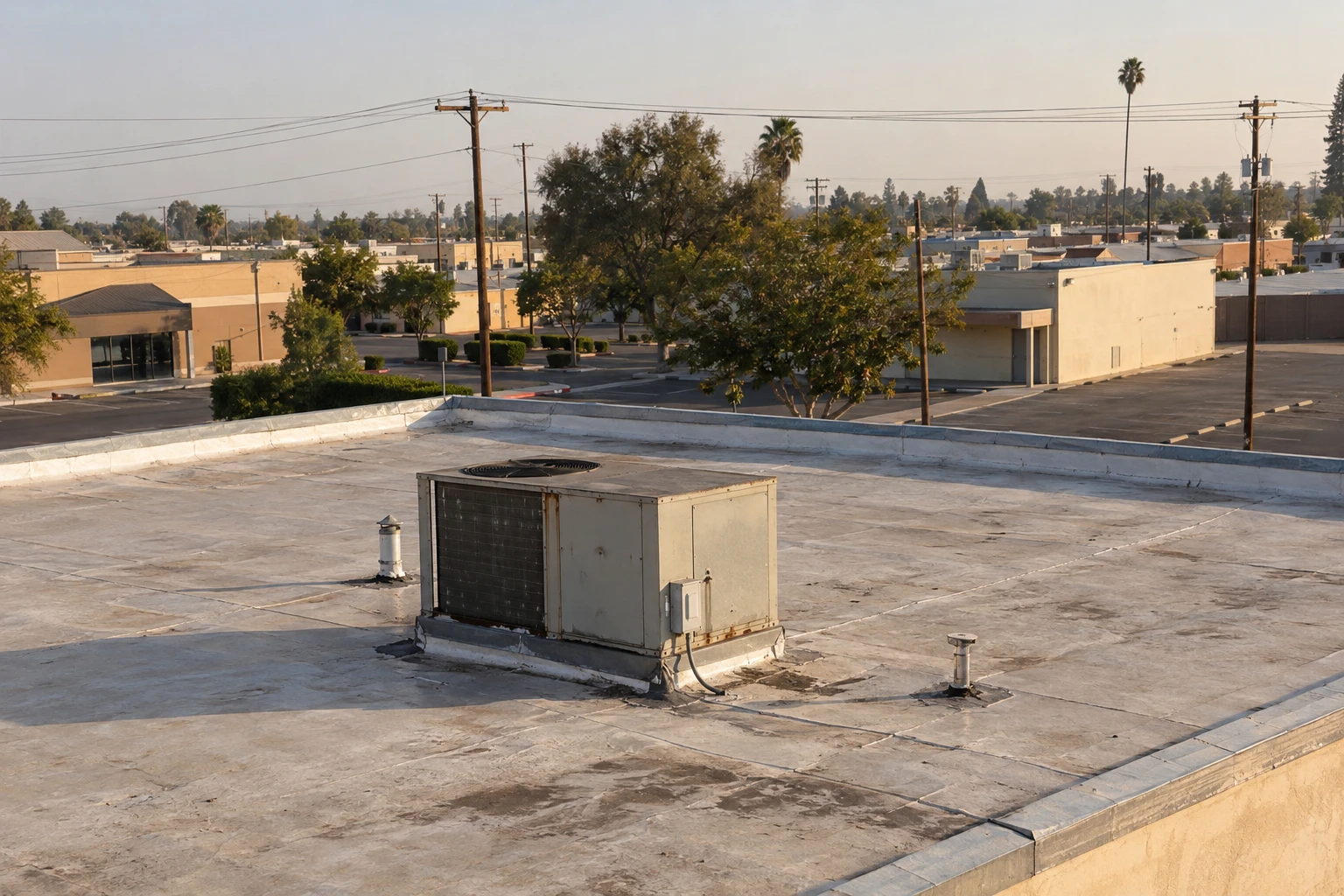
We identify membrane, attachment, insulation, deck and edge construction before proposing a method. At seams, we look for open laps, lifted patches and loose fasteners. At penetrations, we check flashing height, bond and mechanical security where the system requires it. At drains, we inspect the bowl, strainer, sump and surrounding slope. A clear strainer cannot correct a depressed deck or a separated drain connection.
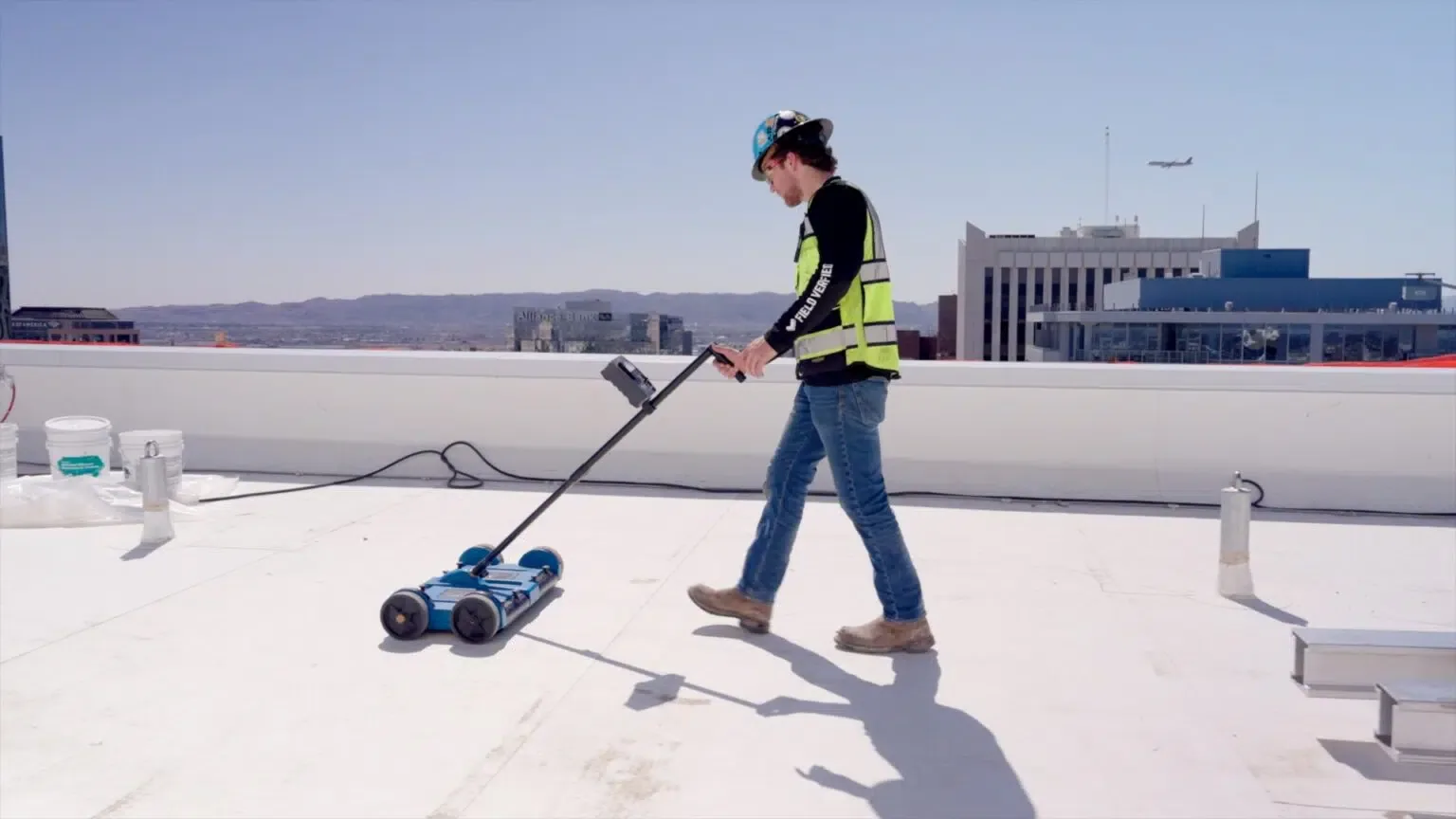
Merced station normals put the July high at 96.3 degrees for the 1991-2020 period. A field check of the Dos Palos roof confirms the membrane, substrate, and detail condition before we set a repair boundary. Heat exposure can make movement and brittle sealant worth checking at transitions. We compare a suspected seam defect with adjacent membrane, probe where the system allows it and photograph the result. For uncertain wet areas, infrared moisture mapping can guide test locations; an opening confirms the layers at that point. Our inspection separates observed conditions from assumptions and gives the owner a repair boundary to review.
Patch, recover or replace
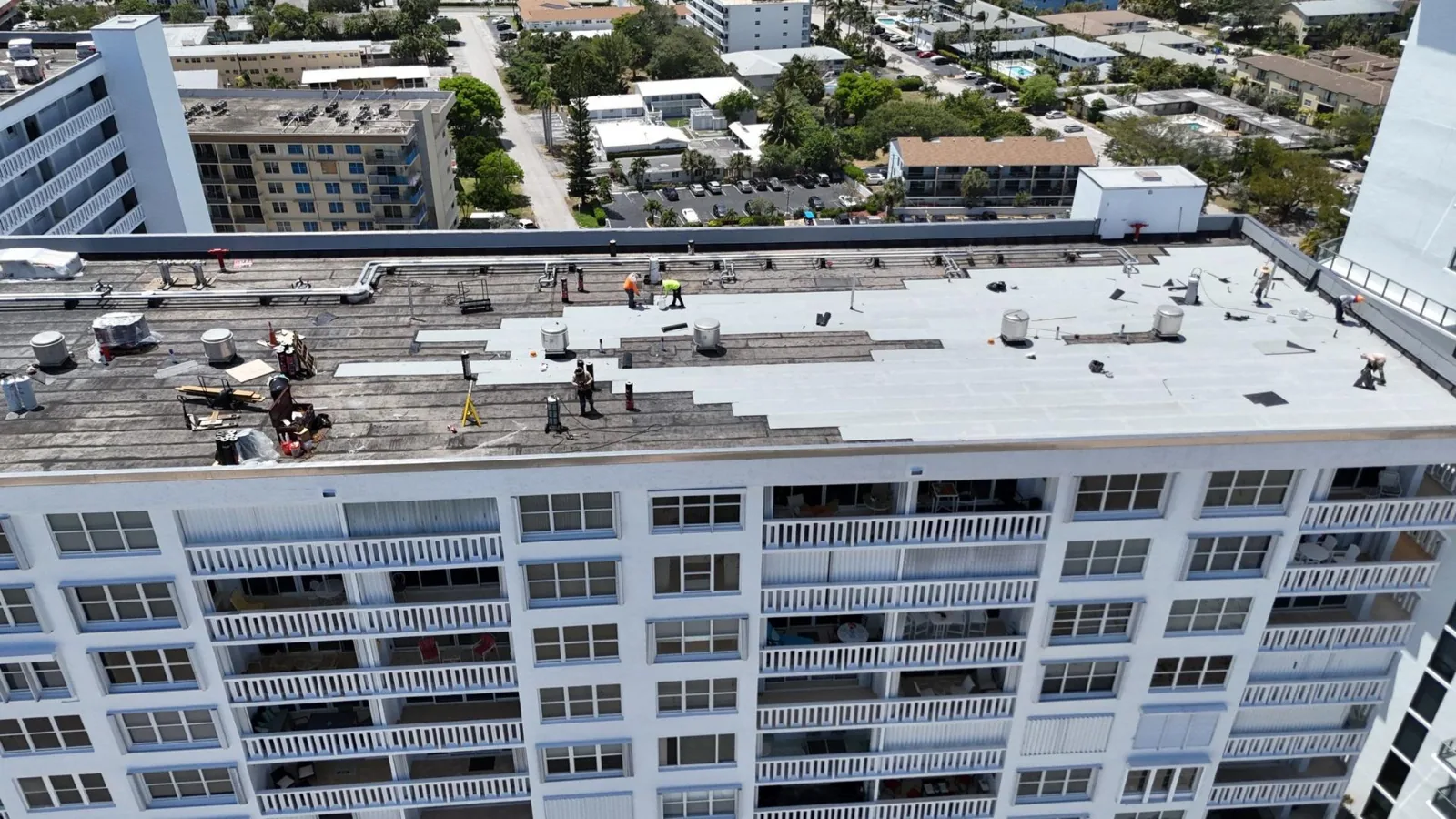
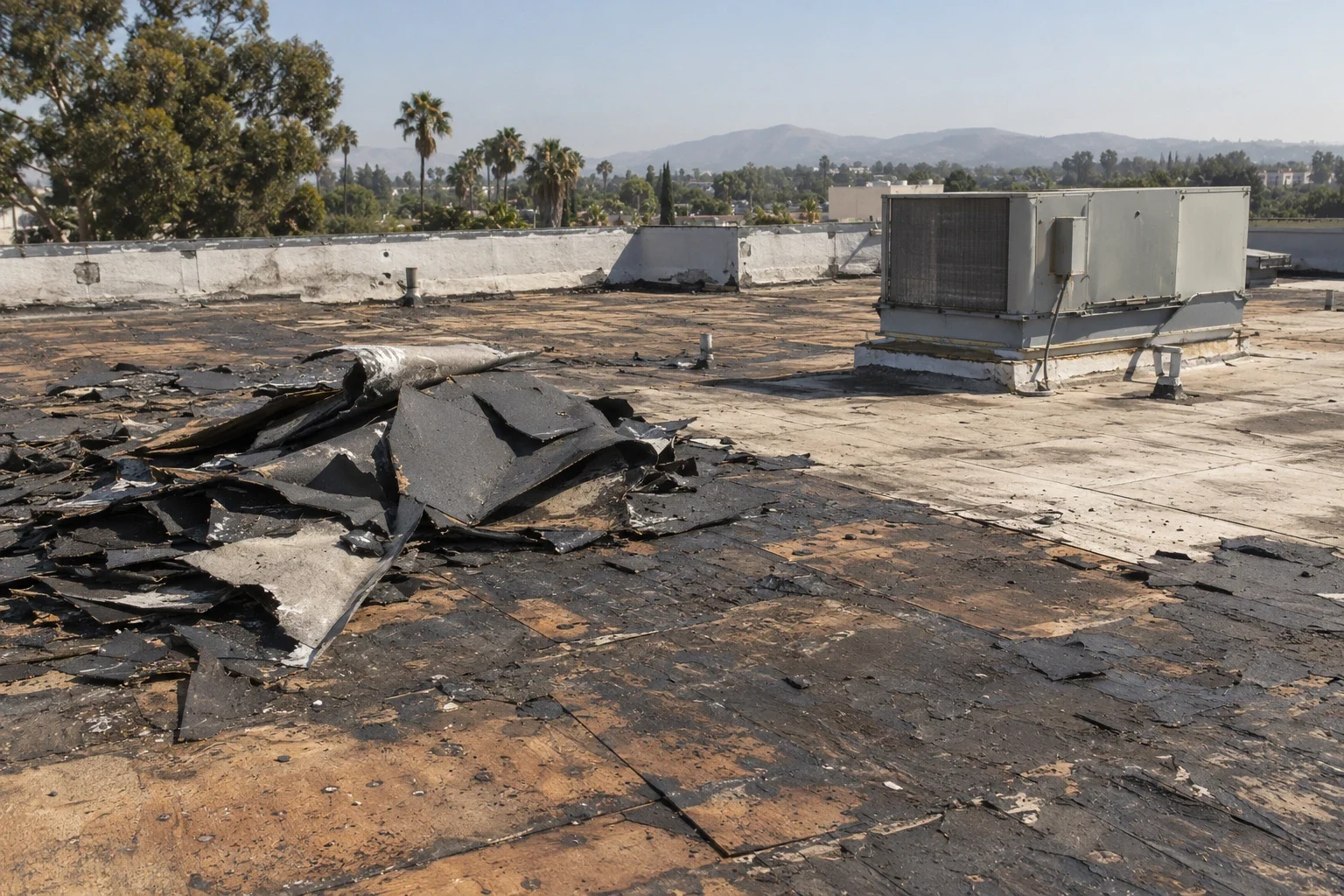
A localized repair fits when the surrounding membrane remains bonded, the substrate is dry and the defect can be tied into sound material. We remove loose material, prepare the surface and rebuild the detail with compatible products. If moisture extends under the field, covering it can trap a problem. We mark the test area, remove wet layers where authorized and document deck condition before rebuilding. A broad pattern of failed seams, saturated insulation or weak attachment can shift the decision toward recovery or tear-off. The report states which condition changed the recommendation.
Cost follows the work that the assembly requires. Access, roof height, debris removal, insulation depth, deck repair, drainage work and the number of penetrations can all change labor and material needs. Timing changes when the building cannot pause, when the roof must be divided into smaller sections or when temporary protection needs to remain overnight. We can compare a bounded repair with a replacement scope after the inspection establishes the layers and moisture limits. A coating is an option only when preparation, adhesion, drainage and substrate condition support it, not as a cover for wet insulation.
Heat, seasonal rain and recurring checks
Merced station normals show 11.80 inches of annual precipitation, with most normal rain falling in January and February and July and August rounding to no measurable precipitation. Merced station normals show the market-area climate pattern; the event date and exposed roof layers guide the inspection. Before the wetter part of the year, a roof check can find debris at drains, open flashing and temporary patches that need permanent work. During dry months, heat exposure can make surface changes easier to inspect, but a visual review still cannot establish whether insulation is wet. We pair visible conditions with moisture testing when the decision depends on what lies below.
Dos Palos and neighboring Los Banos are separate communities in southern Merced County. Their connection does not make building conditions interchangeable. We document each property on its roof plan, list checked drains and transitions, and note areas blocked by equipment or operations. A maintenance visit can track a repair edge, clear accessible drains and record new damage before a detail becomes an interior interruption. If a leak opens outside normal hours, our crews can stabilize water entry and scope permanent work once the roof is safe to access.
A repair scope that stays inspectable
The work order should name the roof section, the condition found, the layers included and the boundary where removal stops. We photograph the defect before opening it, the exposed assembly during work and the finished detail. If the deck is sound and the repair closes the path, the record can support a return-to-service decision. If concealed damage continues beyond the approved cut, work pauses for owner review. The revised scope shows the added area and the reason for extending it. No change to the roof is hidden inside a general line item.
For a larger property, the sequence can also identify delivery paths, protected interior zones and the work window around operations. A condition report gives facilities staff a dated baseline for capital planning. When a building has several roof sections, roof asset records can keep repairs, inspection findings and future replacement decisions tied to the correct area. We also serve nearby South Dos Palos or Los Banos, while keeping each property's findings separate.
Commercial Roofing Questions
A leak returns after a patch. What should the next visit include?
We revisit the repaired detail and inspect the surrounding seams, penetrations, drainage path and interior area. Water can travel before it reaches a ceiling, and a patch can also fail at its bond or edge. Photos of the original repair help compare what changed. If moisture is suspected beneath the membrane, we select a test area rather than coating over the surface.
Can the crew keep product and work areas protected during a repair?
Yes, we plan the opening and staging around the rooms below it. The scope identifies interior protection, access routes and material movement. If an opening reaches wet insulation or damaged deck, we secure the area and review the added work with the owner before extending the removal boundary.
What makes a coating a poor fit for an existing roof?
Wet insulation, weak attachment, open seams or failed drainage can make a coating the wrong repair. We inspect the substrate and prepare a test area when adhesion needs confirmation. The recommendation follows what the roof can support. If moisture is trapped, we compare selective removal, recovery and replacement rather than hiding the condition beneath a new surface.
How do you decide whether to repair only one roof section?
We map the affected area and check the adjacent field, shared drains and transitions. A bounded repair can work when surrounding materials remain secure and dry. If testing finds a wider moisture pattern or failure at connected details, the scope records those limits and compares the next practical option. The owner receives photographs and a clear description of work included.
What information helps schedule a roof inspection in Dos Palos?
Send the building use, leak timing, known roof material, interior location and access limits. Mention active storage, production or vehicle routes below the area so we can plan protection and staging. We confirm roof access before the walk, then inspect the reported detail and the surrounding assembly. The written findings separate urgent stabilization from planned repair work.
Request a Dos Palos roof inspection
Share the leak location, building use, roof access limits and any interior protection needs. We will inspect the assembly, photograph the condition and return a repair boundary for review.
Related Roofing Work