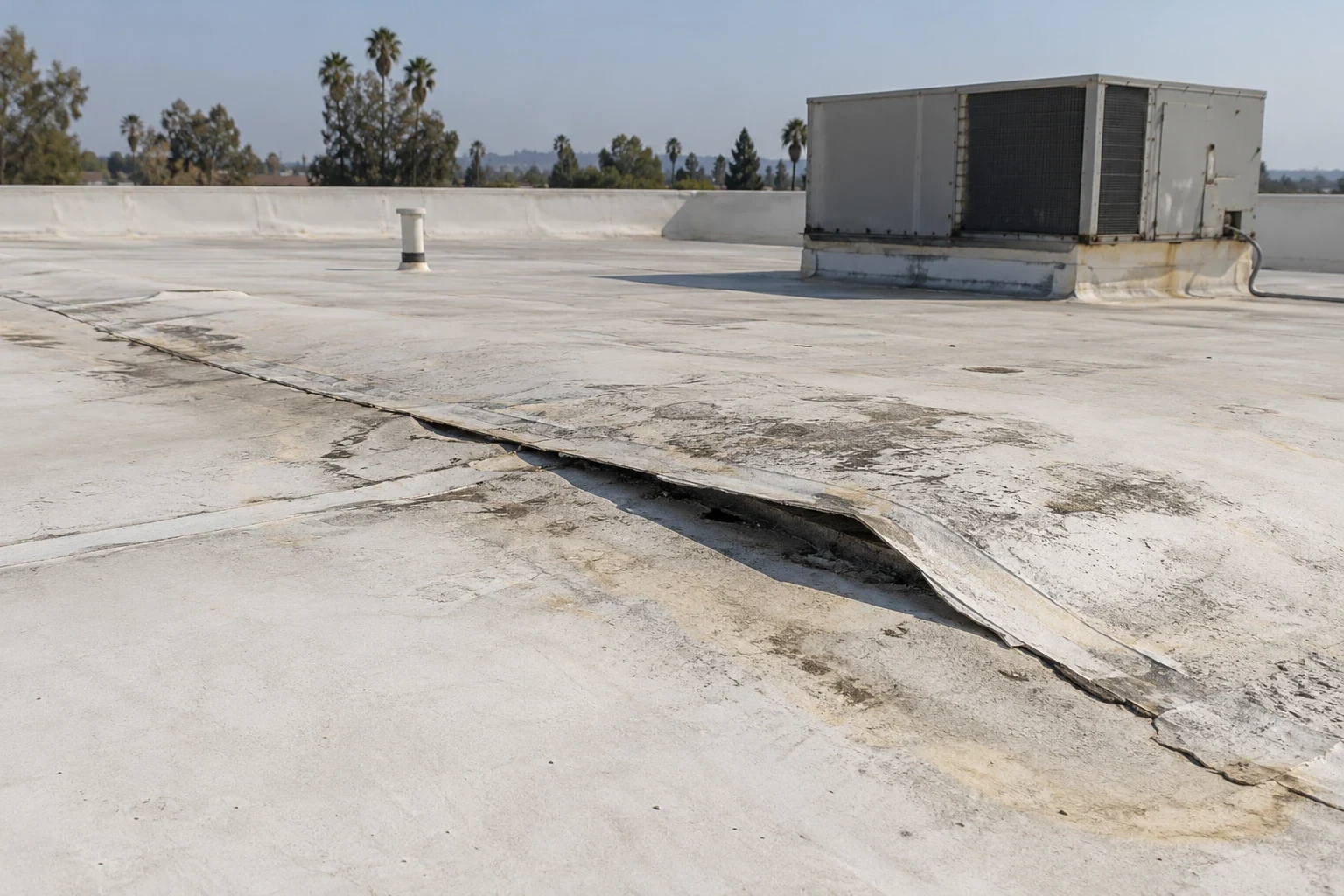
A surface split at a field seam leaves the repair question open until the bond line and layers below it are checked. In Ballico, CA, we inspect the split, its direction and the distance to drains, curbs and roof edges before choosing a patch. Ballico is an unincorporated community in northern Merced County, northwest of Atwater. Ballico is a rural center in northern Merced County, a location that helps orient service from Atwater and Merced. At the property, we identify the installed membrane or metal system before setting the repair. We confirm the membrane, inspect the seam and look for moisture below the visible break. A commercial roof inspection can record the exposed layers and any condition that limits repair. If the surface remains sound outside the split, a seam repair may stay local. If water has spread below it, the written scope must include that area instead of closing only the visible opening.
Read the seam before patching
A seam can separate because the weld, adhesive or field attachment has lost continuity. We look for an open lap, a fishmouth, a wrinkle, a brittle edge or a repair that has lifted. The material and installation method determine how the seam can be rebuilt. A patch placed over dust, a loose edge or a wet substrate may not hold. We prepare the surface, remove unsound material and tie the repair into stable membrane. The scope names how far that tie-in extends.
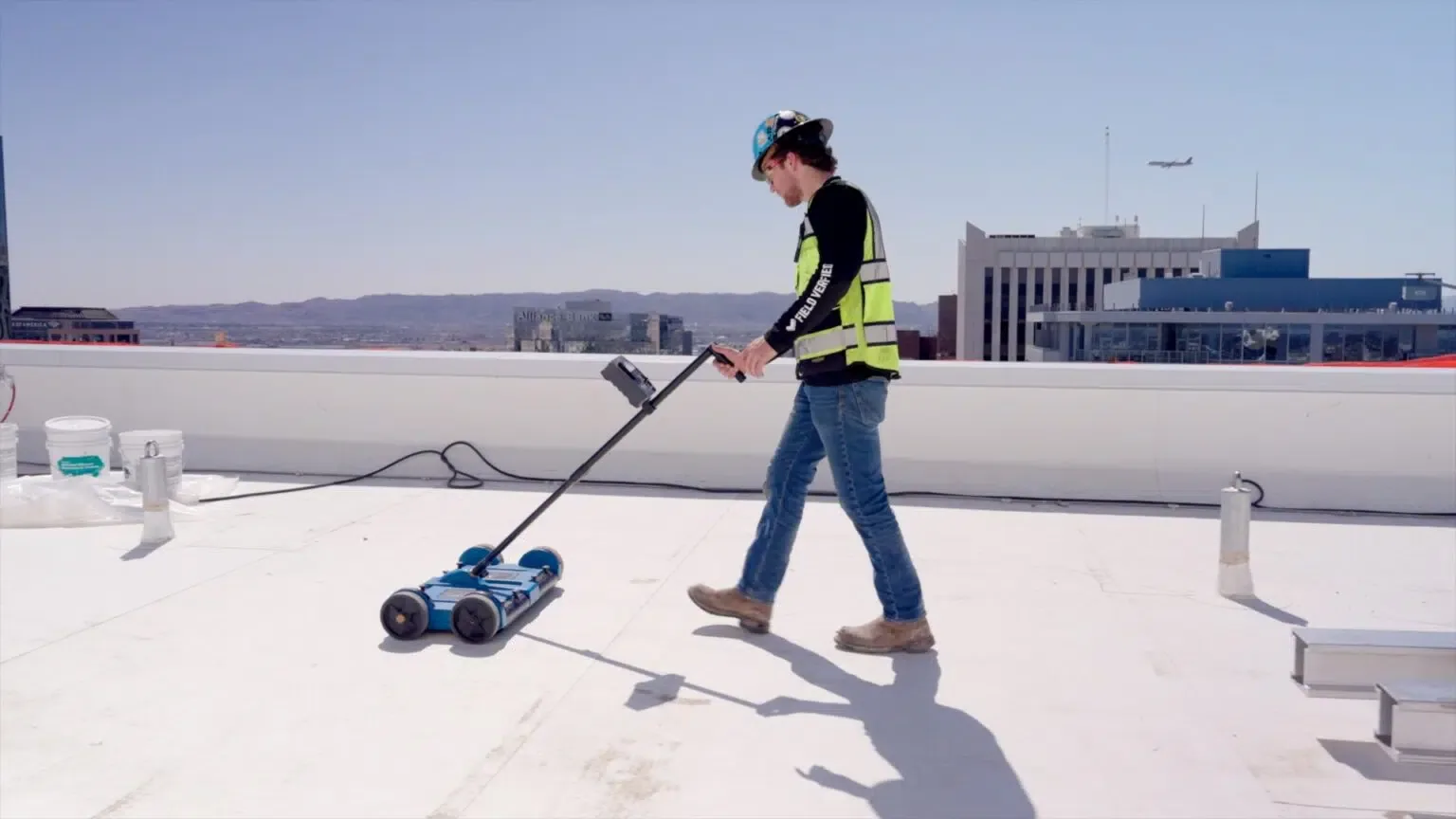
Ballico lies north of the Santa Fe railroad's Merced River crossing, a local geography that helps orient service from Atwater and Merced. At the property, we check drains, transitions and any equipment opening near the split. A perimeter and metal inspection can identify an adjoining edge condition, while a moisture survey may help map retained water beyond the surface defect.
Follow the moisture path
Water entering at a seam can travel beneath the membrane before it reaches the ceiling. We compare the interior mark with the split, nearby deck joints and the direction of drainage. A stain located away from the seam is a clue, not proof of the entry point. The inspection records how far water may have moved and where the assembly remains concealed. If the evidence is unclear, a small test opening can show whether insulation is dry, compressed or retaining moisture.
Heat movement matters at a bonded seam in this market. Merced station normals show 99.7 days per year at Merced reaching at least 90 degrees Fahrenheit. At a Ballico roof edge, we check for lifted laps and fasteners that have begun to back out. We inspect for a stretched lap, a released bond line or a wrinkle that returns after the membrane cools. A heat and UV condition review can separate surface wear from a seam that has opened through its attachment.
Set the repair boundary
A local repair fits when the seam can be reopened and rebuilt on a dry, stable surface. If damp insulation extends past the visible split, we mark the removal area and restore the layers before closing the roof. Several separated laps, a degraded membrane or failed attachment across a broad section may point toward recover or replacement. The manager should see the findings behind each option. We do not turn one open seam into a claim that the entire roof has reached the same condition.
A leak repair can stop water at the opening, while a recover evaluation checks whether the existing roof can accept a new layer. Replacement becomes relevant if the substrate or membrane cannot support a reliable localized repair. A coating may be considered only after adhesion and drainage qualify. The report separates immediate water control from larger capital work, giving the owner a clear way to sequence decisions.
Plan the roof access
A seam repair may require a dry work window, surface preparation and a cure period. We confirm roof access, where materials can be staged and whether equipment or operations below need protection. If the opening must wait for dry weather, temporary protection needs a defined inspection interval and a return plan. The written scope also identifies cleanup and any areas excluded from the repair. That is useful when more than one manager or contractor will review the work.
Route geography and property access are different questions. Ballico's position northwest of Atwater does not tell us which gate a crew should use or whether a lift can reach the roof. The site manager provides those instructions. We coordinate the work zone with occupants and record the seam before and after repair. For a roof close to Atwater or Cressey, the same inspection steps apply, but each assembly receives its own findings and scope.We also confirm where tools and removed membrane can be staged without blocking the owner's normal route.
Photograph the completed lap
Closeout photographs should show the original split, surface preparation, any test opening and the completed lap. We identify the material installed and note whether the substrate was dry at closure. If water testing was included, the record describes the area and method. It should not imply that concealed seams or distant roof sections were tested. A clear repair boundary lets the next inspection check whether the same lap remains stable or a separate issue has developed.
When a leak returns, compare the date, weather and interior location with the repair record. A different stain may point to another moisture path. A repeated mark at the same seam calls for a close check of the bond line and the tie-in. The closeout record can retain photos and note unresolved questions. Where an assembly layer remains concealed, we state that limit and identify the next check rather than treating a surface photo as proof of conditions beyond the repair. Request an inspection while the split and adjacent membrane are accessible, before another layer obscures what needs attention.
Commercial Roofing Questions
Can a split seam be patched from above?
A patch can work when the seam edge is stable, the surface is prepared and the substrate is dry. We check the lap and nearby attachment before choosing that repair. A loose edge or wet insulation needs additional work. The written scope identifies the materials and tie-in area.
How do you know if water reached the insulation?
We compare interior evidence with the roof surface and may use a moisture survey or a controlled opening. The method depends on what can be accessed and what the first inspection shows. The report records the area examined and does not extend a finding to concealed sections that were not checked.
Does a seam leak require replacing the whole roof?
Not automatically. We inspect nearby seams, attachment, substrate and moisture extent. A stable assembly can support a local repair. Repeated failures or wet layers across a larger area may support a recover or replacement option. The findings determine the scope.
How long must the repair area stay clear?
The surface preparation and selected materials determine the required access window. We state cure and protection needs in the work sequence. The manager can coordinate equipment and pedestrian activity below while the seam is being rebuilt.
What evidence should the closeout include?
Keep the before condition, opened layers, surface preparation and finished lap in the record. Note the material installed and any area outside the scope. Those details help a future visit distinguish a returning seam failure from a separate roof issue.
Inspect the split seam
Request an inspection of the open lap, adjoining membrane and any moisture below it. We will record the exposed layers and set a repair boundary for the roof.
Related Roofing Work