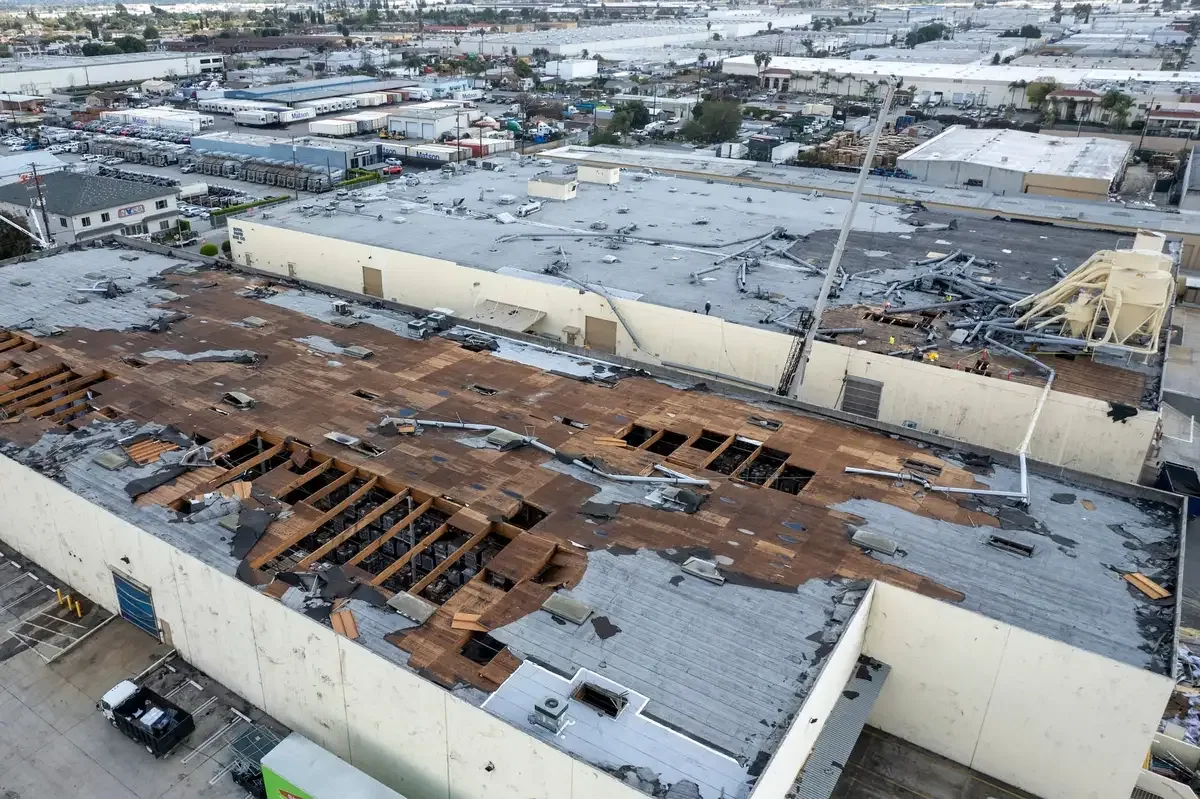
A newly displaced coping piece changes the roof examination after a storm. At a commercial property in Merced, CA, we inspect the exposed connection, adjoining membrane and supporting attachment. Visible displacement may have opened a water route or left unstable material above occupied ground space. The immediate response addresses that exposure. The permanent repair follows examination of the damaged construction.
We compare reported weather timing with roof observations without assigning every worn detail to the event. Downtown Merced contains professional offices and government uses. The industrial parks near Highway 99 include manufacturing and distribution activity. Roof damage above either setting needs a scope tied to the actual building use, safe access and the layers affected at the roof.
Loose materials and reachable roof zones
A loose panel or hanging edge piece can make the ground below unsafe. We coordinate with the property team to identify affected areas before roof work proceeds. The reachable repair zone depends on current weather, footing and supporting construction. A damaged detail should not be approached simply because it is visible. We explain which work can proceed and which condition needs another safety response first.
Standing water can conceal surface damage and complicate access. We examine available routes and identify any outlet condition that contributes to the immediate exposure. Emergency stabilization may provide temporary protection where appropriate. Its scope needs to identify the opening addressed and the reconstruction still required. Current conditions can limit how closely an affected detail can be examined during the first response.
Interior symptoms help identify priority areas. Water above sensitive equipment, stock or public space may require action by the building team alongside the roof work. We ask where exposure is occurring and what operation lies beneath it. That information directs the examination without establishing the entry point in advance. We inspect the roof connections related to the affected zone.
Displacement, impact and exposed connections
A moved edge component needs an attachment review. Fasteners, supporting substrate and the remaining edge can each have damage. We examine the connection beyond the visibly displaced piece. Edge and coping reconstruction may involve more than replacing the exposed cover. The finished detail needs a suitable connection to the roof and supporting construction.
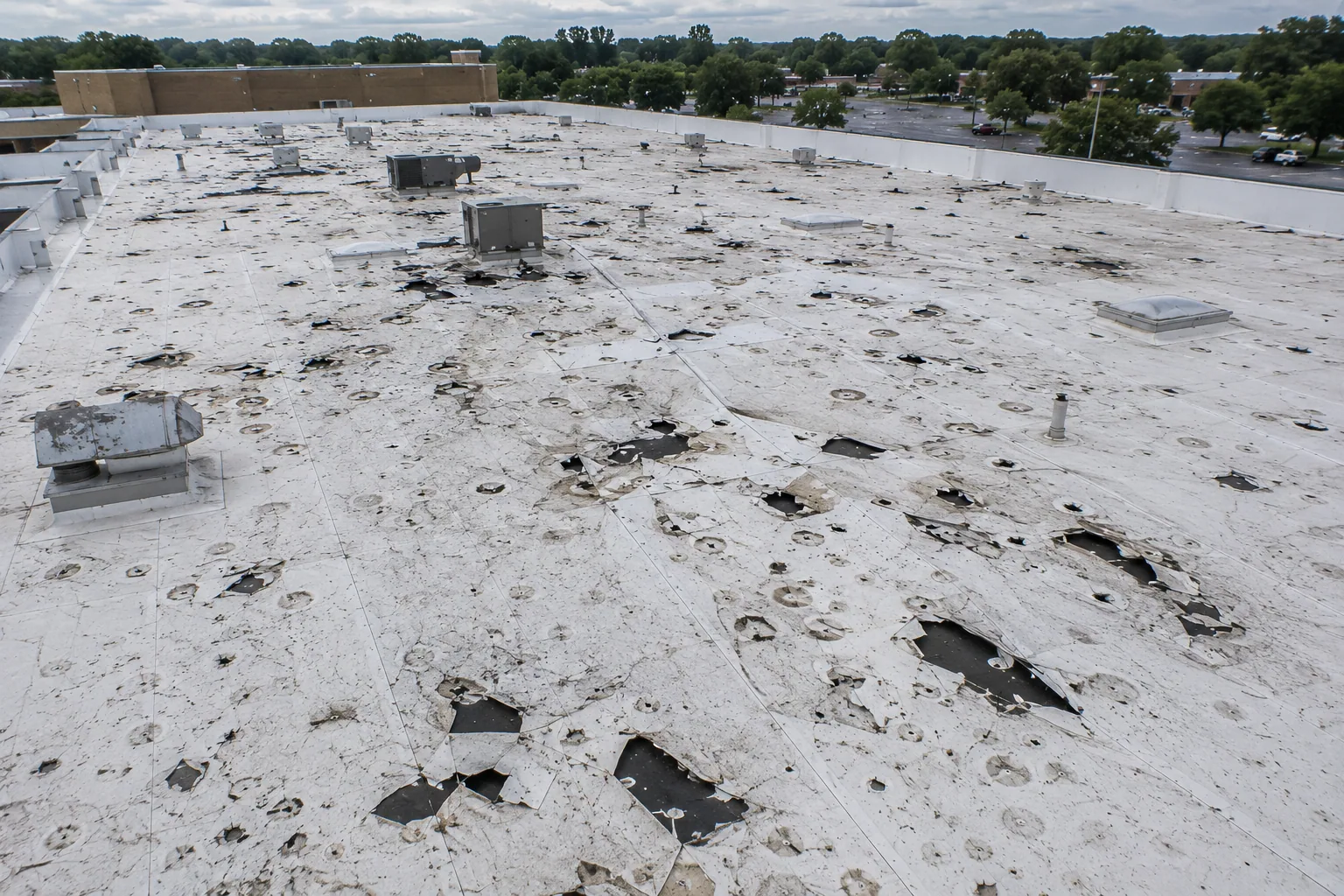
Impact damage presents a different question. A puncture or crushed area may affect the membrane, insulation or deck. We identify the material and examine the extent beneath the surface where needed. A localized membrane puncture repair can be appropriate when the surrounding assembly remains suitable. Damaged support or wet material changes that repair boundary.
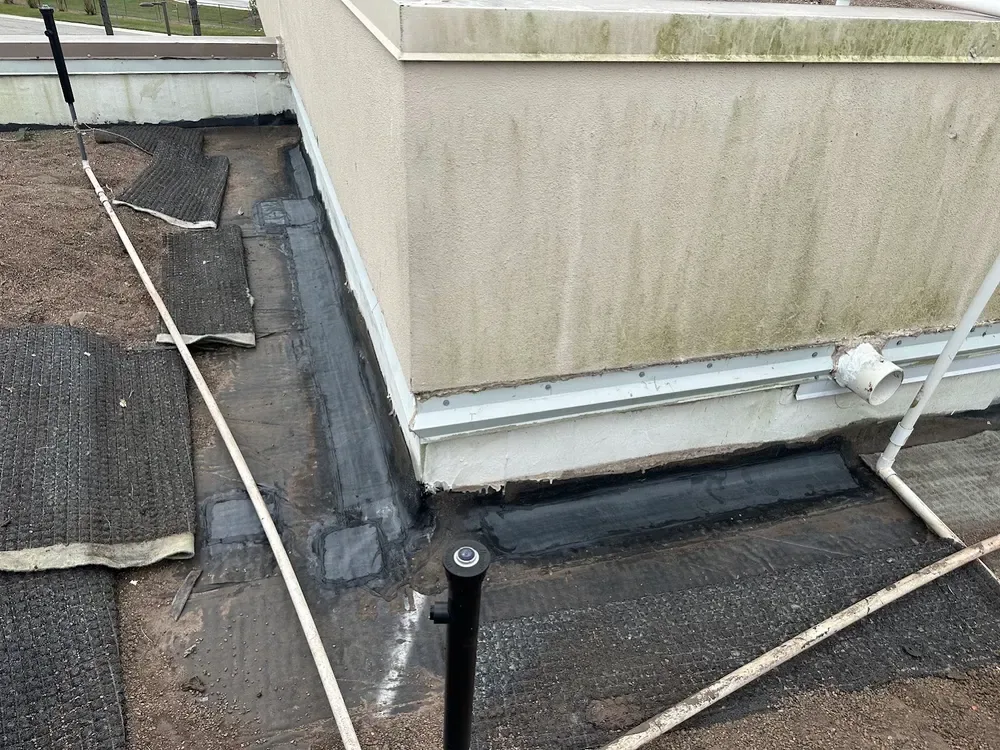
Seams and penetration flashing also deserve examination near the reported damage. A separating seam may be new, pre-existing or related to several conditions. We describe the visible evidence and the repair required. The roofing scope should distinguish material condition from an unsupported cause statement. That keeps the proposed construction useful even where event attribution needs a separate review.
The condition before concealment
An exposed layer gives useful information that may be lost after repair. We photograph the damage and connect it with the roof zone, component and affected material. We include a view of the damaged attachment plus roof geometry that identifies its position relative to equipment or the edge. A manager can then understand why removal extended beyond the obvious opening or why a supporting connection needed additional work.
Existing roof photographs and maintenance information may help compare conditions. We review relevant material supplied by the property team and distinguish it from the current examination. Insurance claim documentation can assemble the roof findings for review. Coverage and event attribution remain separate decisions from the physical repair scope.
Where the roof has received earlier repairs, we identify those materials and their condition. A patch may have remained intact while a neighboring detail opened. Another patch may have separated with unclear timing. We describe those differences rather than assign one event to every observation. The manager receives a usable account of the construction requiring attention now.
Water entry and affected insulation
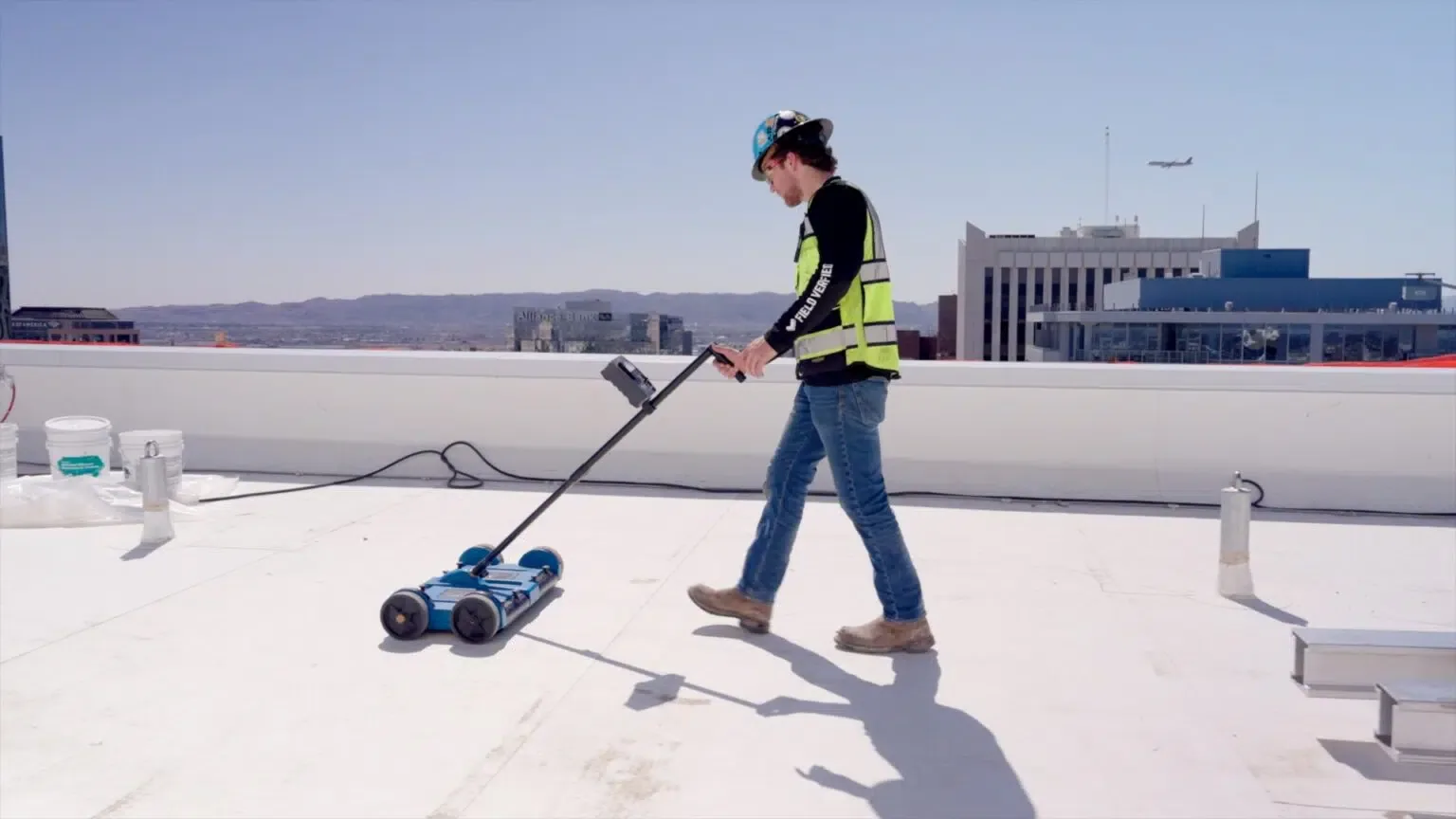
A storm-related opening can admit water into layers that otherwise appear serviceable. We examine the area for moisture and define necessary removal. Closure of the entry detail alone may leave damaged insulation beneath the membrane. An infrared moisture investigation can help select confirmation areas under suitable conditions, while physical checks establish the affected material.
Merced winter rainfall normals are greater than midsummer normals. Roof openings discovered before another wet interval need a clear protection and repair decision. Current exposure matters more than the calendar. We identify how the opening connects with the water path and which layers need examination before permanent closure. The aim is a completed assembly detail rather than a temporary surface appearance.
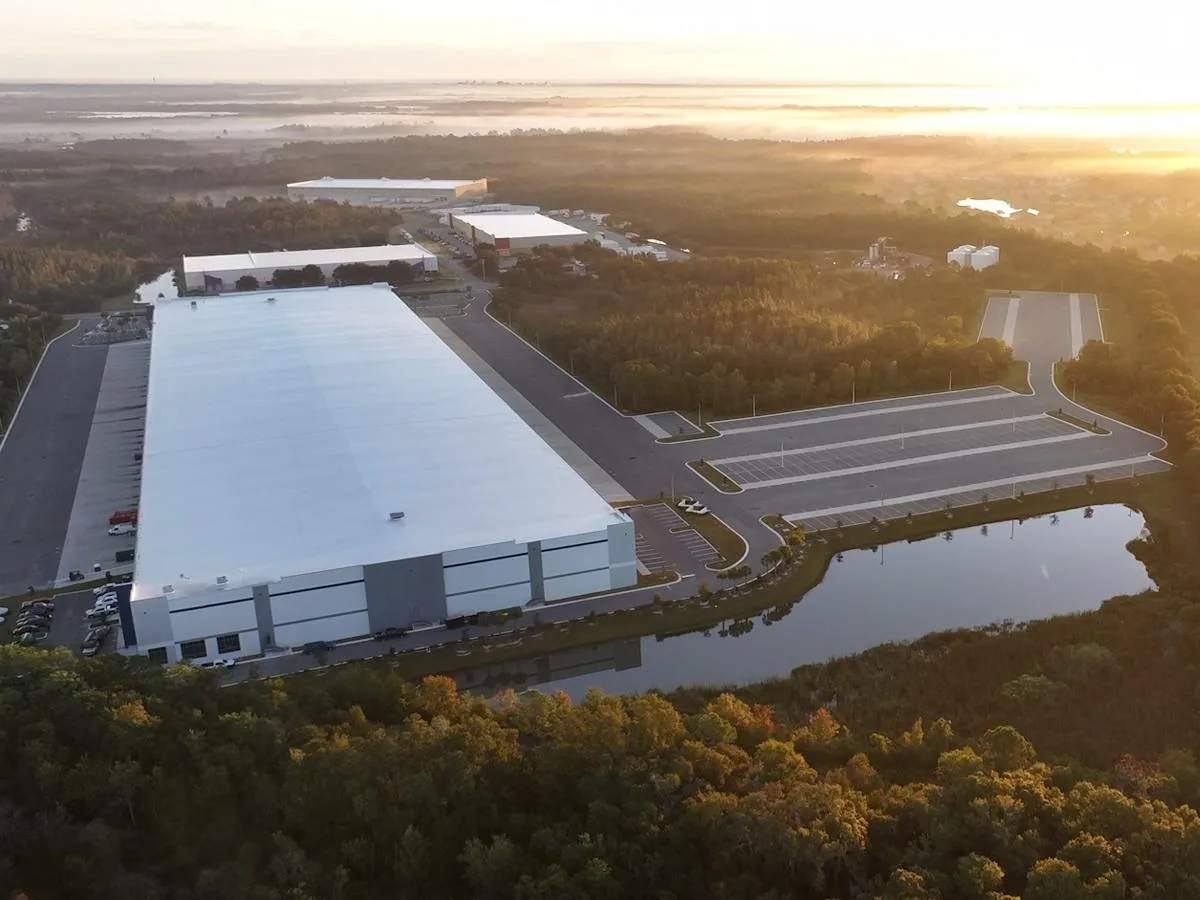
For a distribution property, water beneath the damaged roof can affect handling areas or stored goods. We ask the manager to identify those actual interior uses. The removal sequence then accounts for protection and suitable close-in work. Merced has food and grocery distribution activity, but each building still needs its own affected-zone assessment.
The repair boundary after the event
A repair boundary follows damaged material and usable connections. We examine adjoining construction so new work can attach or bond to a suitable surface. Where an edge assembly has several affected components, the scope identifies each one. Where a small puncture has sound surrounding material, the work may remain localized. The visible size of the first defect does not establish the complete construction quantity.
At a property in Downtown Merced, we plan repair access and debris movement around the occupied commercial setting. A street-side edge repair can require separation from building users. Work near rooftop equipment may need a different sequence. Those arrangements support the reconstruction and should be settled before damaged materials are removed.
After repair, we examine the rebuilt detail and identify any separate unresolved condition. A temporary measure needs a stated replacement or removal decision. Cost drivers include safe access, affected layers and the attachment work required. The manager can compare those construction items without assuming that storm timing alone establishes replacement of every roof component.
Merced summer heat also matters to the permanent transition. The rebuilt connection should suit movement between exposed materials. We examine the original arrangement and identify any detail change needed for the repaired assembly. That consideration applies to the construction method without making heat an unsupported explanation for the reported storm damage.
Commercial Roofing Questions
Should loose coping be handled before investigating an interior drip?
An unstable component can create a separate hazard. We coordinate the immediate site response and assess safe access. Interior water also needs appropriate protection. The roof examination then addresses both concerns according to their location and reachable construction.
Can the roof inspection determine that all damage came from one storm?
Visible conditions and relevant prior information can support an assessment. They may not establish every defect timing or cause. We describe the evidence and the necessary repair, distinguishing current construction needs from event-attribution questions.
Why remove insulation after the opening has been sealed temporarily?
Water may remain in affected layers. Temporary closure addresses the entry exposure, not the condition beneath it. We confirm moisture and identify removal where needed before the permanent repair closes damaged material inside the assembly.
Does storm damage automatically require full replacement?
The damaged extent and remaining assembly condition govern that choice. A bounded defect may permit repair. Broader deterioration or unsuitable supporting construction can justify replacement evaluation. We explain the observed conditions behind the proposed scope.
Examination of the displaced roof detail
Request a damage assessment of the loose edge, impact opening or affected roof zone and the construction beneath it.
Related Roofing Work