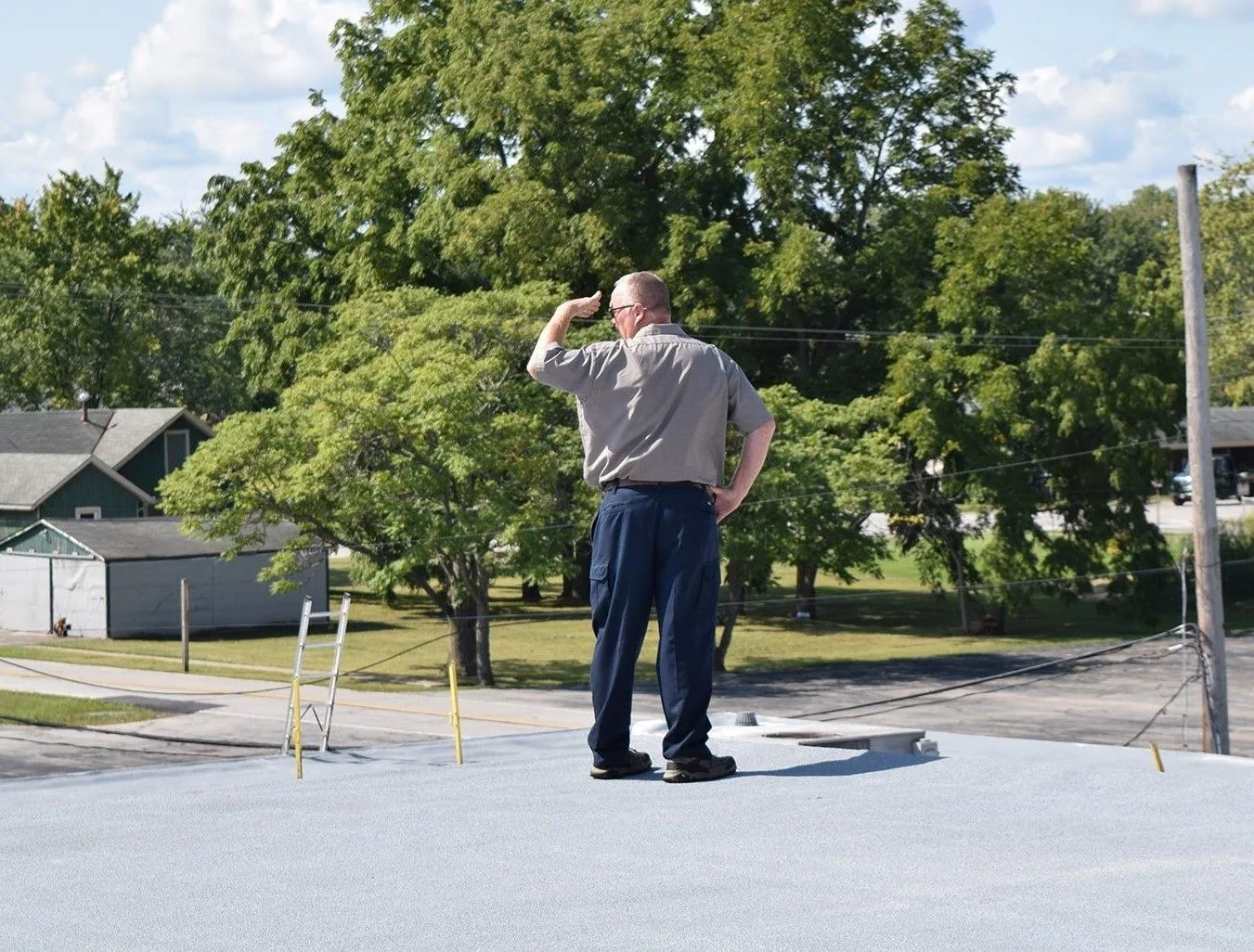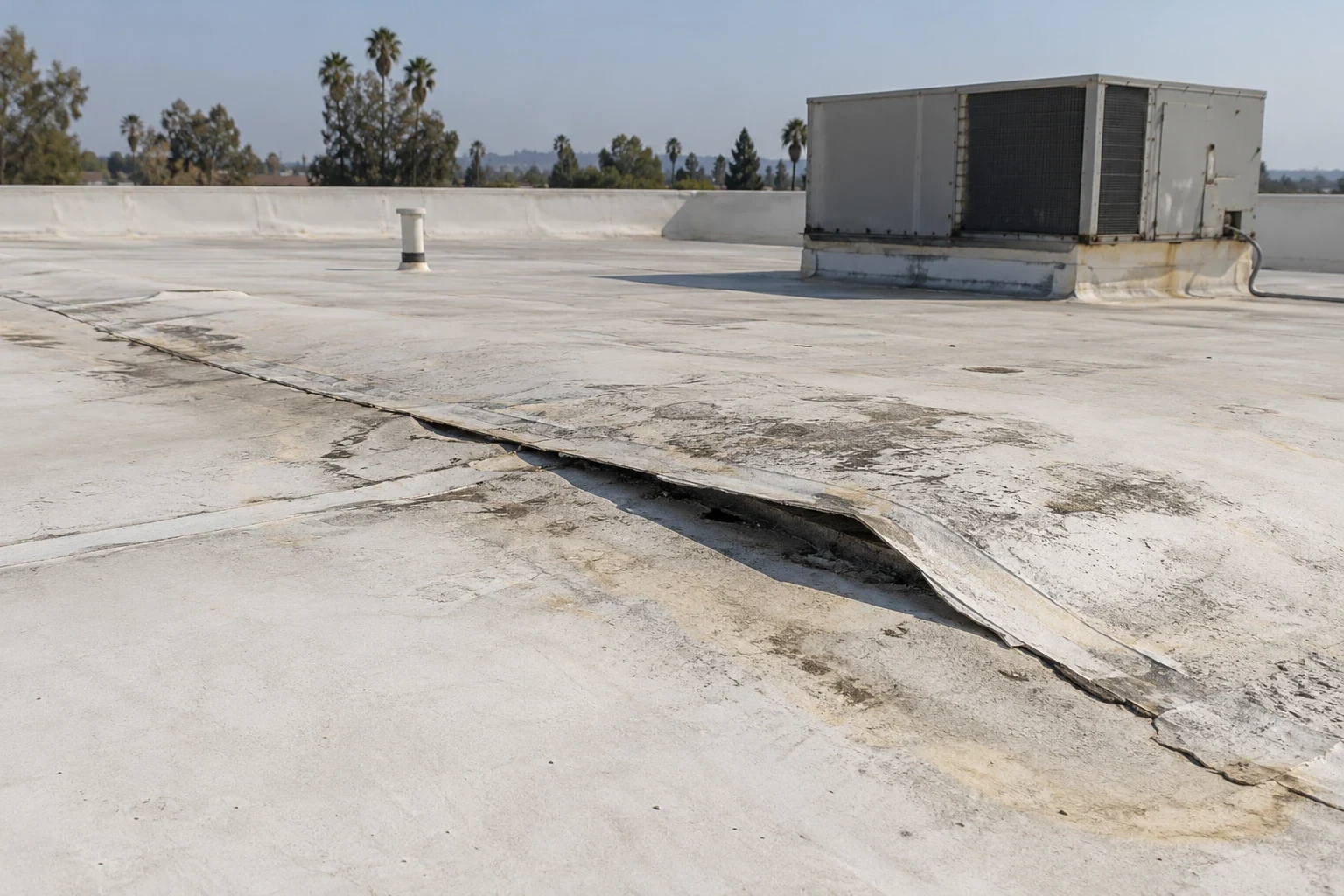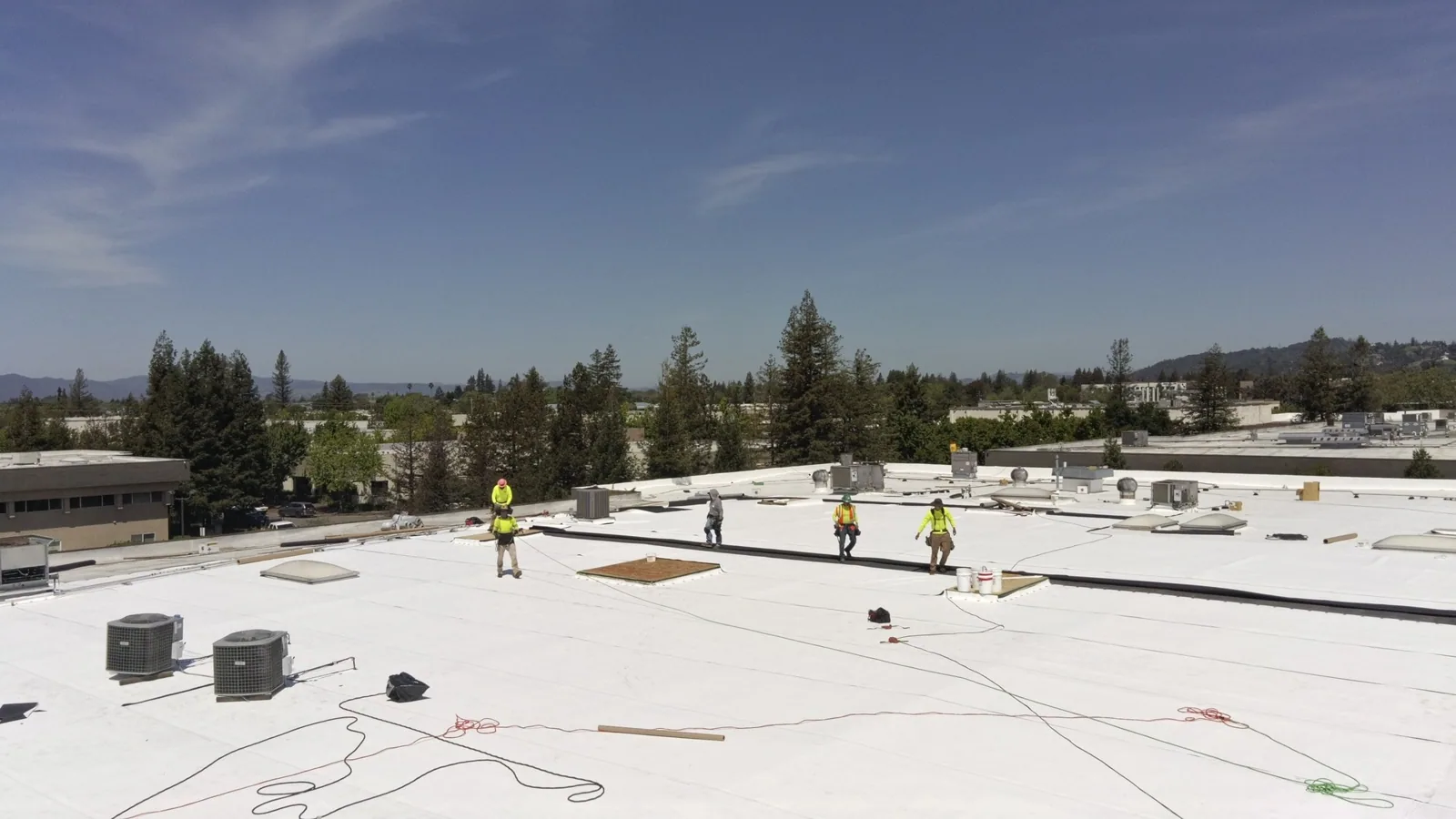
A dark patch at a roof lap can conceal a split that continues beyond the visible mark. In Volta, CA, we inspect the seam, surface bond and insulation before deciding where repair should stop. Volta is an unincorporated Merced County community northwest of Los Banos, between Los Banos to the southeast and Santa Nella to the west. That location helps orient a service visit, while the roof assembly and access plan are confirmed at the property.
Merced station normals show hot summers and little midsummer rain; at a Volta roof, we trace leaks from interior staining to seams, penetrations, and drains. We look for a lifted lap, brittle surface, trapped moisture or a drain that leaves water at the repair. An initial commercial roof inspection documents each condition and what remains concealed. If the substrate is dry and the seam is compatible, a seam repair may be narrower than a full field replacement. We explain the evidence before the owner selects the scope.
Between two county references
Volta sits between Los Banos and Santa Nella in western Merced County. For a manager evaluating roof work, the useful questions are how the crew reaches the roof, which interior space lies below the defect and whether the property can isolate a work area while repairs are open. Highway 152 and Interstate 5 connect communities west of Merced; local roads determine the final approach. We confirm the property's entrance, roof access and staging location before scheduling the inspection. The written scope stays tied to the assembly, moisture path and repair boundary found at that building.
A nearby Los Banos roof inspection or a Santa Nella repair assessment starts with the same inspection discipline, then records that property's own assembly. The location name does not decide membrane, deck or repair method.
Read the lap before patching
A seam needs an intact bond and a dry, compatible surface. We check whether the split follows the lap, crosses it or begins at a termination. Dirt, old coating or a prior patch can obscure the bond line. We prepare a small test area where needed, verify that the substrate will accept the repair and mark the end of sound material. A patch over an unbonded edge may look closed while leaving the moisture path open underneath.
The Merced station normals for Merced records 22.8 days a year reaching at least 100 degrees Fahrenheit in its 1991 to 2020 normals. We inspect the actual roof assembly and connection before planning heat-related seam work. In hot weather, surface movement makes the condition of a seam and its transitions worth checking together. The membrane type and installation details still control compatibility. If the roof carries a coating, we test whether it adheres to the existing surface before specifying any tie-in. A TPO system review is useful only after the installed material is identified.
Find the path below the split
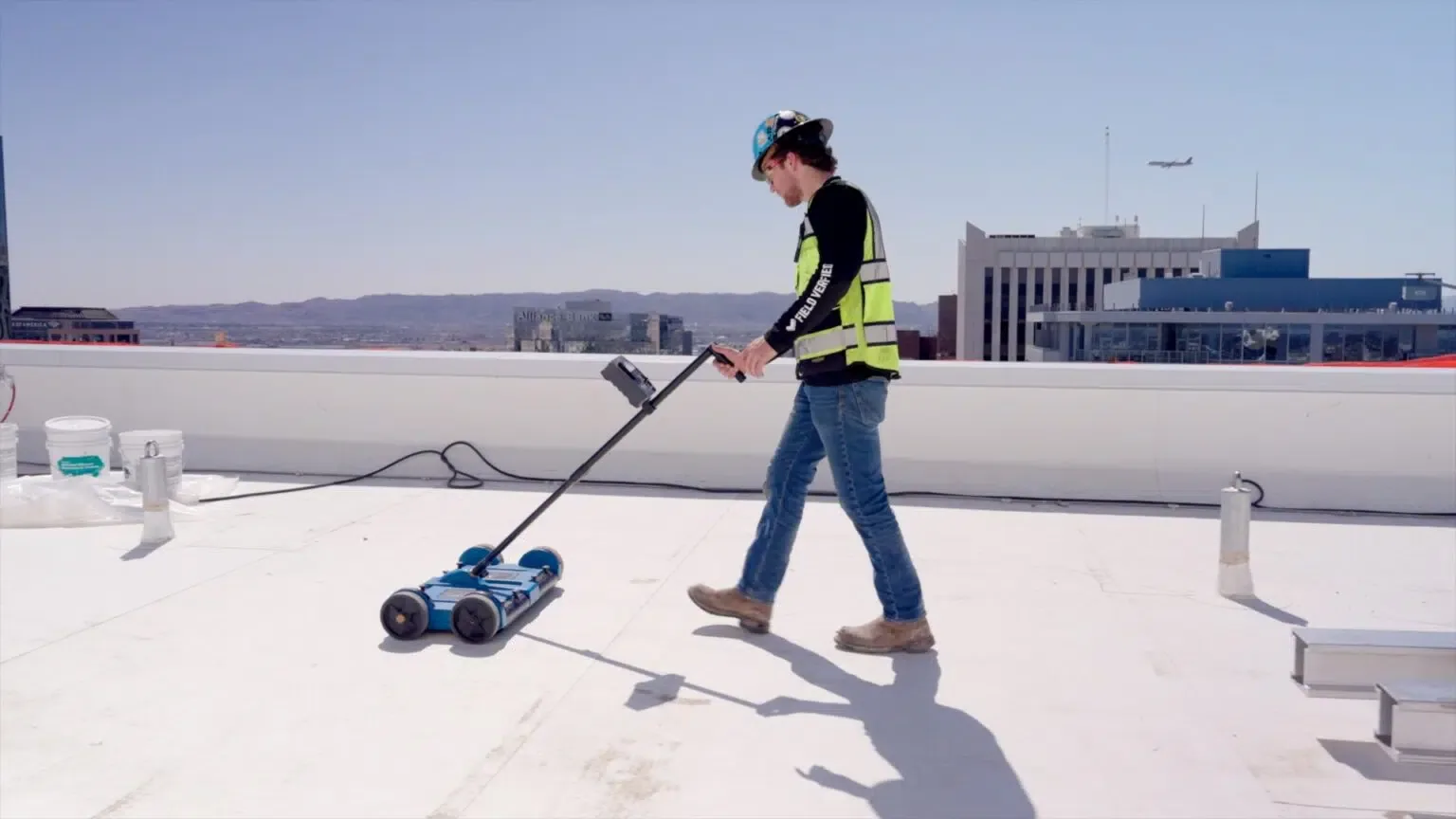
A leak may travel away from the failed seam before it reaches a ceiling. We compare interior staining with roof laps, penetrations, drains and low points, then look for changes in insulation or deck. An infrared image can point toward a temperature pattern, but a test opening confirms what sits beneath the membrane. The report identifies each opening and the layers exposed. If wet insulation ends within the approved boundary, removal can be limited. If moisture continues, the owner receives photos before the area expands. A photograph of a dry ceiling cannot clear the roof surface. We compare conditions after weather changes when the entry point remains uncertain.
Volta's place between Los Banos and Santa Nella gives a regional reference, while the actual property supplies roof access and operating constraints. We ask whether the leak affects a storage area, production schedule or occupied room only to plan protection and timing, not to assume the building's use. A moisture survey can help select test points across a broad roof. A leak-repair scope then ties the confirmed moisture route to material removal and closure.
Compare the repair sizes
A localized seam repair is appropriate when the surrounding membrane remains flexible, the bond can be restored and the substrate is dry. A longer seam release, repeated splits or wet insulation can point to a larger section. Recover and replacement decisions depend on attachment, drainage, deck condition and the layers that would remain below a new system. We note what supports each option and what evidence is still needed. A coating is not a substitute for removing trapped water or rebuilding a failed seam.
Timing and cost follow the removal depth, material compatibility, access equipment, disposal needs and the work window the property can allow. If the roof stays in service, we define where temporary protection sits and when each section can close. A recover evaluation addresses whether existing material can remain, while replacement planning covers a broader assembly decision. The written scope separates confirmed repairs from optional work so the manager can review them distinctly. It should also state whether drains, edge metal or penetrations fall inside the authorized area. That prevents a small seam repair from being read as a full roof renewal.The repair plan should identify who approves an expanded boundary if concealed moisture continues beyond the first opening.
Leave the repair boundary visible
Before repair, we photograph the split, adjacent laps, drainage and interior evidence. During work, the record follows each layer removed and the condition underneath. At closeout, photos show the rebuilt seam, the materials used and the point where sound membrane begins. We identify any area that remained inaccessible or untested. That record helps a later inspection compare like locations and keeps an isolated repair from being mistaken for a full-roof assessment.
The owner also needs to know how the next decision changes if new moisture appears. We can list a monitor point, a section for further testing and a broader replacement option without treating all three as current defects. For a multi-property manager, the condition report gives maintenance and capital planning a consistent record. A maintenance visit checks seams and drainage over time, but it does not erase an open defect. Send the known leak location, photos and roof access details to begin an inspection.
Commercial Roofing Questions
Can a split lap be patched from the surface?
Only when the surrounding surface accepts a compatible tie-in and the layers below are dry enough to close. We test the bond and inspect the moisture path first. A split over wet insulation or a longer released seam needs a larger repair boundary.
Why does an infrared scan not settle the repair scope?
It can identify a pattern for investigation, but the roof layers need confirmation where the finding affects material removal. A controlled opening shows the insulation and deck at that point. We document both the scan and the test result separately.
What do Los Banos and Santa Nella have to do with a Volta roof?
They are geographic references around Volta, which the county identifies as lying between the two communities. Their business uses do not describe a Volta building. We inspect the actual roof and coordinate access with its manager.
When does a seam problem justify replacing a larger area?
A longer release, recurring splits, wet insulation or an attachment issue can move the decision beyond a single lap. We map each finding and compare localized repair with selective removal or replacement. The scope shows the condition that changes the work.
Trace the seam failure
Request a roof inspection with the leak location, recent repair history and access instructions. We will document the seam, test the assembly where needed and define the repair boundary.
Related Roofing Work