A flashing split at a pipe curb can send water across insulation before it reaches a room. In South Dos Palos, we inspect the reported area, then follow seams, slopes and penetrations to find the path that connects roof damage to the interior mark. The community borders Dos Palos to the north, and State Route 33 runs along its eastern edge toward Los Banos and Firebaugh. Those connections help locate the service area, but they do not identify any property's roof assembly. We confirm the membrane, deck and moisture condition before deciding whether the work is a repair, recovery or replacement.
Access along the State Route 33 edge
State Route 33 gives the community a north-south road connection. A building's access still depends on its own gate, roof hatch, loading path and active hours. We confirm those details before moving equipment or opening the roof. A repair over storage, production or service areas needs a protected zone below the cut. We map the intended work area, keep drains clear and move materials so active routes remain usable. When the opening reveals a larger problem, the owner reviews photographs and the revised boundary before removal continues.
South Dos Palos borders Dos Palos rather than operating as a separate city. The two place names should not be treated as proof of identical buildings or roof conditions. We inspect each property on its own terms. A low-slope assembly may have a single membrane over insulation, several recover layers, or metal panels with different fasteners and transitions. We identify what is present, note where access is limited and check whether repairs from earlier work remain bonded. The written findings keep a change in scope tied to an observed layer or defect.
The details that control water entry
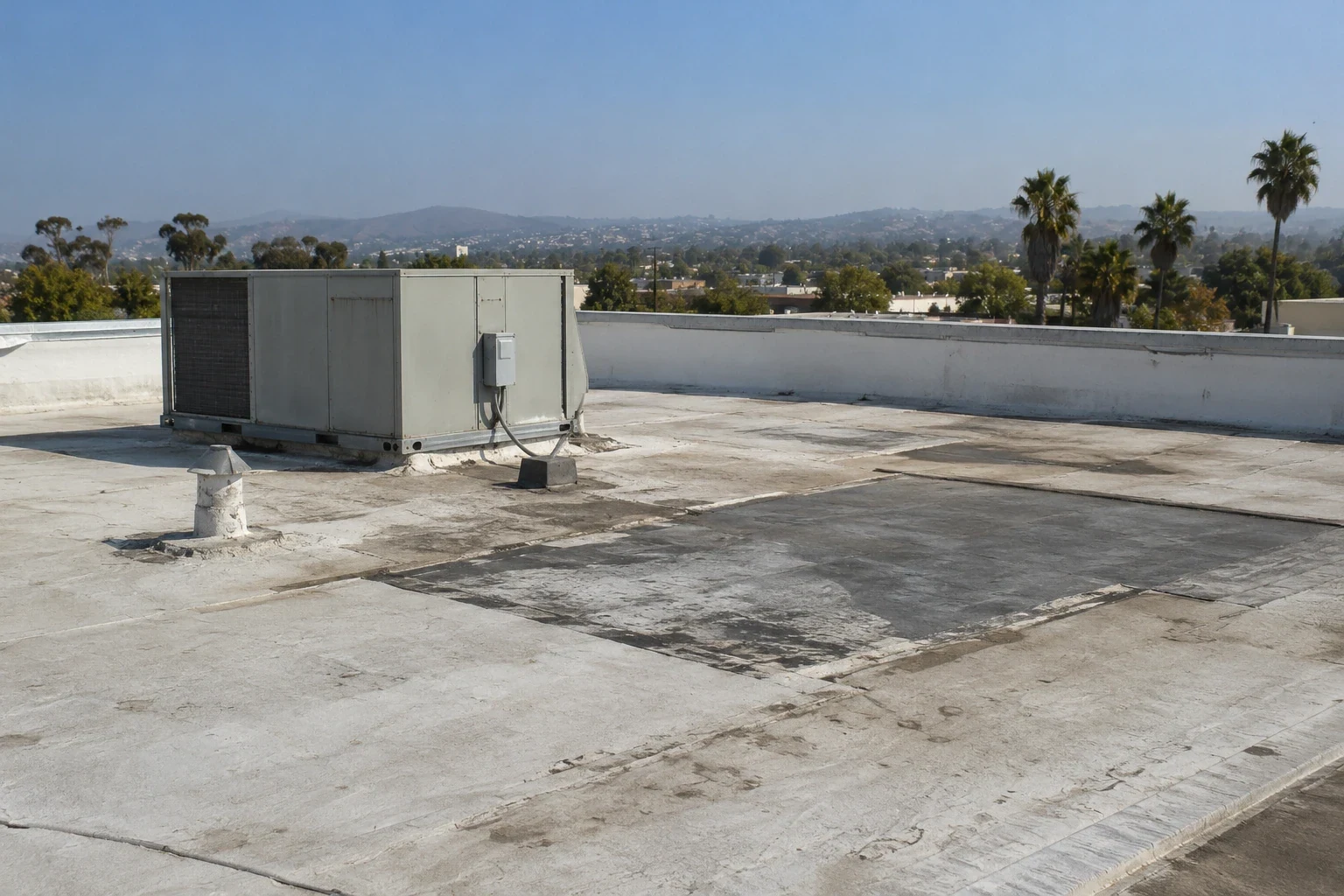
On a membrane roof, seams and penetrations carry the inspection. We look for open laps, lifted patches, exposed reinforcement, loose termination bars and sealant that has separated from the substrate. At a curb, we check corners and the transition from field membrane to vertical flashing. At a drain, we inspect the strainer, bowl and sump, then compare ponding marks with slope and nearby seams. On metal, we review fasteners, laps, ridge and eave details, and the condition of coatings where they are present. The repair follows the actual material.
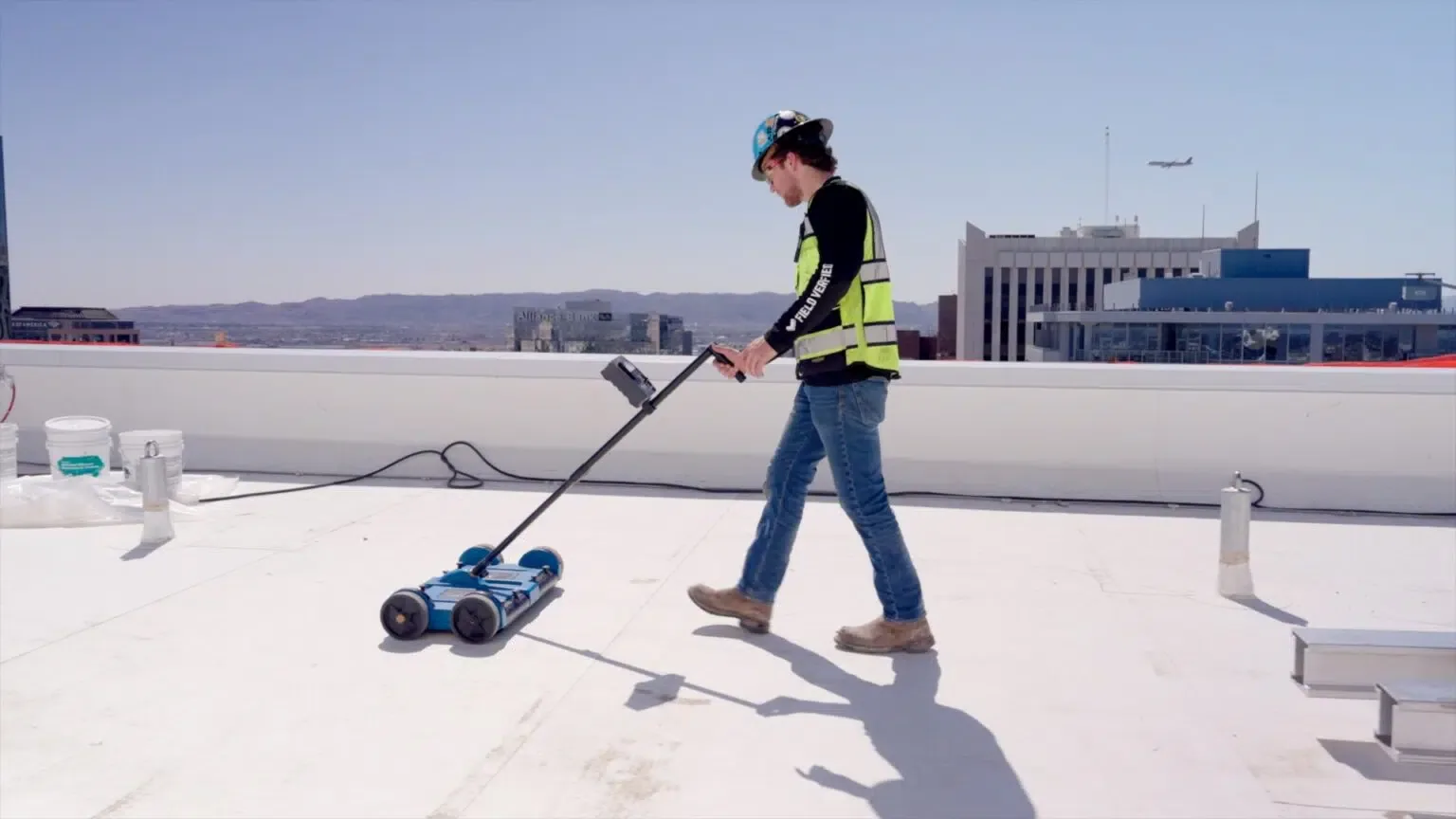
The Merced Merced station normal lists a 96.3-degree July normal high and shows 99.7 days per year at or above 90 degrees. We check the South Dos Palos assembly in the field before defining removal limits or material quantities. Heat can make membrane movement, brittle sealant and fastener changes worth checking at exposed transitions. We compare the suspect area with nearby details and document what can be seen. If moisture below the surface could change the decision, infrared scanning can guide test openings. A roof inspection records the condition, tests and unresolved areas.
Repair boundary and replacement decision
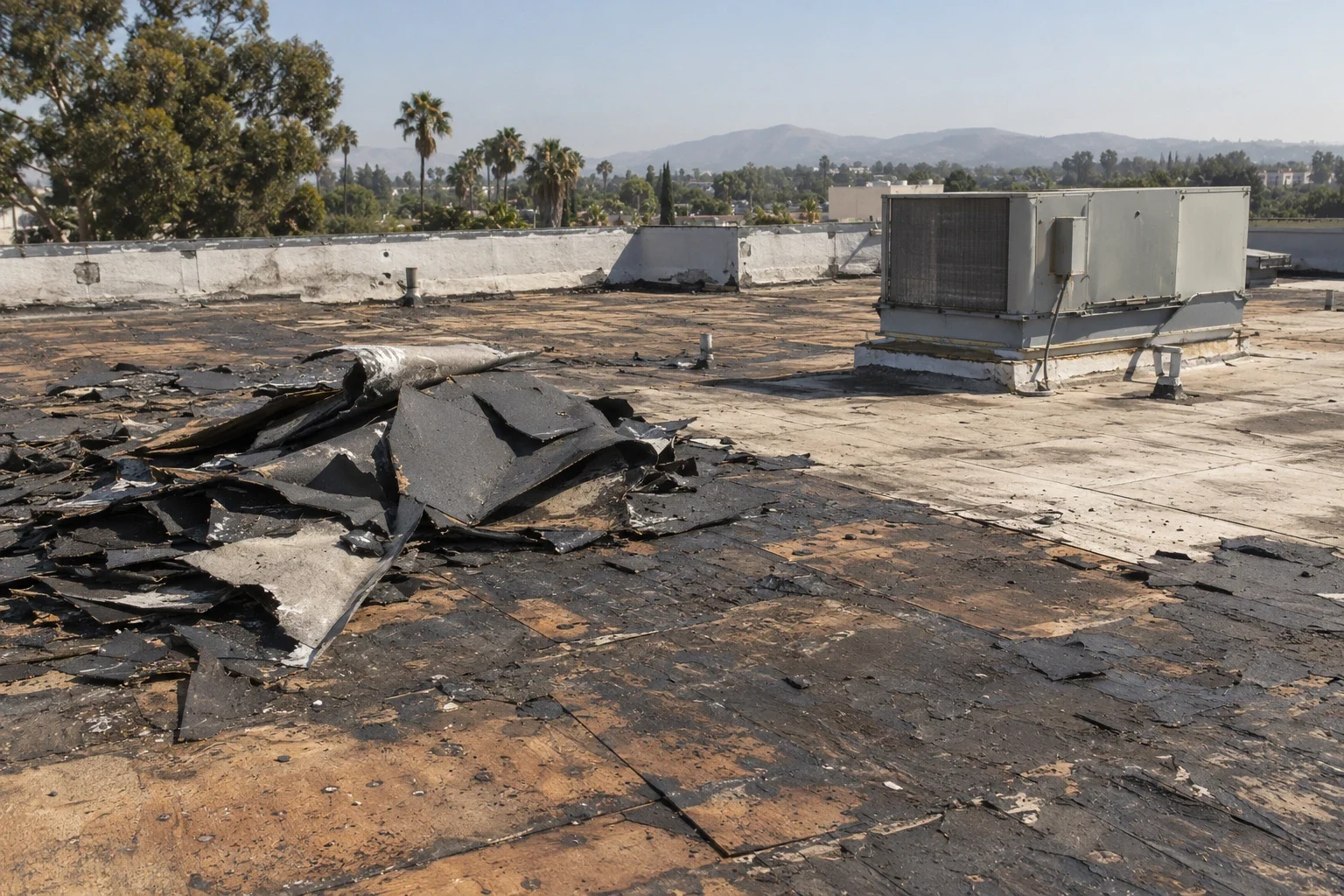
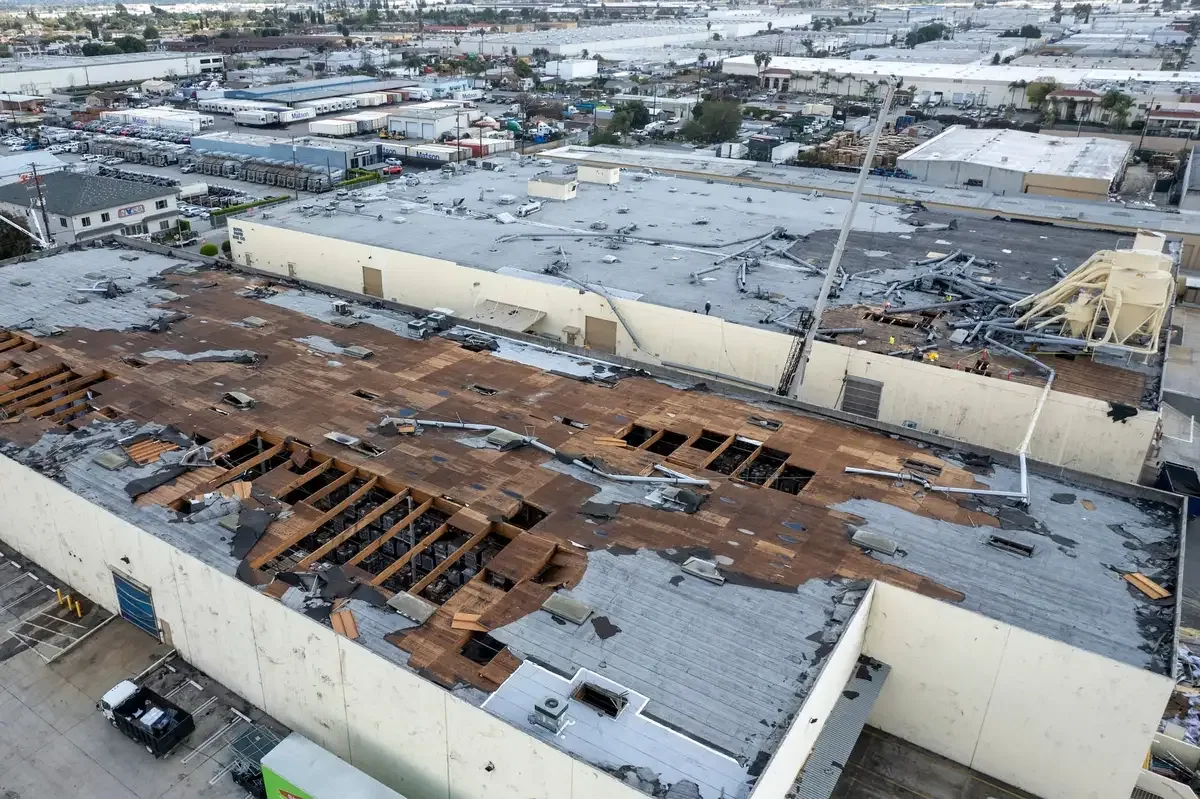
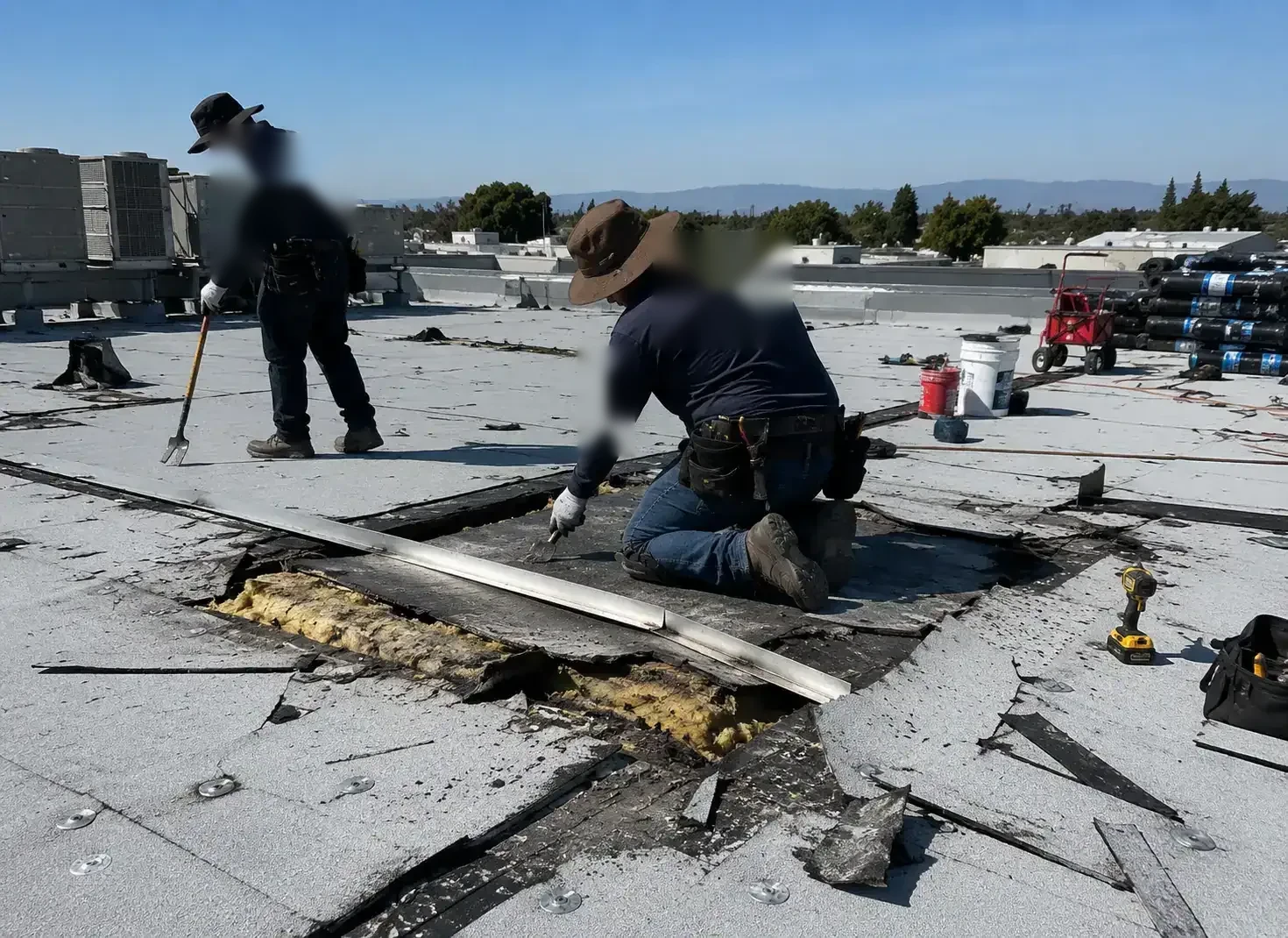
A localized repair needs a sound edge. We remove loose material, clean the surface and tie compatible membrane into the surrounding field. If the insulation beneath the defect is wet, a surface patch will not correct it. We expose the affected layers where authorized, record the deck and replace material that cannot remain. For a roof with broad attachment failure, repeated seam separation or moisture across connected areas, selective removal, recover and replacement may each be evaluated. We state what the inspection supports and where evidence remains incomplete.
Price and schedule depend on access, tear-off depth, deck condition, insulation quantity, drain work, edge metal, disposal and the number of separate roof sections. A property with active work below the roof may require short work windows, interior protection and temporary dry-in at each shift. A defined repair can address one verified defect; a replacement assessment compares the existing assembly with a new build-up. Recovery is considered only when moisture, attachment, drainage and edge details can support it. The scope distinguishes urgent stabilization from capital work that can be scheduled.
Dry-in before the next weather window
At the Merced station, the annual precipitation normal is 11.80 inches. January and February hold the highest monthly averages, whereas July and August each report 0.00 inches. For drainage planning, current roof slope and outlet condition matter more than a regional average. Seasonal rain makes drains, seams and temporary openings worth reviewing before a work window closes. Heat during dry months still affects surface movement and can change how a repair bonds. We check weather and substrate before applying membrane, flashing or coating materials; the surface must be prepared for the chosen system.
State Route 33 connects South Dos Palos with Los Banos to the north and Firebaugh to the south, while Dos Palos lies immediately beyond the northern edge. These are distinct service locations. We keep inspection records attached to the correct building and do not transfer one property's roof findings to another. If water is entering during an active leak, emergency stabilization limits immediate exposure, followed by a permanent scope after safe access is confirmed. A maintenance plan can track drains, seams and completed repairs through later inspections.
A roof record the next decision can use
Useful documentation names the roof section, defect location, layers opened and the repair edge. We take photographs before removal, at the exposed substrate and after the detail is rebuilt. If the deck is damaged or wet insulation continues past the authorized boundary, work stops for review. The revised scope shows the additional area and material. That record helps the property manager compare the repair with later conditions, make a capital request and plan access around the building's use.
For a property portfolio, a roof asset record can connect inspection dates, photographs, repair boundaries and replacement priorities. We can also inspect nearby Dos Palos and Los Banos, with a separate finding set for each address. The owner receives a clear list of completed work, conditions to watch and items that need a separate scope. Send the roof material if known, the interior location, when the leak appeared and the access window. We will inspect the roof and return a documented next step.
Commercial Roofing Questions
Why can water show up far from the roof opening?
Water can travel along insulation joints, deck flutes, framing or a low point before it reaches a ceiling. We inspect above and around the interior mark, then compare the path with seams, curbs and drains. If a test opening is needed, we photograph the exposed layers and keep the scope boundary visible in the report.
Can a repair be completed without closing the space below it?
Often, the work can be staged around active operations, but the sequence depends on access and the opening required. We identify the protected area, keep routes clear and confirm temporary dry-in at each shift. If the condition reaches a larger area than expected, the owner reviews the photographs and added scope before we continue.
What does a roof inspection include after summer heat?
We check seams, flashing, fasteners, drains, coatings and prior repairs for separation, movement or exposed substrate. The inspection also records visible ponding and signs of moisture below the membrane. A scan can guide a test location, but an opening confirms the layers. The report identifies what was inspected and what remains untested.
When should an owner compare repair and replacement?
A comparison is useful when defects repeat, moisture extends beyond a repair boundary or attachment and deck condition raise questions about the wider assembly. We map the affected areas and examine representative layers. The proposal can then separate localized repair, selective removal, recover and tear-off, with access and schedule needs shown for each option.
What details should I send before scheduling in South Dos Palos?
Provide the building use, reported leak area, interior impact, known membrane or metal system and roof access limits. Note equipment or work routes below the suspected area. We use that information to plan the roof walk, protection and staging, then verify the assembly before giving a repair scope.
Plan a South Dos Palos roof inspection
Send the leak location, roof material if known, building use and access limits. We will inspect the assembly, document moisture and repair boundaries, and explain the next work decision.
Related Roofing Work