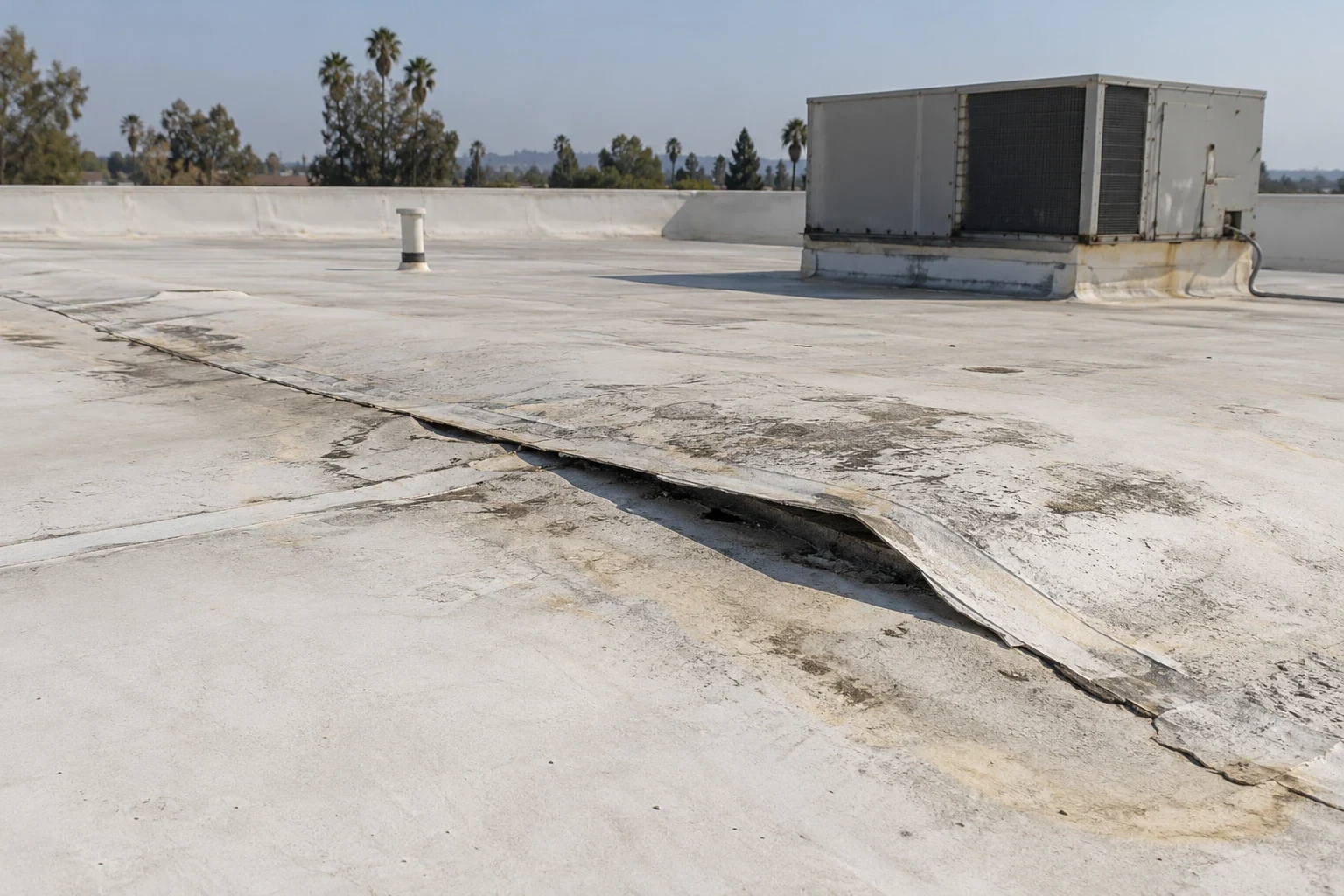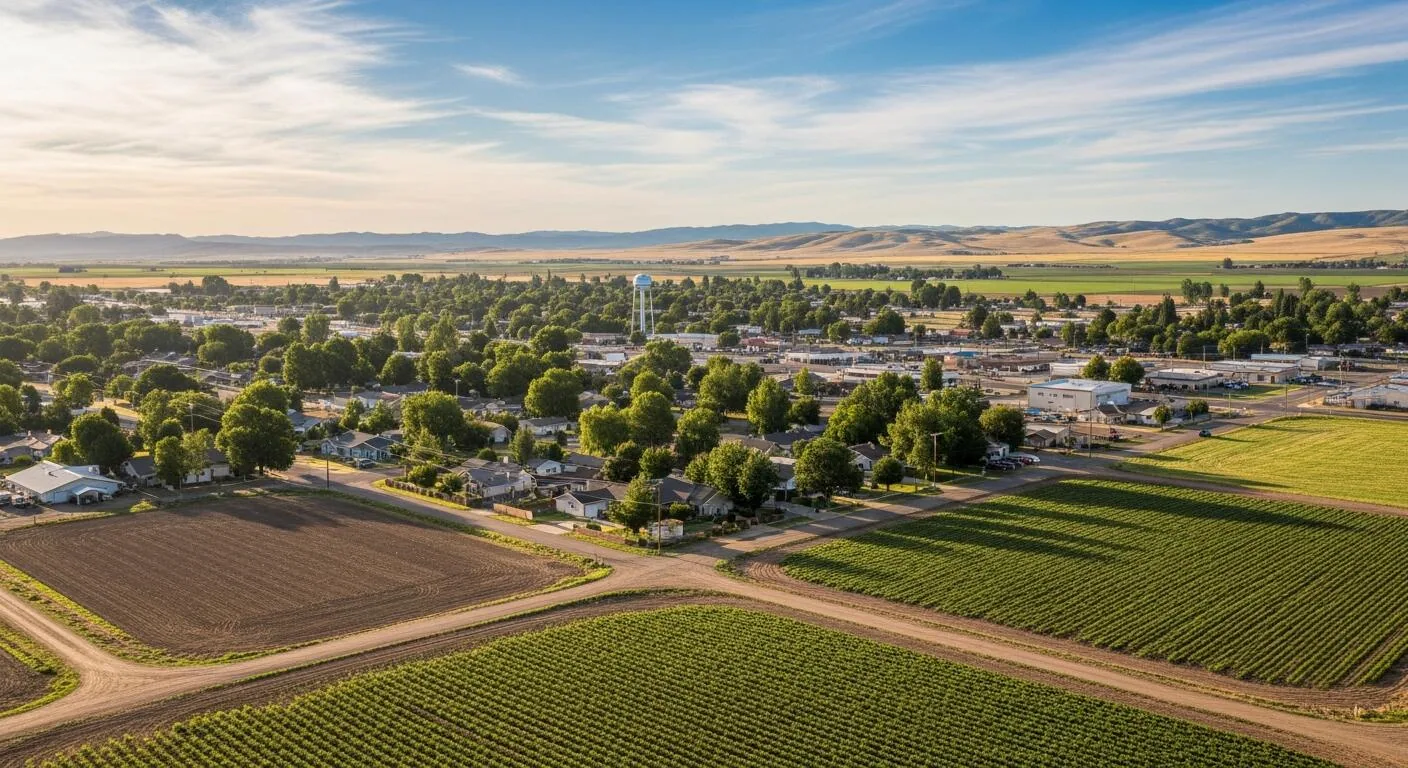
A wrinkle that ends at a roof lap can signal movement, trapped air or a bond that has released. In Snelling, CA, we inspect the lap, its edge and the insulation below before treating the wrinkle as a leak source. Snelling is an unincorporated Merced County community about 17 miles north of Merced, on the Merced River's north bank. Snelling is a rural center in Merced County. Those facts frame the service area, but the roof's actual material and condition must be checked at the property.
We document what is visible, compare it with any interior mark and identify whether the membrane can accept a local repair. A roof inspection can establish seam condition and drainage; a seam repair rebuilds a lap only when the substrate and adjacent sheet are sound. The owner receives a repair boundary and a record of layers that remain concealed. Nearby Merced and Cressey are separate service locations, not substitutes for a property-specific inspection.
Read the wrinkle and lap
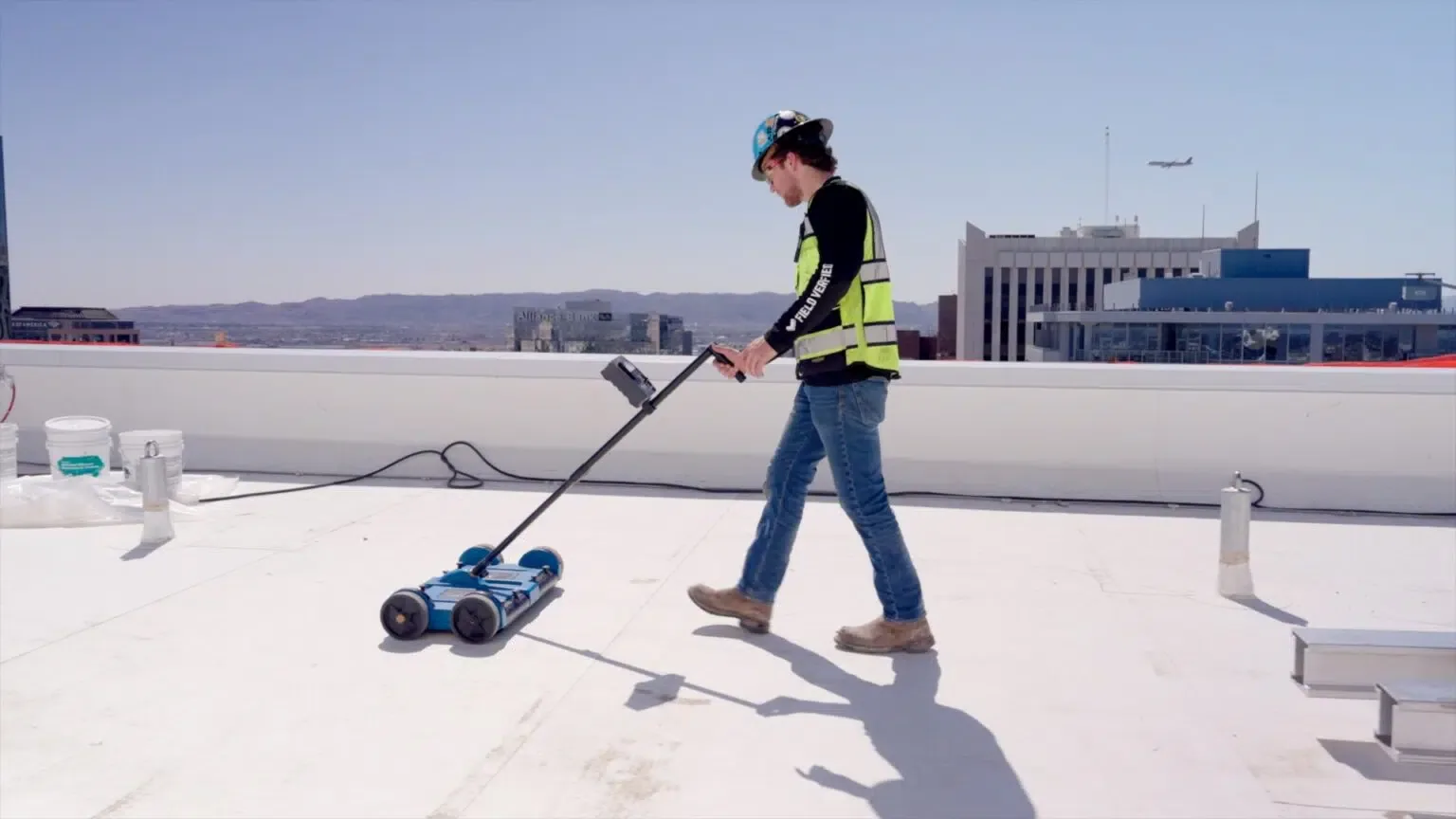
A wrinkle is a surface clue, not a complete diagnosis. We check whether it crosses the seam, runs toward a drain or ends at a curb. A lap that has lost bond may open at the edge, while a wrinkle with secure attachment may reflect another condition in the roof field. We probe the seam, inspect the edge and photograph the surrounding membrane. If the material is brittle or the lap has several old patches, the repair area may need to extend to sound sheet rather than stop at the visible ridge.
We inspect the roof for blocked drainage, displaced flashing and moisture below the lap, then compare those conditions with the reported interior mark. A drainage inspection can identify whether water is being held near the seam.
Movement through a dry season
At the Merced station, annual precipitation averages 11.80 inches and the July and August monthly normals round to 0.00 inches. At a Snelling roof, we examine membrane edges and fastening lines directly for heat-related movement. In a hot, dry summer, sheet movement can stress a lap and loosen an attachment. When seasonal rain returns, water can enter at a seam that appeared stable during dry weather. We inspect for a lifted edge, stretched fastener slot, cracked seal or separation that reaches beneath the membrane.
The repair method depends on the exposed material and the extent of moisture. We remove a limited sample only when the roof surface cannot establish the assembly beneath it. If insulation is dry and the lap can be restored, a compatible weld or adhesive may resolve the defect. If the substrate is damp, we mark the removal area and replace affected layers before closing the seam. A moisture survey can help distinguish a local condition from a broader pattern, but each result needs surface confirmation.
Match the surface to the interior
A stain below a seam can appear after water has traveled across the deck or along framing. We compare the mark with roof penetrations, drains and edge details above it. A ceiling location is useful evidence, but it does not identify the entry point on its own. The inspection records the path that aligns with the roof conditions and notes any area that remains concealed. When an opening is needed, we agree on its location, photograph the layers and restore the area with compatible materials.
A written report separates confirmed openings from likely paths. It identifies seam length, test openings, moisture readings and work limits. If access prevented a close look, that boundary belongs in the record.
Keep the work inside a sound boundary
A local seam repair fits when the lap can be opened, cleaned and rebuilt over dry, stable material. We remove unsupported patches, prepare the edge and reconnect the sheets using a compatible method. If the wrinkle continues through several laps or insulation holds moisture, the work area may need to expand. We identify what the inspection confirms before discussing recover or replacement. That keeps the choice tied to the roof rather than to a single visual symptom.
A recover evaluation checks existing layers, moisture and attachment before an overlay is considered. Replacement may be appropriate when wet insulation or widespread bond failure makes localized work unreliable. Coating is not used to cover a moving or open seam; the underlying detail must be repaired first. A restoration review can consider coating only after the surface, drainage and adhesion meet the selected system's requirements. Each option receives its own scope and assumptions.
Set a workable repair window
Seam preparation and closure need a dry work surface. We check the forecast, roof access, material staging and the building schedule before opening the lap. If the area cannot be repaired in one visit, temporary protection and a return date should be explicit. The manager also needs to know whether equipment below can stay operating and which roof routes will be closed. A bounded work zone reduces interference with the building without implying that all roof activity can continue unchanged.
Snelling's location north of Merced helps orient a service request; the owner still supplies the access route and site rules. For urgent water entry, emergency roof response can limit exposure while the inspection defines permanent work. A leak repair scope identifies the seam, removal area, materials and closeout check. If weather or access changes the sequence, the record should say what was completed and what remains.
Leave a useful seam record
Closeout photographs show the wrinkle, lap before preparation, any exposed insulation and the completed seam. We note the material installed, the length of the repair and whether the adjoining membrane remained sound. If water testing was included, the record names the test area and method. A photo should not imply that distant seams were tested or that concealed layers were confirmed dry. The manager receives a clear record of what changed and where the next inspection should look.
When a similar mark appears later, compare its position with the repair boundary and the earlier moisture path. A new mark may come from a nearby penetration or drain. A repeat at the same seam calls for inspection of the bond line and tie-in. Request a roof walk while the condition is visible. We can document the lap and give the owner a repair option grounded in the exposed assembly.
Commercial Roofing Questions
Does a wrinkle mean the seam has failed?
Not by itself. We check the lap edge, attachment, material and moisture below the wrinkle. A released bond can be repaired if nearby sheet and substrate remain sound. A wrinkle without an open seam may call for monitoring or a different correction.
Can a seam be repaired during dry weather?
Yes, when the surface is dry and the selected repair materials can be installed under their conditions. We confirm access and forecast before opening the lap. If moisture remains below the membrane, the work must address those layers before the seam closes.
Why can a leak appear far from the seam?
Water can travel along the deck or framing before it reaches the ceiling. We compare interior evidence with roof drains, penetrations and laps above it. A test opening can confirm layers where the path remains unclear. The report records what was confirmed and what remains concealed.
When is an overlay a reasonable option?
The existing layers must be dry enough, attached and suitable for another system. We check moisture, substrate and roof condition first. If the seam problem extends across the assembly or insulation is wet, removal or a larger repair may be the better scope.
What does a seam closeout record include?
Photos should show the original condition, preparation, exposed layers and completed lap. We note the repair length, material and any test performed. That gives the next inspection a clear point of comparison without extending the repair claim beyond its boundary.
Inspect the lap and attachment
Request an inspection of the wrinkled seam, adjacent membrane and interior moisture path. We will document the repair boundary and the work window needed to close it.
Related Roofing Work