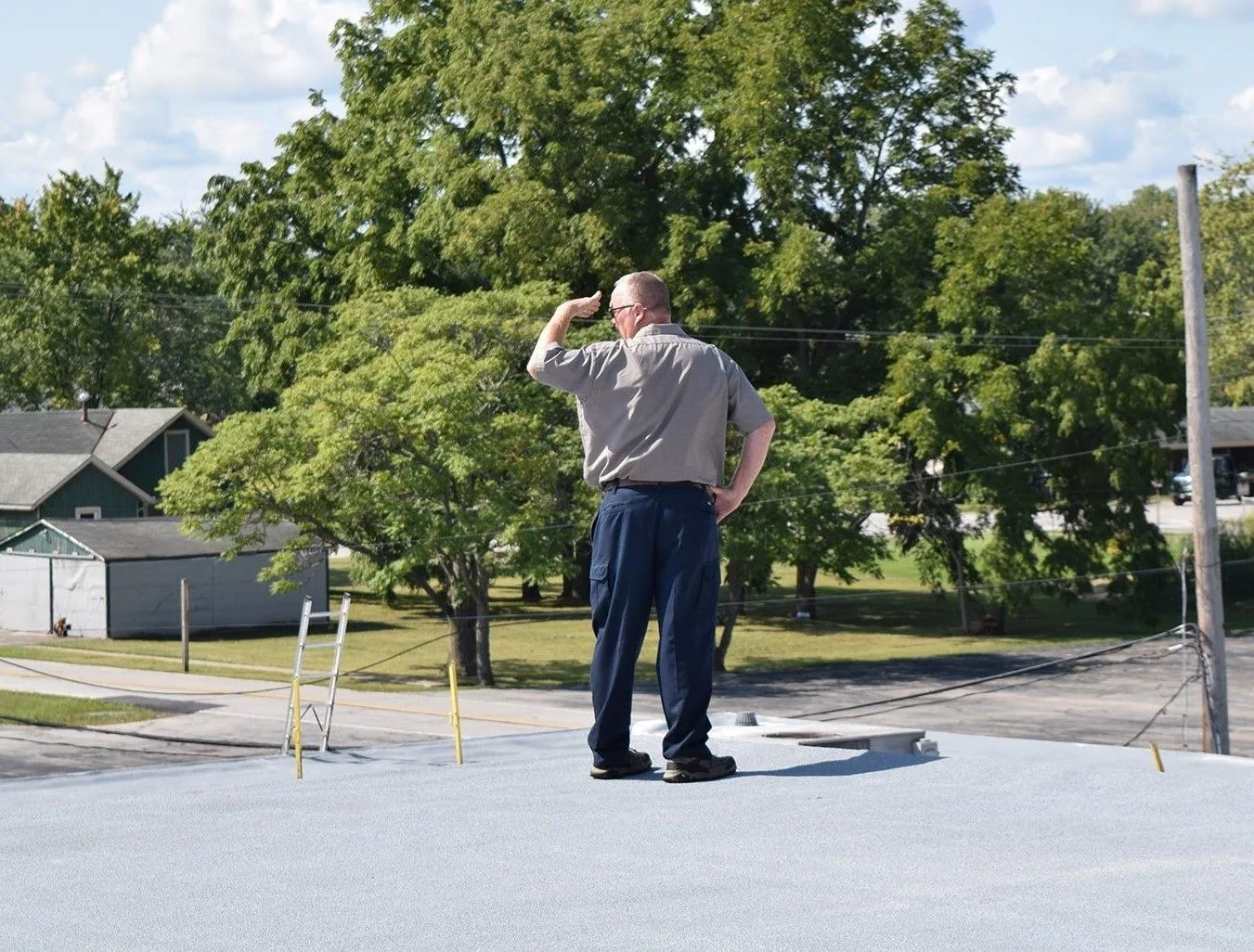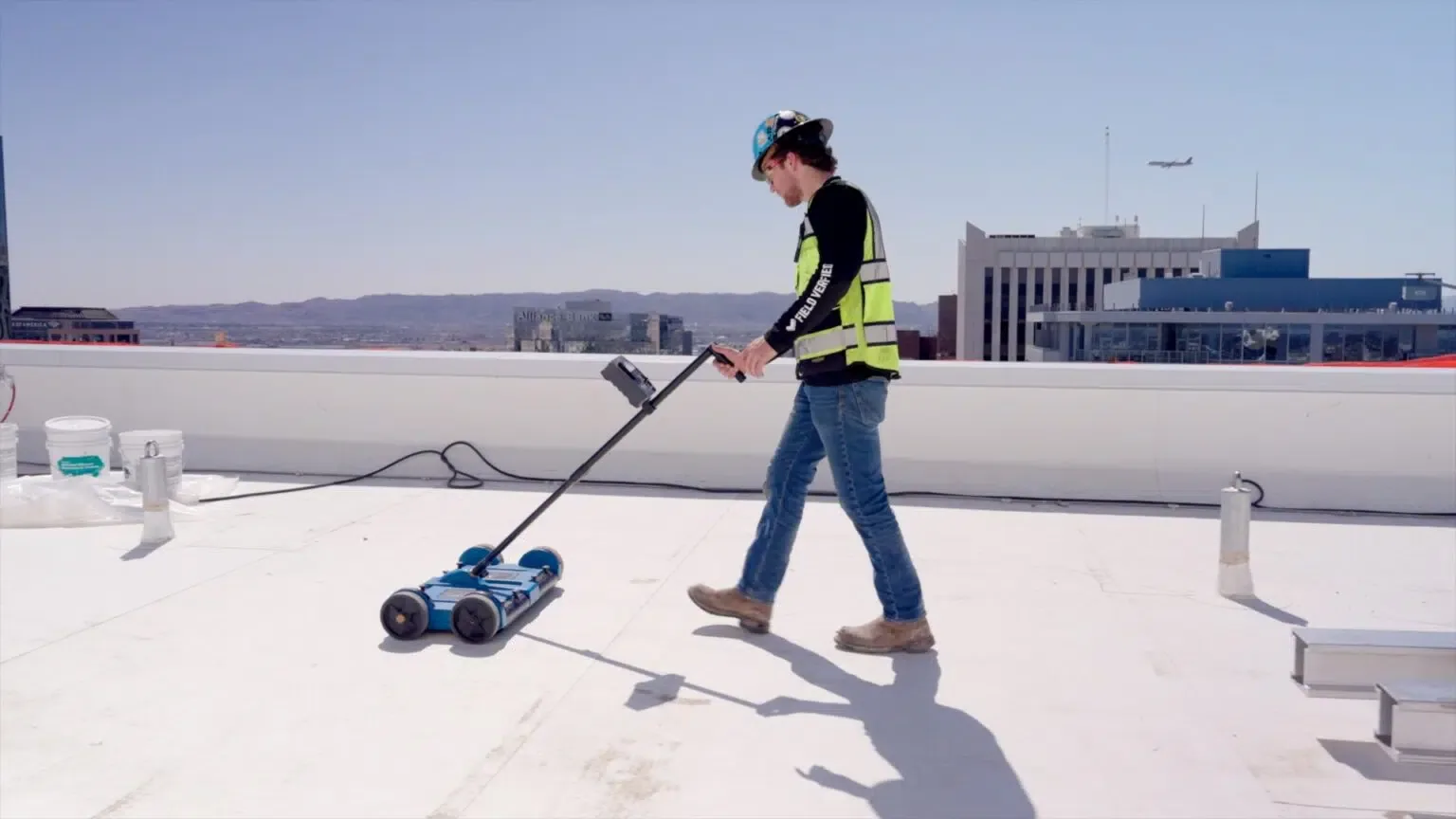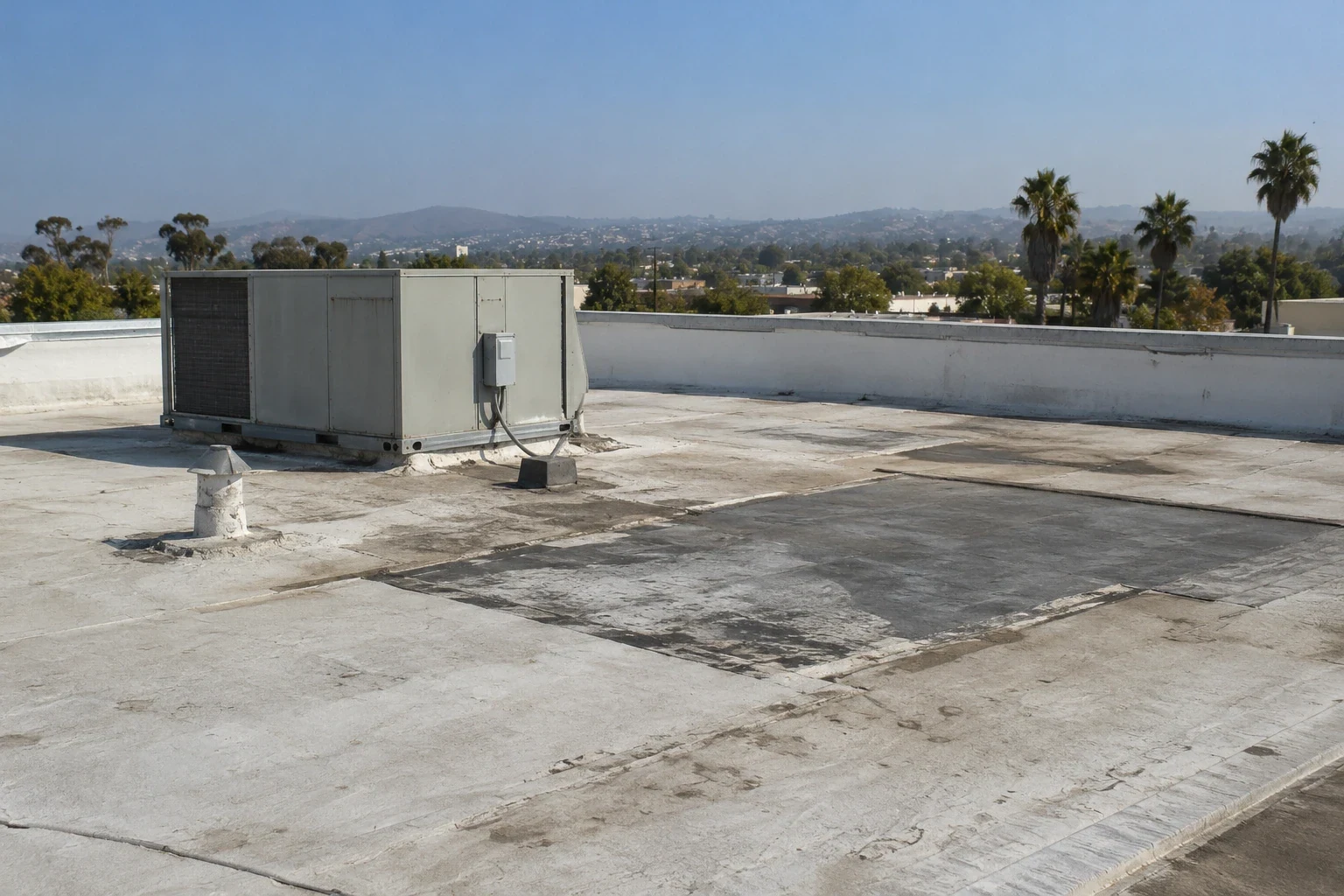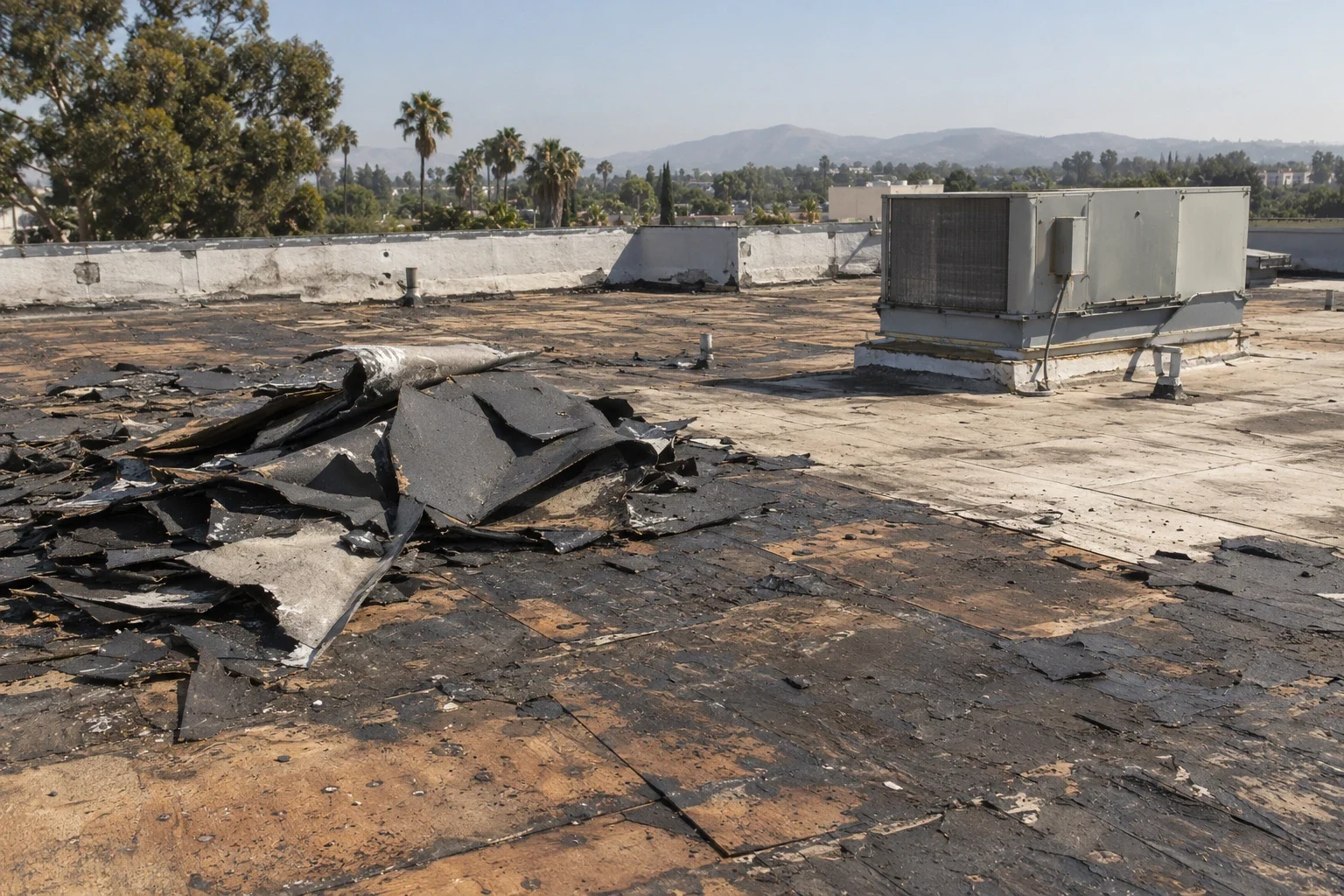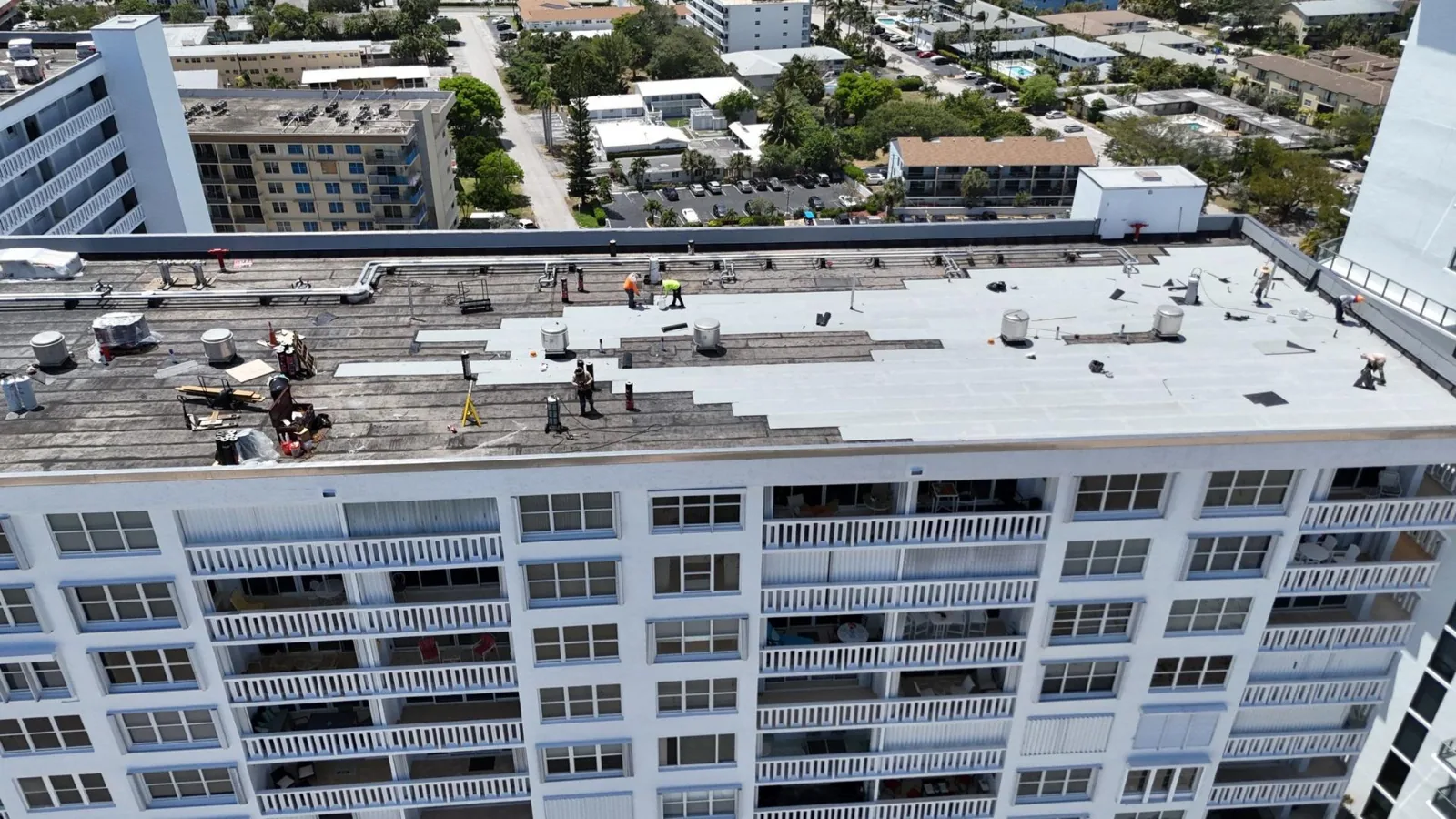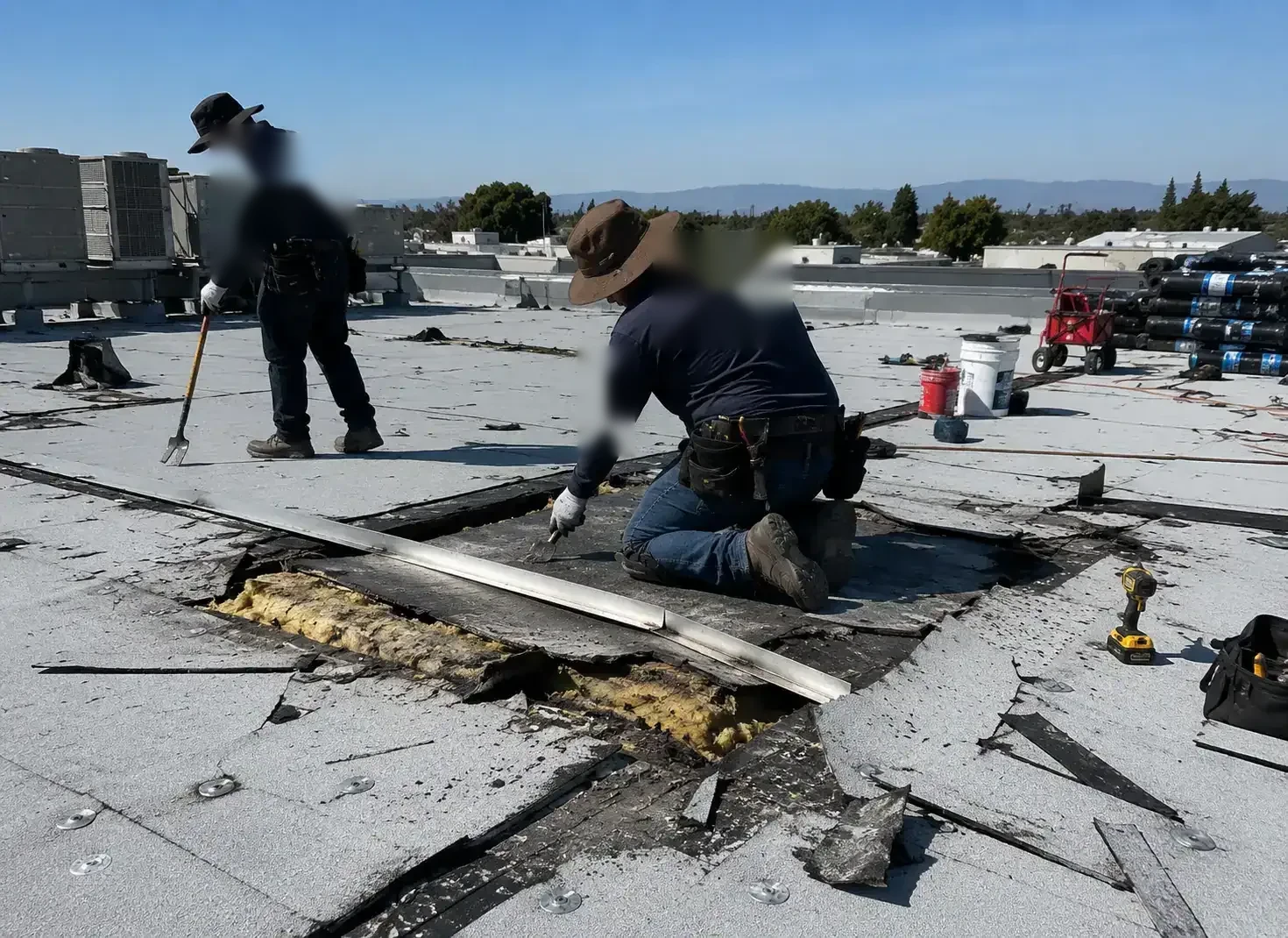
A fastener backing out of a metal panel can leave a narrow leak path that is hard to see from below. In Denair, we inspect the panel laps, attachment points and adjoining flashing before deciding whether that single fastener explains the water mark. The community developed along the Santa Fe railroad alignment, and its summers are hot and dry. Neither fact identifies the roof on a particular property. We check the installed assembly, the condition around the reported leak and the layers below before setting a repair boundary.
Trace the leak back through the assembly
A ceiling mark can appear several feet from the opening that admitted water. We map the interior location, inspect the roof above it and follow likely travel paths at laps, curbs, penetrations and deck joints. On metal, a loose fastener, shifted panel or failed side lap can move water along the sheet. On a membrane roof, an open seam or curb flashing can feed water beneath the field. We identify the roof type first so the test matches the materials present.
Denair's Santa Fe rail alignment is a recognizable local reference. When an owner reports a leak near a loading area or equipment route, we inspect that roof section and the path below it directly. If insulation is suspect, a test opening can reveal moisture and deck condition. A commercial roof inspection records the defect, test location and any roof area that remained out of reach.
Inspect seams, edges and fasteners
Panel roofs need a close look at screw lines, washers, side laps, ridge caps, eaves and transitions to walls or equipment. We note missing or backed-out fasteners, elongated holes, panel movement, surface wear and sealant that no longer bonds. A replacement fastener cannot correct a stretched hole or unsupported panel edge without addressing the underlying condition. On a membrane assembly, we check welded or adhered seams, termination bars, edge metal and repair patches. The roof material sets the preparation and repair method.
For the Merced station, the 1991-2020 July normal high is 96.3 degrees, with 99.7 days per year reaching at least 90 degrees. At the Denair roof, we inspect seam bond and edge restraint before selecting a repair compatible with the installed assembly. They provide nearby climate context for checking sealant, membrane transitions and exposed metal after heat cycles. We compare each suspect location with adjacent material rather than treating weather as a diagnosis. If a darker roof pattern could indicate wet insulation, infrared moisture mapping can guide test locations; only an opening confirms the layers beneath the surface.
Repair what the roof inspection confirms
A small opening in sound, dry material can often be repaired without replacing the surrounding roof. We remove debris, prepare the surface, install a compatible patch or detail and inspect the finished edge. On a panel, the repair may involve the fastener, washer, lap or flashing, depending on what has failed. We do not cover a loose connection with sealant and call the roof repaired. The scope identifies the detail, material and boundary so the property manager can inspect the finished work.
When moisture has reached insulation, the affected material must be removed within the authorized area and the deck checked before closing the assembly. Repeated leaks, corrosion, broad seam separation or widespread wet insulation may support a larger evaluation. We compare localized repair, selective removal, recover and replacement based on the layers and attachment found. Price and timing depend on roof height, access, removal depth, deck condition, drainage, disposal and the number of transitions. A defined repair scope can address a verified defect; a replacement assessment compares the wider assembly when a patch no longer fits the evidence.
Plan the work around seasonal conditions
The Merced station's precipitation normal for 1991-2020 totals 11.80 inches annually, with larger monthly values in January and February and zero rounded values in July and August. The winter-weighted normal helps frame seasonal planning; the current forecast and roof surface control any opening. A roof opening still depends on the forecast, surface temperature and substrate moisture on the workday. We choose a compatible material, prepare the area and secure a temporary cover if permanent dry-in cannot be completed before the shift ends.
Denair has hot, dry summers and cool winters. That seasonal pattern makes it useful to inspect panel fasteners, sealant and membrane transitions after prolonged heat and to keep drainage ready for winter rain. It does not establish a leak or material failure. Our inspection records what has moved, separated or held moisture. Where work must proceed above an active space, we confirm the room use, equipment and access route before cutting. An occupied-building sequence can divide larger work into sections. Later maintenance checks compare the completed repair with the next inspection.
Keep the access and repair record clear
Before mobilization, we confirm the gate, ladder or hatch, staging location and any route that must stay open. If a lift is needed, the site contact identifies a safe setup area. We protect the space below the opening and account for tools and removed material. When the first cut reveals a problem outside the approved boundary, we stop, photograph the additional condition and review the change with the owner. The work record shows where permanent repair stops and any temporary protection begins.
Denair, Merced, Atwater and Livingston sit within a connected regional service area, but each property has its own access route and operating schedule. We confirm the building entrance, roof access and staging area before mobilization, then return photos and recommendations tied to the inspected roof. For properties in the surrounding area, we also work in Atwater and Livingston, keeping each scope tied to the address inspected. A roof asset record can connect the inspection date, repair detail and follow-up need when a manager oversees multiple buildings.
Commercial Roofing Questions
Can one loose roof fastener explain an interior leak?
It can be part of the path, but we also check the panel lap, washer, flashing and nearby roof area. Water can travel before reaching the ceiling. We photograph the fastener and surrounding details, then test below the surface if moisture could change the repair boundary. The scope names what the inspection confirmed.
How do local rail and highway routes affect service access in Denair?
They help orient a service visit. At the property, we confirm the access route, roof material, attachment, drainage and deck condition before recommending work.
What should I send before scheduling a roof walk in Denair?
Share the interior leak location, when it appeared, known roof material, access route and operating hours. A photo of the ceiling mark or roof area can help us plan the inspection. We confirm the assembly and access on site rather than choosing a repair from the photograph alone.
When does a panel roof need more than new screws?
If holes have elongated, panels move, laps are open or the supporting edge has deteriorated, new screws alone may not restore the connection. We inspect attachment, metal condition and adjacent flashing, then define the repair that reaches sound material. The report notes which panels and edges were examined.
How do you handle wet insulation found beneath a leak?
We photograph the opening, identify the wet layers and check the deck within the authorized area. Wet insulation is removed before the roof is closed. If the condition runs past the marked line, we secure the opening and ask the owner to review the additional scope before removal continues.
Request a Denair roof inspection
Send the building use, leak location, roof material and access limits. We will inspect the assembly, photograph the repair area and return a scope with a clear endpoint.
Related Roofing Work