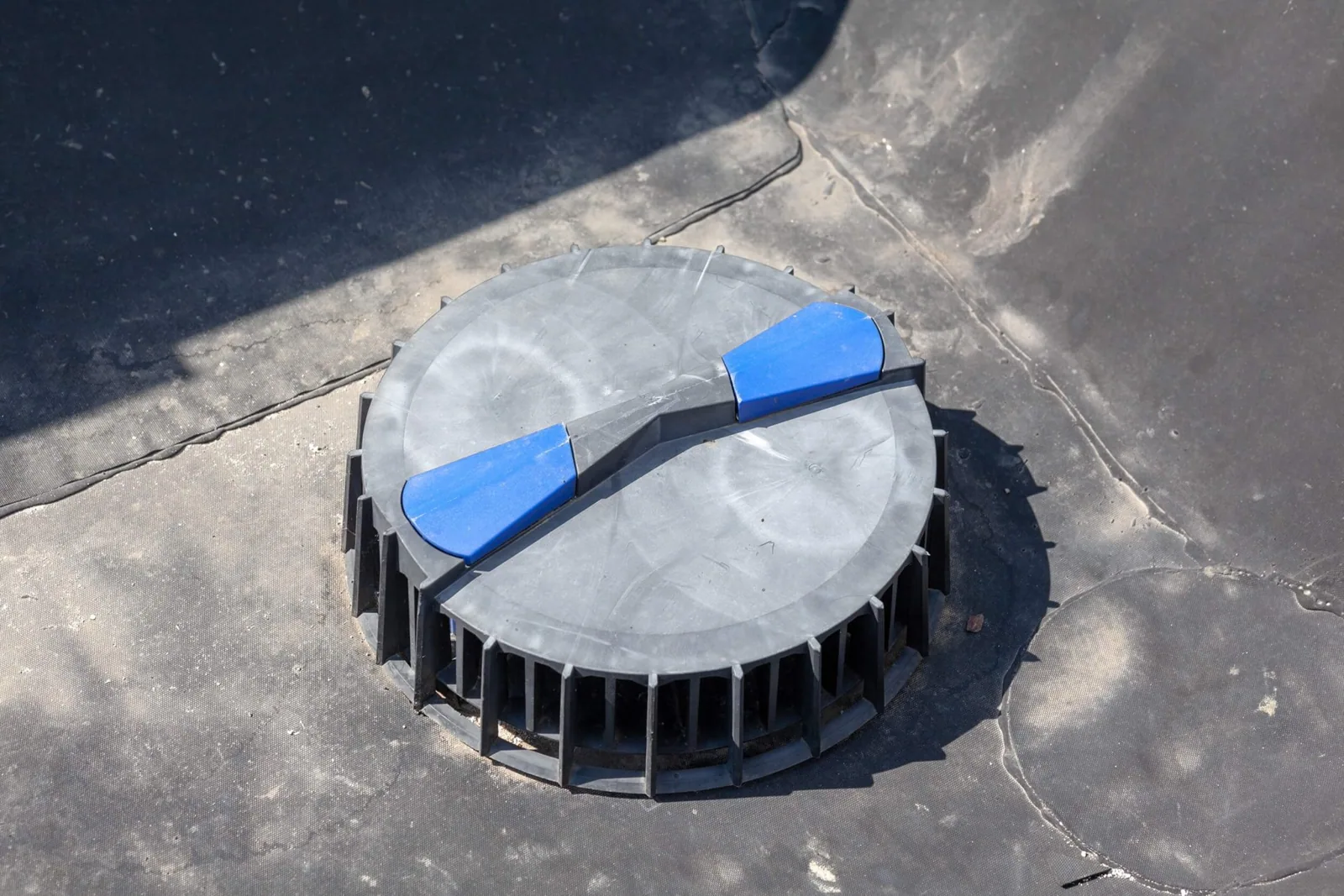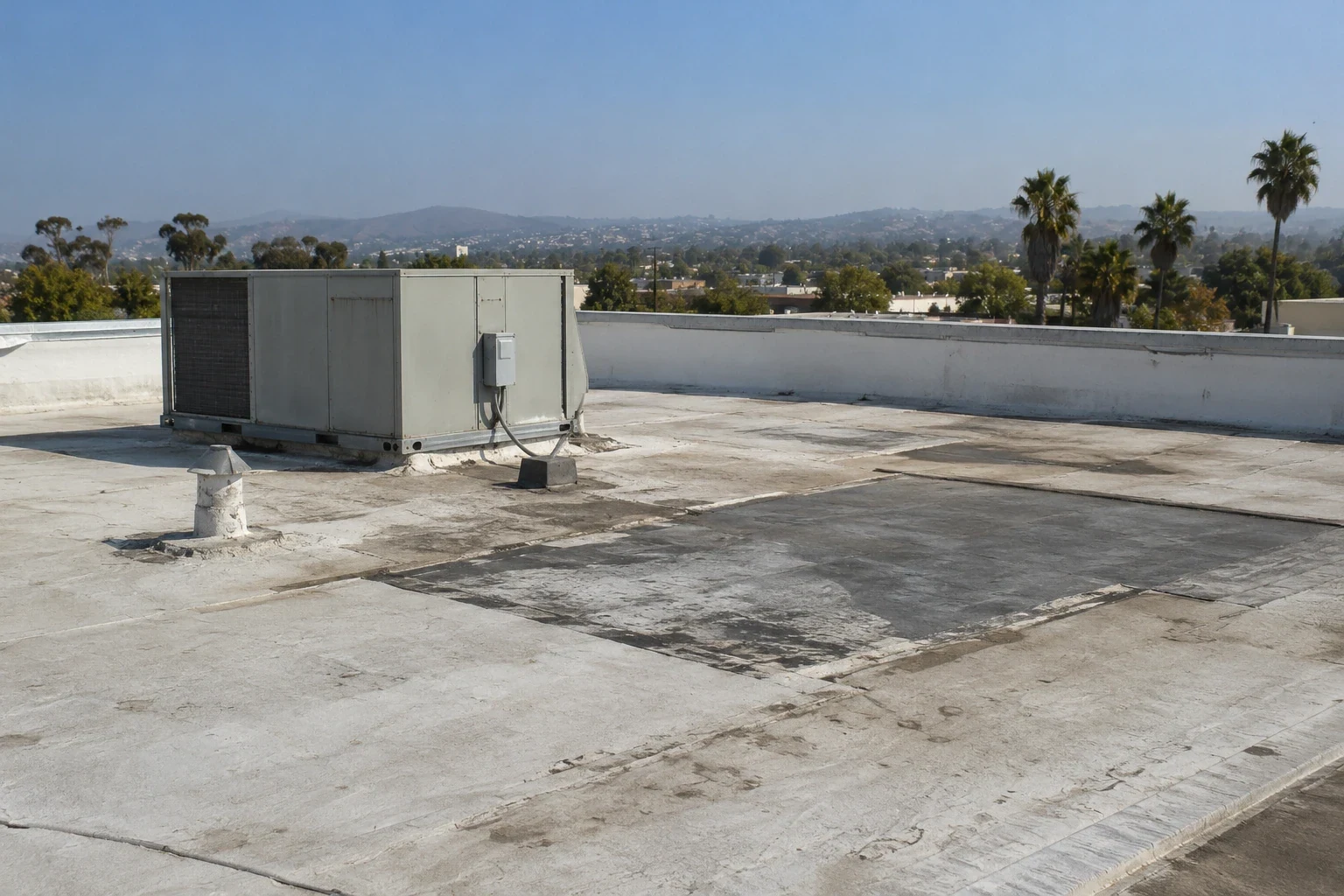
A drain bowl that holds water after the field begins to dry needs a closer look at its slope, flashing and outlet. In Delhi, CA, the CA-99 corridor links the community with nearby Livingston and Hilmar, so a property contact may coordinate deliveries across a wider operating area. We start at the reported wet point and check the drain, seams and nearby penetrations against the actual assembly. The first report marks what is visible and what needs an opening. A drain and scupper inspection can show whether the issue is debris, a failed membrane connection or a low area needing a separate slope review.
At the drain throat
Water moving slowly through a roof outlet can leave a dark ring even when the pipe itself is clear. We remove debris, inspect the clamping ring or flange, and check for membrane pullback at the bowl. A loose connection can admit water below the surface before a ceiling shows a stain. We photograph the outlet before disturbing the layers, then test the surrounding field for bond and moisture. Around a mechanically attached outlet, we note whether fasteners remain tight; a bonded sheet needs a clean tie-in area. The inspection notes whether the outlet can be repaired in place or the surrounding insulation must be exposed. A roof inspection with a marked drain location gives the owner a boundary instead of a general note to monitor ponding.
Coordinate along the corridor
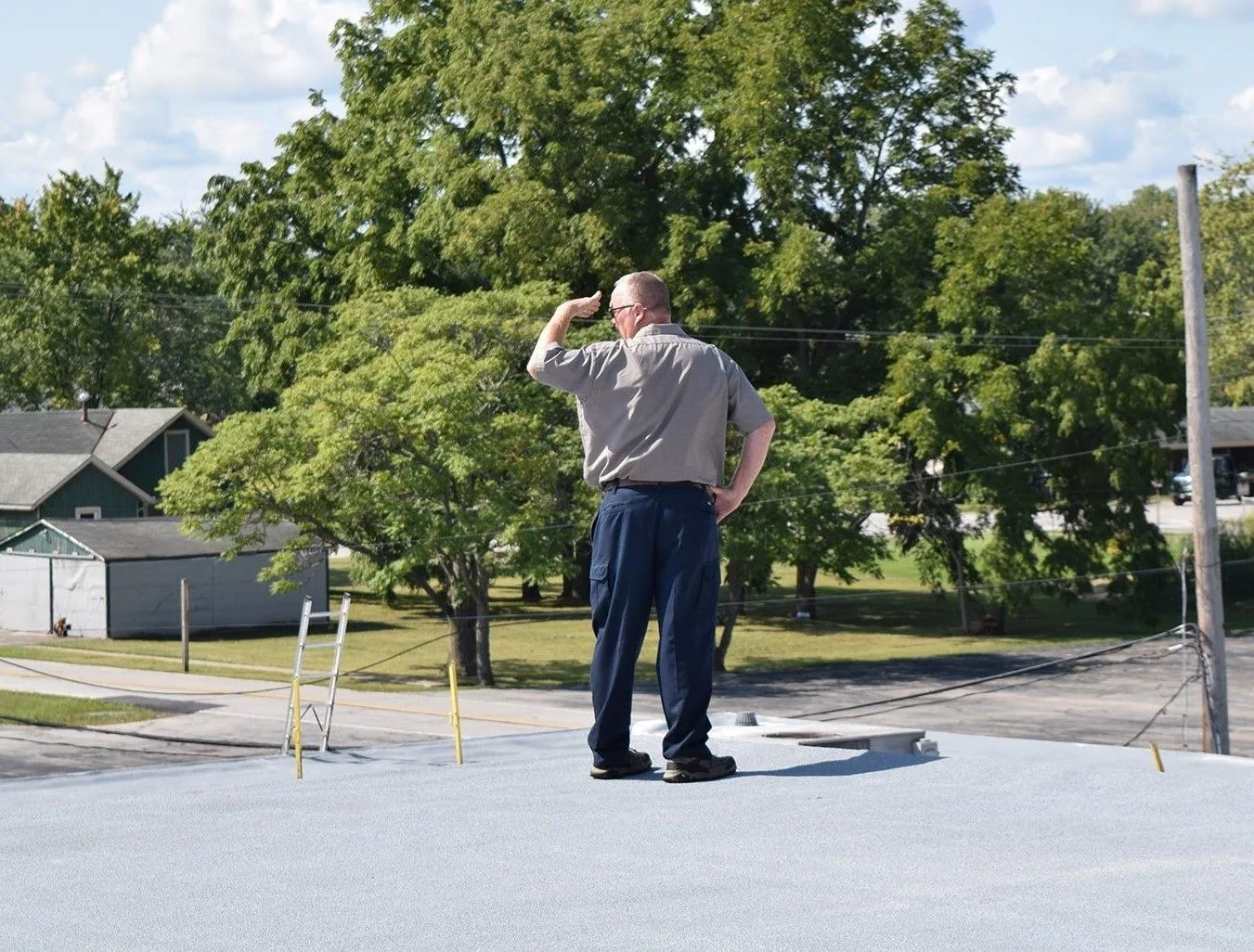
Delhi sits along CA-99 in northern Merced County, near Livingston and Hilmar. That regional setting can make scheduling across multiple sites practical, but each manager controls access, vehicle movement and operating windows. We confirm which entrances stay open, where material can be staged and whether equipment below the work area can pause. Then we separate roof sections by their actual seams and penetrations. A property with additions may have different membrane generations even when the exterior looks continuous. We identify those transitions before pricing a repair. If the site manager shares prior photographs, we use them to locate a concern, then verify its current condition. For a roof inspection in Livingston or Atwater, we confirm access and defects at the property before writing the repair scope.
Plan for water release
The Merced station's 1991-2020 normals show 11.80 inches of annual precipitation, with January and February accounting for 2.37 and 2.20 inches. Those winter totals make a pre-season check of strainers, scuppers and downspout connections a practical first step. Before a storm, we clear loose debris and photograph membrane separation, then note whether water remains after discharge. During diagnosis, water left after a drain is clear may reflect low slope or deck deflection rather than a clogged pipe. We mark the ponding area's extent and revisit it after discharge. If the membrane split at the bowl, the repair must reconnect the field sheet to the drain detail. A maintenance inspection can log that condition before the next rain instead of treating each recurring stain as new evidence.
Identify the assembly before patching
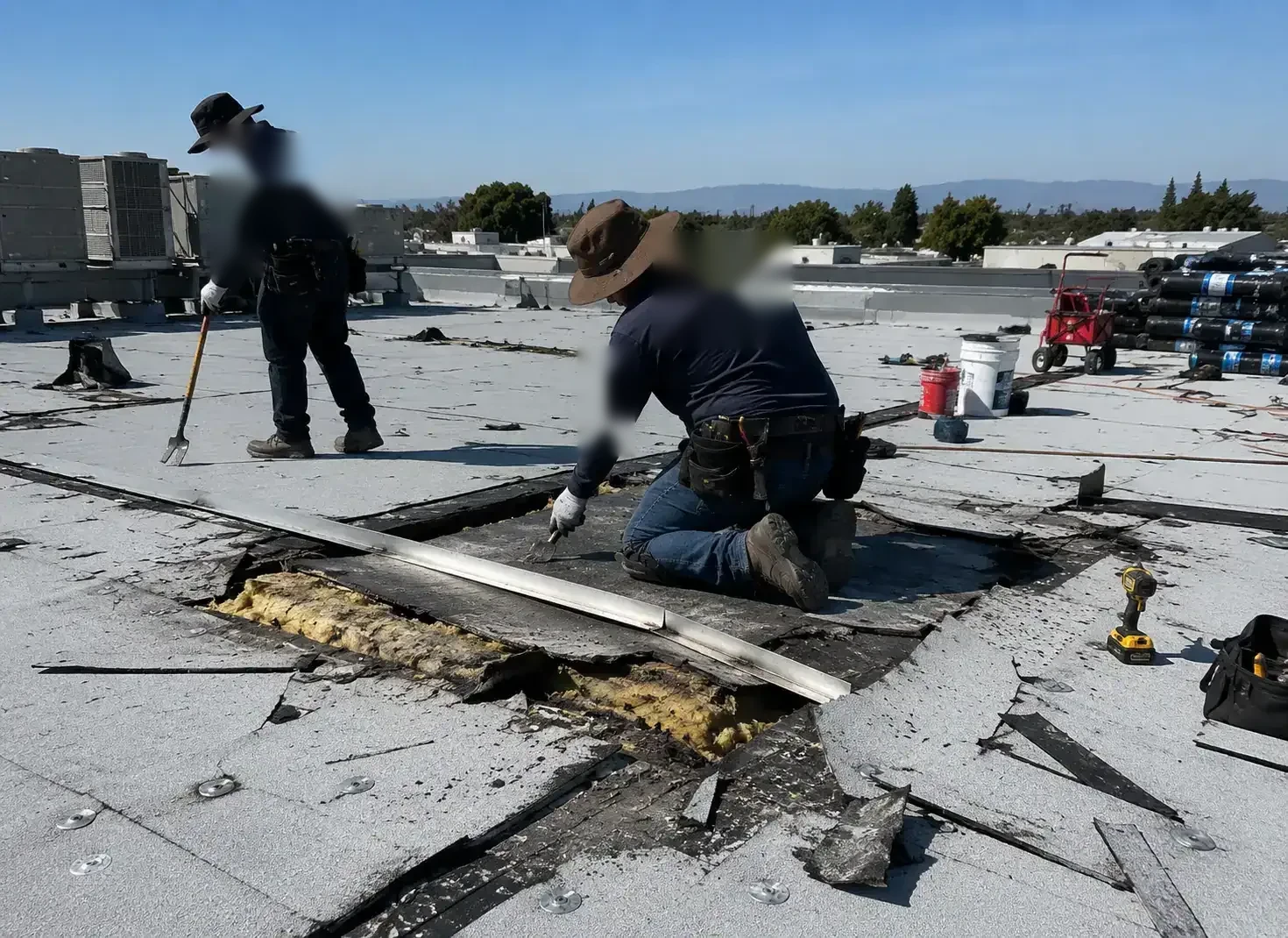
A repair product has to suit the membrane, attachment and surface condition present. We check whether the sheet is TPO, PVC or EPDM where visible, inspect prior coatings and patches, and compare them with available project records. Color alone does not identify chemistry. At seams, we look for a failed weld or bond, dirt in the lap, puncture damage or a termination that has backed away from metal. Any test opening records exposed deck and insulation before closeout. If the roof has multiple layers, we note each and keep the removal limit clear. A TPO system review or EPDM repair detail is useful only after identification; the names do not replace confirming the installed product and condition. A multi-section roof may include a drain tied into an older sheet beside a newer addition. We mark each field before opening the area and check whether the seam direction, attachment and flashing details change at the transition. A drawing helps, but its date matters. We compare it with visible repairs, mechanical curbs and the actual outlet connection. If the assembly changes, we keep each material boundary in the report so one repair product is not carried across a different sheet. The owner can then see which details share a scope and which need separate pricing. That distinction can prevent a correctly repaired outlet from being tied into an incompatible field.
Write a bounded repair scope
The scope names the drain, seam or curb, describes the removal boundary and states how the tie-in will reach sound material. We separate observed wet insulation from areas that have not been opened. When more than one section has failed outlets or loose laps, we map each condition and compare a group of repairs with a larger recover plan. The owner can see which findings support immediate work and which remain options. Cost and timing change with insulation depth, attachment, access and interior protection, so we itemize those drivers instead of extrapolating from one detail. A commercial roof repair proposal should describe exposed layers and limits plainly. If moisture or bond loss changes the boundary, a replacement assessment can compare removal and recover alternatives.
Stage work around people and equipment
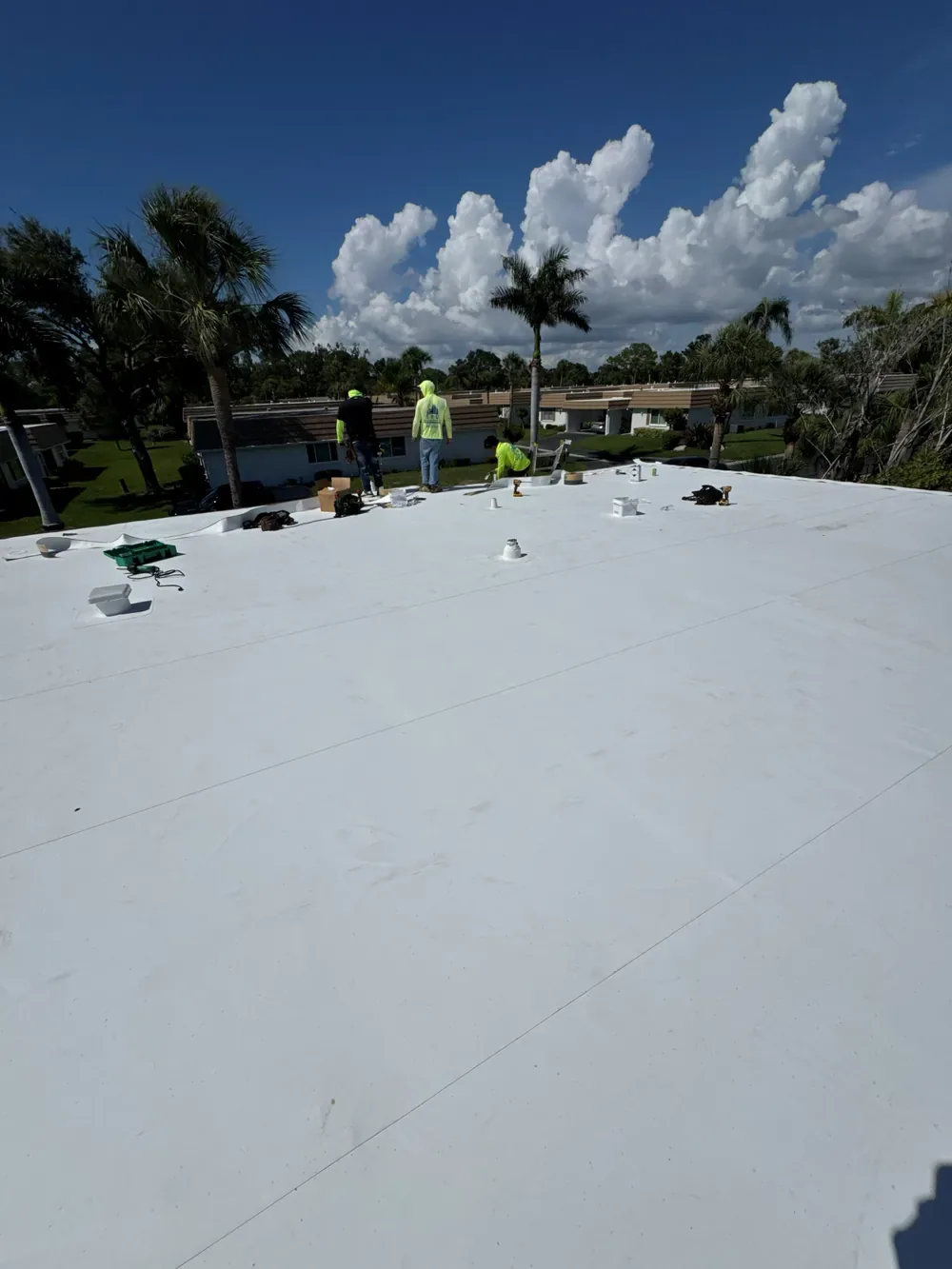
A Delhi property may have public entries, service doors or active equipment beneath a repair area. The manager marks any room that cannot take debris or vibration, and we plan protection before the roof is opened. For occupied work, we agree on the sequence, temporary weather cover and path for removed materials. We keep intake protection in place when work could send dust toward an operating unit. If a shutdown is needed, the contact confirms authority and timing. We report any change to the boundary before extending an opening. For active water intrusion, the first visit identifies the entry and affected space, establishes safe roof access, and protects interior equipment before the permanent repair follows an assembly review. A roof stabilization request should include affected space and a safe access contact.
Leave a record the next visit can use
At closeout, we label photographs by roof area, mark the outlet and seam checked, and state whether insulation was exposed. The owner receives the repair limit, material notes and any condition deferred for later review. At closeout, we label roof areas, drains, seams and conditions left unopened, giving the next inspection a defined starting point. We note the drain elevation, visible seam direction and any area left unopened. If a later inspection finds a different entry point, those observations help separate a new condition from the repair already closed. The owner can then compare the same roof section, rather than rely on a general note that water appeared after rain. A dated drawing can help a future visit return after another rain event; we note changed equipment and additions as they appear. For a portfolio extending to Chowchilla, managers can compare the format while retaining property-specific findings. A a Downtown Merced assessment still needs its own access and occupancy plan.
Commercial Roofing Questions
Why can water remain after a Delhi roof drain is cleared?
We check slope, deck movement and insulation buildup after confirming the outlet is open. A slow area needs measurements before a drain repair is selected.
Can inspection identify a membrane by color?
No. We verify markings, seams, attachment and repair history. A compatible repair depends on the sheet and surface, not appearance alone.
What is included in a drain repair limit?
The scope identifies the bowl or scupper, surrounding sheet removal, exposed layers and the tie-in to sound material.
How do you handle a leak over active space?
We protect the interior, arrange access with the manager, stabilize the opening and document what remains before permanent work proceeds.
Can other corridor sites use the same report?
A shared format helps compare visits. Each building gets its own photos, assembly notes, approved repair boundary and remaining observations.
Inspect the outlet connection
Request a Delhi roof inspection of the drain bowl, surrounding membrane and the path water takes after discharge.
Related Roofing Work