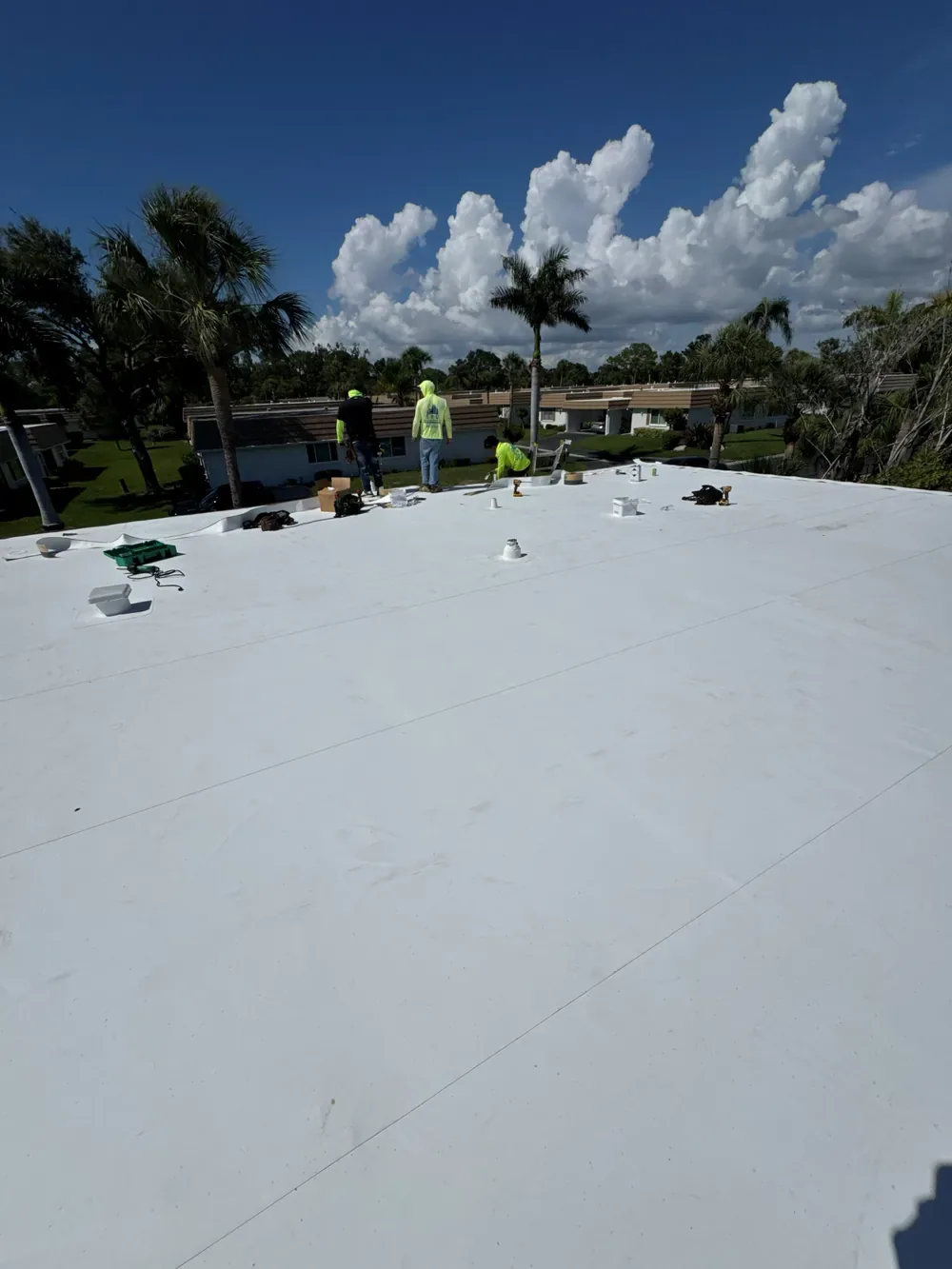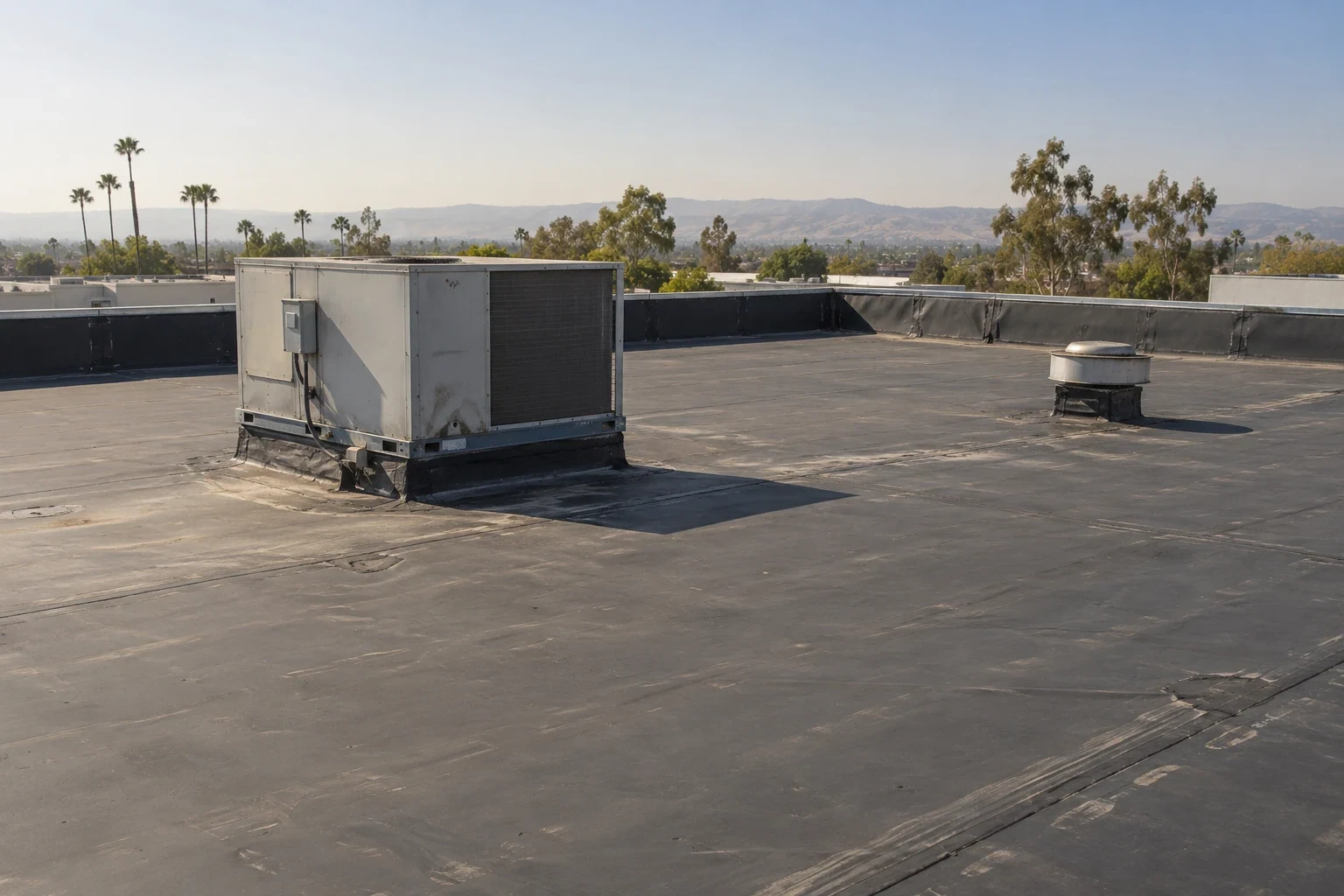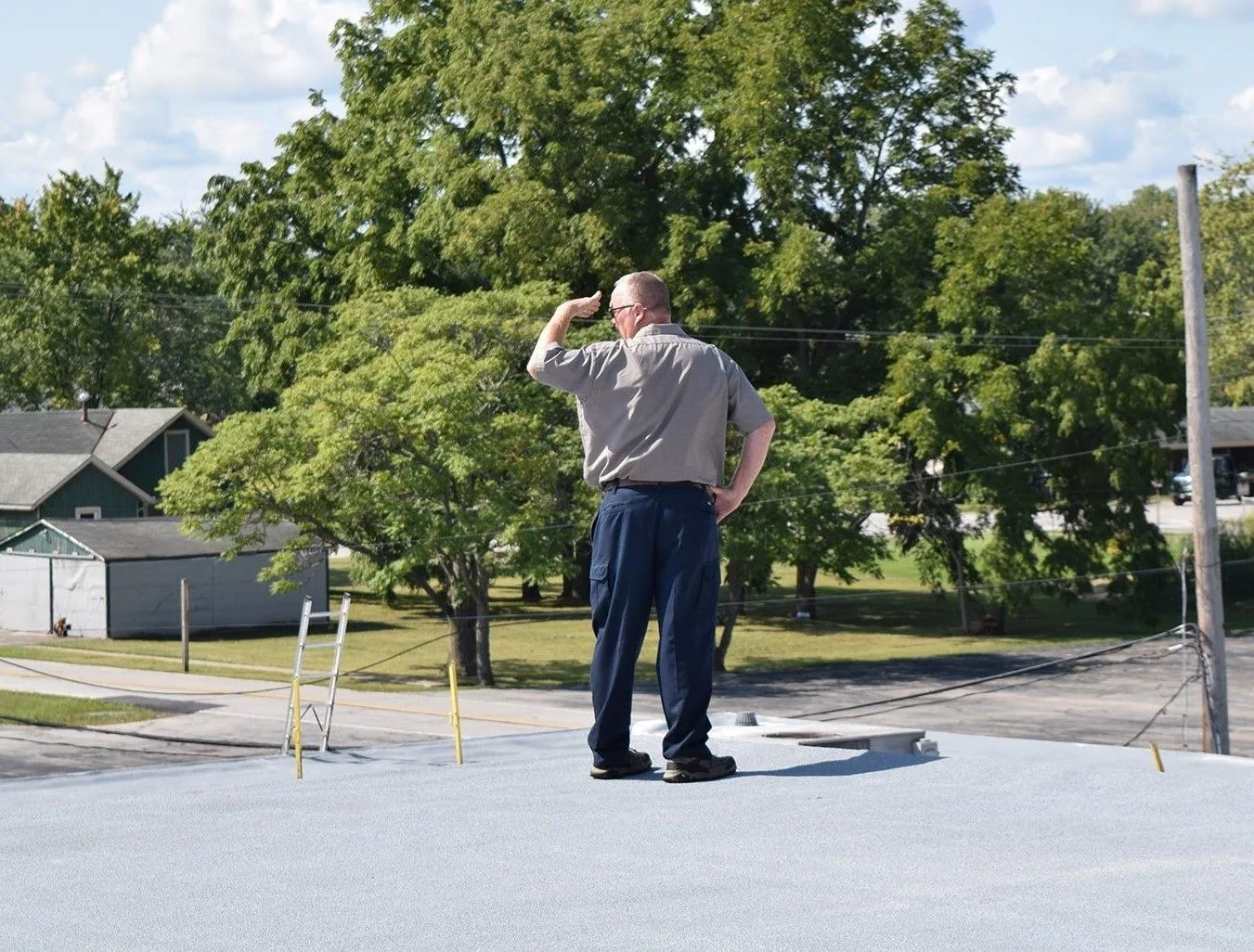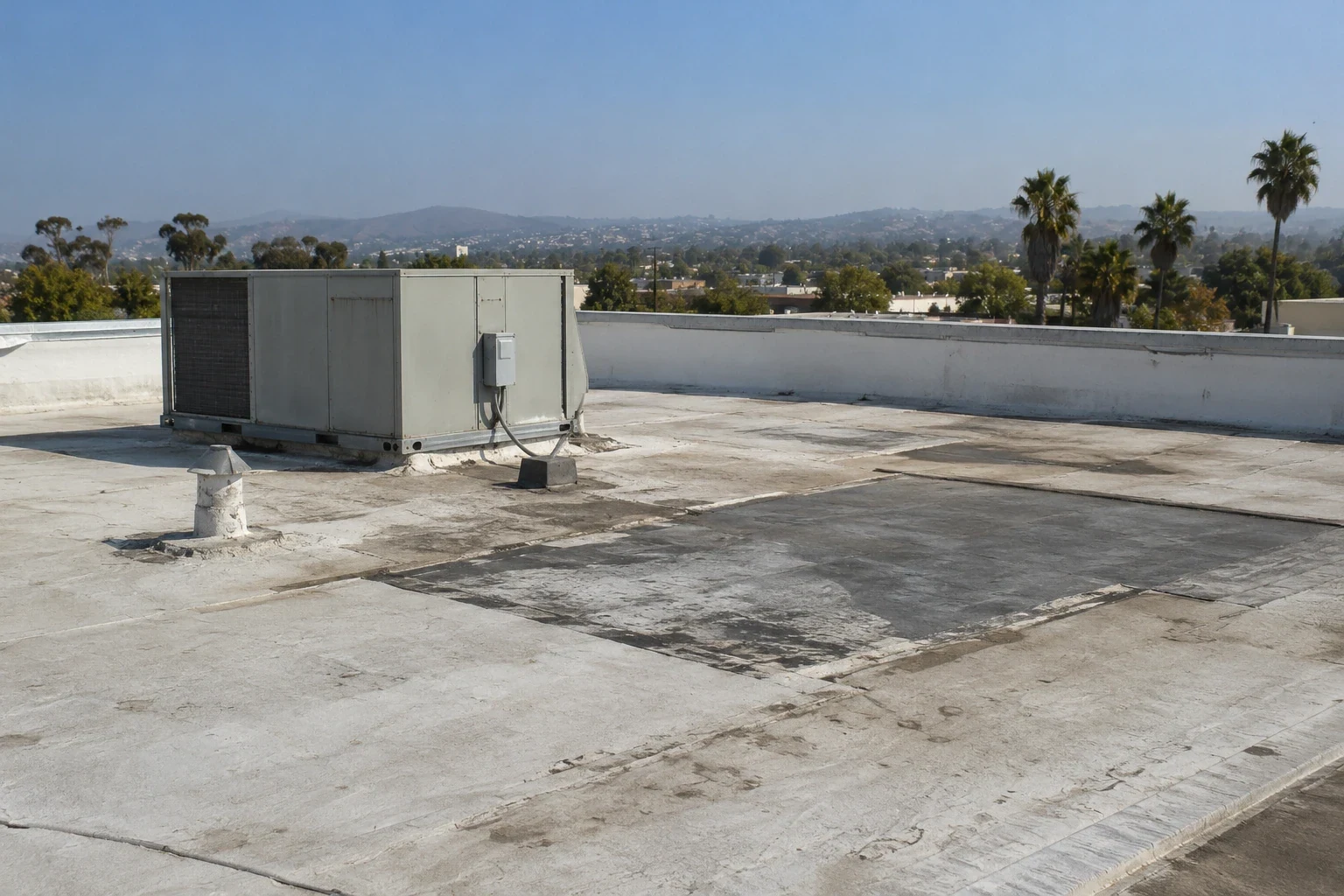
A loose edge at a rooftop unit can pull on the field membrane when equipment vibrates or the sheet moves. In Merced, CA, we check the curb, attachment and membrane before specifying a Versico repair. The detail matters as much as the system name. A sound field cannot compensate for a flashing that is not tied into the roof.
Versico publishes TPO and EPDM commercial roofing products and several system attachment approaches. TPO seams are heat welded, while EPDM repairs use different compatible materials. The assembly has to match the deck and project conditions. Downtown Merced offices and restaurants have different access needs from industrial sites served by Highway 99 and rail.
Separate thermoplastic from rubber
Versico's VersiWeld TPO is a thermoplastic membrane joined at seams with hot air. Temperature, speed, pressure and cleanliness affect the weld. We test the equipment setup on a sample and inspect completed seams after they cool. A field lap can look closed but still need probing to confirm a continuous connection.
EPDM is a thermoset sheet with seam and flashing details that rely on compatible primers, tapes, adhesives and accessories rather than welding. A repair method that works on TPO is not appropriate for EPDM. We use exposed edges, product markings, old repair materials and seam construction to identify which membrane is on the roof before ordering components.
Membrane thickness and sheet width do not settle the entire assembly. We compare the intended product with deck, insulation, cover board, perimeter design and roof geometry. A product schedule may call for one method in the field and another at edges or transitions. We check the submittal and the physical roof together so the work reaches a suitable termination.
Choose an attachment the deck can accept
Versico lists mechanically fastened, adhered and induction-welded TPO system options, among others. The choice depends on the deck, wind design, insulation layout, perimeter details and project requirements. Mechanical attachment needs fasteners appropriate to the substrate. Adhesive installation depends on a prepared surface and controlled application. Induction welding needs compatible plates and equipment. We do not select a method from building type alone.
At an inspection, we note deck condition, fastener patterns, loose sheets and any movement near the perimeter. A test pull or engineering review may be required before the specified attachment can be confirmed. Wet insulation or corrosion can change what lies beneath the membrane. The scope separates confirmed work from concealed conditions that need a decision after opening.
Merced's industrial parks include light- and heavy-industrial properties, with Highway 99 and rail connections. Access may shape deliveries and staging at those properties. Downtown Merced has government, finance, offices and restaurants, where pedestrian access and operating hours may matter. We coordinate the attachment and daily work sequence with the roof conditions and the people using the building.
Check the seam beside the flashing
A roof's vulnerable point often sits where materials meet. We examine curb corners, pipes, drains, wall bases, edge metal and expansion joints for separation or movement. On TPO, we clean and prepare the surface, then weld compatible membrane and flashing pieces. On EPDM, the detail calls for the specified preparation, primer and accessory. Each connection follows its own manufacturer's instructions.
Old sealant and patch layers can hide the edge of a defect. We remove enough material to expose a sound bond or weld surface and inspect below where moisture may have traveled. If water has spread through insulation, closing the top layer can trap the problem. A test opening documents what can remain and where removal is needed. The repair boundary follows the exposed construction.
Drain connections deserve a separate check. We look at the clamping ring, sump, outlet and nearby field seams. A new membrane can finish above the original drain height if insulation changes. That difference affects water flow and flashing. We measure the intended elevation before work begins and identify any drain or deck adjustment that needs to be included.
Close each work area deliberately
Installation planning begins with the weather-tight limit. We select an area small enough to open, inspect, install and close within the planned work period. Temporary tie-ins protect exposed deck and insulation at the boundary. At each shutdown, we check that loose material is secured, drains remain clear and the unfinished edge cannot admit water.
During TPO production, the crew tests weld settings as conditions shift and checks seams after cooling. EPDM work gets its own inspection at laps and flashing transitions. Insulation joints, cover board and fastening patterns are verified before they disappear under the membrane. We photograph details and repairs as they are completed so the manager can connect the work to the scope.
Occupied buildings call for coordination at roof access, noise, interior protection and deliveries. A Downtown Merced restaurant or office may need entrances kept clear. Industrial uses may need a route that avoids loading activity. We review those limits with the manager and communicate which area is under work. The schedule changes if the weather or exposed conditions make the planned opening unsafe.
Use the inspection to set repair limits
A Versico product line gives the installer a defined set of materials and details. It does not reveal the condition of the existing roof. We inspect the membrane, substrate, insulation, drainage and perimeter, then compare repair, recover and replacement options. A localized defect on dry, stable material may support repair. Widespread moisture or deck damage may require removal.
A recover can preserve serviceable layers if the assembly is dry, attachment is suitable, detail heights remain adequate and project requirements allow added material. We explain those limits and identify any test opening or structural review required. The proposal states what is removed, what remains, which system is proposed and how concealed conditions will be handled.
We also note roof areas that cannot be reached without moving equipment or coordinating a shutdown. That access limit belongs in the inspection record because it affects how much of the assembly has been verified. If a concealed section matters to the repair choice, we identify a safe opening point and obtain approval before removal. This keeps the proposed work tied to observations instead of assumptions.
Because TPO and EPDM use different seam preparation, the existing TPO assembly or EPDM detail must match the material already on the roof before we propose a repair. A commercial roof inspection can document the existing seams. We also review repair options, properties in Downtown Merced and Atwater. Other product families include Sika Sarnafil PVC and Carlisle SynTec.
Commercial Roofing Questions
Does Versico TPO use the same seam method as EPDM?
No. TPO is heat welded; EPDM laps use compatible tape, primer, adhesive or flashing accessories. We identify the installed membrane before selecting a repair method.
Which Versico TPO attachment method fits a Merced building?
Deck type, wind design, insulation, perimeter details and project documents control the choice. We inspect the roof and compare those conditions with the specified assembly before committing to an attachment method.
Can a rooftop unit leak be fixed by replacing its boot?
Sometimes, but the curb, membrane termination and supporting attachment need examination. We check the surrounding field and moisture below before setting a repair boundary.
How do you protect an open roof area overnight?
We limit the daily opening to what can be completed and closed safely. Temporary tie-ins and weather protection are inspected at the boundary before the crew leaves.
What information helps compare repair and replacement?
A condition record should show the membrane, wet or damaged layers, deck condition, drainage, repair history and transition heights. The written scope then separates localized work from removal or recover options.
Check the curb and membrane edge
Request inspection of the loose flashing, TPO weld or EPDM transition at the rooftop unit.
Related Roofing Work